Dolly Parton & 17 White Women Who Black Folks Have Embraced
White Women Black Folks Don’t Play About: Diana, Dolly, Anne, Sophia & More
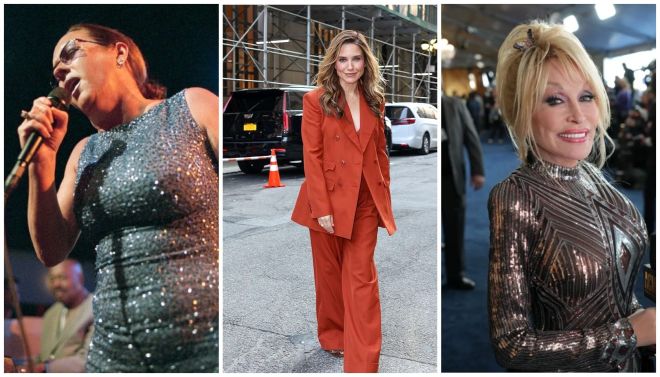
Photos by Gregory Bojorquez/Kevin Mazur,Jason Howard/Bauer-Griffin/Getty.
Dolly Parton’s legacy goes far beyond country music. The legendary singer, songwriter, actress and philanthropist died at 80 on Aug. 25, 2026, following a brief and private battle with cancer. She passed away peacefully at Vanderbilt-Ingram Cancer Center in Nashville, Tennessee, surrounded by loved ones. Fans will forever remember Parton for timeless hits like “Jolene,” “9 To 5” and “I Will Always Love You.” But her impact stretched far beyond the recording studio. Parton was a white woman from Nashville who not only fought for Black people but also stood up for our civil rights unabashedly.
Throughout her career, Parton used her platform, money and influence to support communities and causes close to her heart, never afraid to speak publicly about racial inequality or show her support when doing so may have put her career in jeopardy.
Dolly’s Whitney Houston connection became a gift to Nashville.

One of the most memorable examples of Parton putting her money where her mouth was came through Whitney Houston’s iconic version of “I Will Always Love You.”
During a 2021 appearance on Watch What Happens Live with Andy Cohen, Dolly Parton revealed that she used royalties from Houston’s recording to purchase an office complex in a predominantly Black Nashville neighborhood, in order to honor the legendary singer. The legendary song made around $10 million in royalties for Parton, according to Forbes.
“It was mostly just Black families and people that lived around there,” Parton said. “It was a whole strip mall. And I thought, ‘This is the perfect place for me to be, considering it was Whitney.’ ”
Parton set up a recording studio in the complex in 1997. At the time, major artists and record labels rarely brought their business or production jobs to that specific part of town. Her presence brought immediate jobs and industry attention to the neighborhood, WKRN News 2 noted. Rather than pocketing the money or investing it in elite areas of town, Parton intentionally placed millions of dollars directly into the local economy of “Whitney’s people,” ensuring the neighborhood had financial backing from one of music’s biggest stars.
“I just thought, ‘This was great. I’m going to be down here with her people, who are my people as well,’” Parton added during her interview with Cohen in 2021. “And so I just love the fact that I spent that money on a complex. And I think, ‘This is the house that Whitney built.’ ”
It was a powerful full-circle moment. Houston turned Parton’s song into one of the biggest recordings in music history, and Parton used the financial success of that song to invest in a community in Houston’s own hometown.
She wasn’t quiet about Black Lives Matter.
Parton also made her position clear during the nationwide racial justice protests that followed the 2020 killing of George Floyd.
In an interview with Billboard that year, Parton pushed back against the idea that supporting Black lives somehow diminished the importance of anyone else.
“I understand people having to make themselves known and felt and seen. And of course Black lives matter. Do we think our little white asses are the only ones that matter? No!” Parton said.
For a country music superstar with generations of fans, it was an especially blunt and unapologetic statement.
That willingness to speak up, rather than simply remain on the sidelines, became another part of the affection many fans had for Parton.
And she certainly wasn’t the only white celebrity who has supported Black people, Black artists and civil rights. Over the years, several white women in entertainment have used their platforms, money and careers to stand alongside Black communities.
Here are several famous white women who have fought for Black people over the years.
1. Jane Fonda
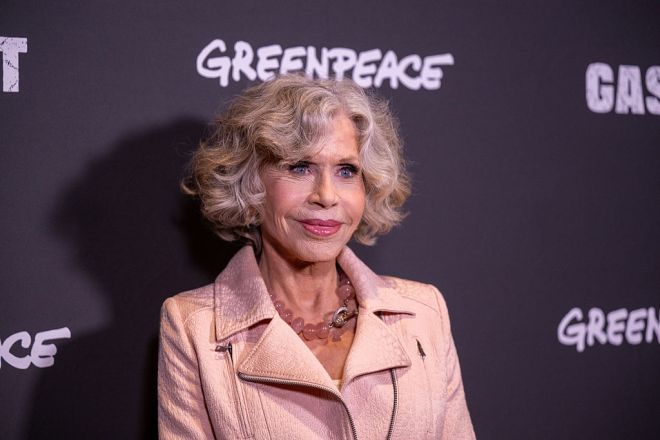
Fonda became heavily involved in racial and social justice activism during the 1960s and 1970s. According to Time, she formed alliances with members of the Black Panther Party and supported community initiatives connected to the organization, including programs designed to provide food and other resources to underserved communities.
Her activism extended well beyond simply making public statements. Fonda participated in protests, raised money for political causes and developed relationships with prominent activists, including Angela Davis, whom she visited in prison in 1971. Her willingness to put her celebrity behind controversial movements made her one of Hollywood’s most outspoken political figures of her generation.
While Fonda’s activism has remained controversial in some circles, there is little question that she used her visibility to bring attention to racial inequality and other forms of systemic oppression at a time when doing so could come with significant professional consequences.
RELATED CONTENT: ‘So Much Of What We Love Comes From Black Culture’ — Sophia Bush & 6 Other White Celebrity Allies Invited To The Cookout
2. Betty White

White made headlines in the 1950s when she refused to remove Black tap dancer Arthur Duncan from her variety show despite pressure from Southern television stations.
Her response to the demands was famously simple: “I’m sorry, but he stays… live with it!” she said in an interview before her death in 2021.
White didn’t just keep Duncan on the program; she reportedly gave him even more airtime, refusing to allow racist complaints to dictate who appeared on her show. At a time when segregation was still legally enforced in parts of the United States, White’s decision was a meaningful public stand.
Duncan later recalled White’s support with gratitude, and the incident became one of the many stories that contributed to her reputation as someone who was willing to stand her ground even when it was easier to give in.
3. MacKenzie Scott

Amazon co-founder and philanthropist MacKenzie Scott has donated more than $26 billion through her organization, Yield Giving, since 2019, directing enormous sums toward nonprofit organizations, universities and groups serving historically marginalized communities.
What makes Scott’s philanthropy particularly notable is her approach to giving. Rather than attaching a long list of conditions to every donation, she has frequently provided unrestricted funding, allowing organizations to decide for themselves where the money is needed most. That approach has given community leaders greater flexibility to address the issues they understand firsthand.
Scott has also made a significant impact on Historically Black Colleges and Universities (HBCUs), becoming the largest individual donor in history to the institutions. She has contributed well over $1 billion to HBCUs and the United Negro College Fund, helping support schools that have historically played a critical role in expanding educational opportunities for Black students.
Her giving has also reached Black-led organizations working on economic mobility, education, criminal justice reform and civil rights. Through that combination of massive financial contributions and trust in the organizations receiving them, Scott has become one of the most influential private philanthropists supporting underserved communities.
4. Teena Marie

Teena Marie became beloved in the R&B and soul world despite being a white artist, earning the nickname the “Ivory Queen of Soul.”
Her legendary creative partnership with Rick James helped launch her career, while her deep connection to R&B earned her lasting respect from Black audiences and musicians who grew to adore her music.
Marie made Black folks move to classics like “I Need Your Lovin’,” a soulful groove that became her first major solo hit, and “Square Biz,” a funky track featuring her iconic rap breakdown.
Rather than treating the genre as a passing phase, Marie immersed herself in its musical traditions and built a career that was deeply rooted in soul and funk. Marvin Gaye was her icon and she grew up listening to and studying the complex vocals of giants like Sarah Vaughn and the “Queen of Soul,” Aretha Franklin.
She also became the first white artist signed to Motown Records, an important achievement that reflected the label’s confidence in her ability to connect authentically with the music and audiences she loved, always paying homage along the way.
5. Kelly Clarkson

Clarkson has consistently used her daytime talk show to spotlight and celebrate Black artists, frequently welcoming legendary singers and performers onto her platform.
She has also spoken openly about her admiration for artists such as Patti LaBelle and Aretha Franklin and their influence on music. Clarkson famously auditioned for American Idol in 2002 with Franklin’s “Express Yourself.” She later performed a celebrated tribute to the “Queen of Soul” at the 2018 American Music Awards.
That appreciation has become a recurring part of Clarkson’s public image, particularly when she talks about the vocalists and musical traditions that influenced her own career.
6. Adele

Adele has repeatedly acknowledged the influence of Black musicians on her artistry and has been particularly vocal about her admiration for Beyoncé.
At the 2017 Grammys, she famously used her Album of the Year acceptance speech to praise Beyoncé’s Lemonade, making it clear that she believed the groundbreaking album deserved recognition. Her emotional comments became one of the ceremony’s biggest moments and showed the deep respect she had for Beyoncé as both an artist and cultural force.
7. Céline Dion

Céline Dion has long expressed admiration for powerhouse Black vocalists including Whitney Houston and Aretha Franklin.
Throughout her career, she has spoken about the influence of legendary singers on her own development and has treated those artists as inspirations rather than simply competitors. Her public praise has helped highlight the enormous impact Black vocalists have had on the evolution of contemporary pop and soul music.
8. Princess Diana

Princess Diana became an international symbol of compassion during the HIV/AIDS crisis after publicly shaking hands with people living with HIV without wearing gloves.
At a time when fear and misinformation surrounding the disease were widespread, the gesture helped challenge the stigma surrounding patients, especially for Black communities who were and continue to be disproportionately impacted by the disease. Diana understood the power of a highly public moment and repeatedly used her visibility to humanize people who were being marginalized or treated with fear.
Diana also devoted significant attention to humanitarian causes across Africa and became one of the most prominent celebrity advocates for banning landmines. Her humanitarian work helped turn issues that often received little mainstream attention into subjects of international conversation.
9. Mariska Hargitay

Hargitay founded the Joyful Heart Foundation to support survivors of sexual assault, domestic violence and child abuse.
She has also spent years advocating for survivors whose rape kits remain untested, helping bring attention to a problem that has disproportionately affected women of color. Through her advocacy, Hargitay has pushed for reforms that would give survivors greater access to justice while also changing the way sexual violence is discussed publicly.
Her work has gone beyond the screen, allowing her to use the platform she built through Law & Order: SVU, a show beloved by Black audiences, to address issues that closely mirror the storylines she has portrayed as Detective Olivia Benson.
10. Anne Hathaway

Anne Hathaway has used her platform to speak about racial inequality, white privilege and racial violence.
Following the 2018 killing of Nia Wilson, Hathaway publicly urged white people to confront their own biases and examine the systems that contribute to racial injustice.
“The murder of Nia Wilson- may she rest in the power and peace she was denied here- is unspeakable AND MUST NOT be met with silence,” the Hollywood star captioned her since-deleted post in part, according to ABC 7 News. “She is not a hashtag; she was a black woman and she was murdered in cold blood by a white man. White people- including me, including you- must take into the marrow of our privileged bones the truth that ALL black people fear for their lives DAILY in America and have done so for GENERATIONS. “
Her willingness to address uncomfortable conversations has become part of her broader public advocacy, particularly when issues of race and inequality enter the national conversation.
11. Ms. Rachel

Children’s educator Rachel Accurso, better known as Ms. Rachel, has made diversity and representation a major part of her popular educational content.
Her videos intentionally feature diverse creators and children, inclusive sign language and representation designed to help children from different backgrounds see themselves reflected on screen. She has also used her platform to encourage kindness, acceptance and empathy, making representation a central part of the educational experience she creates for young viewers.
12. Meryl Streep

Streep has repeatedly used her enormous Hollywood platform to address discrimination and inequality.
She has spoken about the treatment of women in entertainment, political division and the importance of creating opportunities for people who have historically been overlooked. Her career has also included working alongside and publicly supporting artists from a wide range of backgrounds.
As one of Hollywood’s most respected actresses, Streep has had the kind of platform that can turn a brief award-show speech or interview comment into a much larger cultural conversation.
12. Martha Stewart

Cooking and lifestyle icon Martha Stewart has held a special place in the hearts of many Black fans for years, thanks in part to her unapologetic personality, work ethic and ability to continually reinvent herself. Her direct communication style, exacting standards and determination to rebuild after her very public legal troubles have made her a fascinating cultural figure far beyond the kitchen.
Her friendship and longtime partnership with Snoop Dogg also helped introduce Stewart to an even broader audience. What started with Snoop appearing on her show eventually grew into Martha & Snoop’s Potluck Dinner Party, where their unlikely chemistry became one of television’s most entertaining cross-cultural pairings. Their friendship felt genuine rather than forced, allowing Stewart to connect with hip-hop audiences while Snoop stepped into a world traditionally associated with lifestyle and cooking television.
For many fans, that combination of authenticity, humor, hustle and resilience is part of what makes Stewart so easy to root for. She built an empire, faced one of the biggest setbacks of her career, served time in prison and still managed to reinvent herself and remain a major pop-culture figure. Whether she’s teaching someone how to make the perfect pie or trading jokes with Snoop, Stewart has managed to stay unmistakably Martha — and that has earned her fans across generations and communities.
13. Reba McEntire

McEntire has developed a reputation within country music for being welcoming and approachable, including toward Black artists and performers working in a historically less diverse genre. She most notably performed a stripped-down duet of “In the Ghetto” with Black country star Darius Rucker at the 2020 CMA Awards to honor the late songwriter Mac Davis.
Black audiences also grew up watching the actress on UPN, where her hit sitcom Reba became a familiar part of many households’ TV lineups. The show’s mix of family drama, comedy and relatable characters helped make McEntire a nostalgic favorite for viewers who tuned in week after week.
14. JoJo

JoJo has openly acknowledged the influence of Black R&B and soul singers on her own music.
She has frequently credited Black artists and musicians for shaping her vocal style and has worked with Black producers and songwriters throughout her career. Her admiration for R&B has been a consistent part of her musical identity, and she has often spoken about the artists who inspired her rather than treating those influences as something separate from her own artistry.
15. Sophia Bush

Actress Sophia Bush has been outspoken about racial justice, police brutality and systemic inequality, regularly using her social media platforms and podcasts to amplify Black activists, writers and community organizers.
During the racial justice protests of 2020, Bush took part in the nationwide #ShareTheMicNow campaign, handing over control of her Instagram account to prominent Black women, such as activists, writers, and organizers, to magnify their voices directly to her millions of followers.
She has also encouraged her followers to educate themselves on racism and support Black-owned businesses and organizations. Rather than limiting their advocacy to moments when racial injustice is dominating headlines, Bush has continued discussing issues of representation, privilege and equality with her audience.
Bush has been vocal about the responsibility she believes white people have to speak up for Black communities. During an interview at the NAACP Image Awards in March, she encouraged white people to use their voices in support of Black people and culture.
“Art is always political,” said Bush. “As the White friend at this event, I’m gonna go ahead and say to the women who look like me—to the men who look like me—it’s incredibly important to remember that so much of what we love in America comes from Black culture.”
16. Hayden Panettiere

Panettiere has spent years using her celebrity platform to support humanitarian and anti-violence causes, while also drawing attention to issues involving vulnerable communities around the world.
But for many Black fans, Panettiere has a special place in their hearts thanks to her role as Britney Allen in Bring It On: All or Nothing. The 2006 cheerleading movie became a nostalgic favorite for many viewers, particularly among audiences who grew up watching the Bring It On franchise and its diverse cast.
Panettiere’s portrayal of Britney put her alongside Black characters and performers in a movie centered around friendship, competition and cultural crossover, helping make the film a memorable part of many Black millennials’ childhoods and teen years.
Sadly, on Aug. 16, the 36-year-old actress died after she was found unresponsive and in cardiac arrest at an apartment complex in Greenville, South Carolina.
17. Julie Andrews

Julie Andrews may be best known for classics like Mary Poppins and The Sound of Music, but her connection with Black audiences goes beyond those beloved films. For generations of Black viewers, Andrews has been a familiar and comforting presence in some of Hollywood’s most cherished movies, making her a nostalgic favorite across different generations.
While Andrews is widely recognized for her extensive humanitarian work and advocacy, including serving as a Goodwill Ambassador for UNIFEM, supporting Operation USA, championing LGBTQ+ rights and promoting arts education, her philanthropic record has largely focused on international humanitarian causes, women and children living in poverty, refugees and the arts rather than race-specific advocacy.
Still, her decades-long career and reputation for professionalism, kindness and grace have earned her respect from audiences and fellow performers alike. For many Black fans, part of Andrews’ appeal comes from the simple nostalgia of growing up with her movies and performances as part of the cultural soundtrack of their childhoods.
Who are some of your favorite white women who have fought for Black people over the years? Tell us in the comments section.
RELATED CONTENT: Why Black America Will Always Love Dolly Parton — Her ‘Coat Of Many Colors’ Had Room For Us [Op-Ed]