Kiami Davael Reflects on Becoming Matilda’s Lavender
She Played Lavender In ‘Matilda’—Now Kiami Davael Opens Up About Child Stardom, Sacrifice, And Reinvention [Exclusive] - Page 3
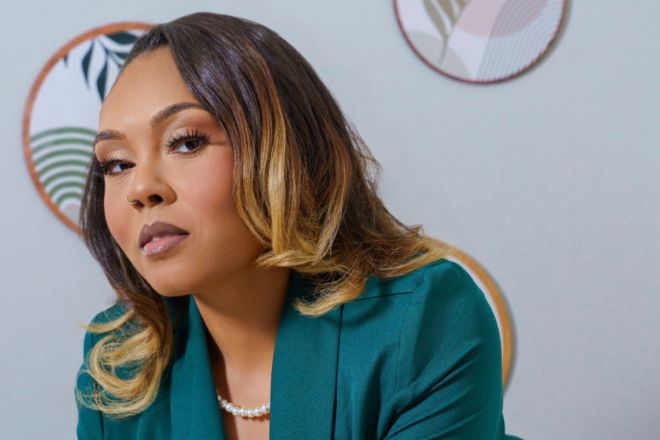
For many, 1996’s film adaptation of Matilda is a childhood staple with equal parts magic, mischief, and memory. For Kiami Davael, who played Lavender at just eight years old, it was the beginning of a life that would unfold far beyond what audiences ever saw onscreen.
Now, with her and Jahmar Hill’s upcoming documentary Lavender: Life After Matilda set to be released later this year, Davael is offering something far more personal than nostalgia. The film, she explains, is not a retrospective of fame but an excavation of truth.
“This is about Kiami…you know, this is about Kiami’s story, Kiami’s journey…all that I have been through, the ups and downs, the lessons that I have learned,” she shared with MadameNoire in a recent conversation. “We’re just getting raw and real into the nitty-gritty and answering people’s questions about ‘where has Kiami been?’”
What emerges from that reflection is a layered understanding of what it actually means to grow up in Hollywood—especially as a Black girl navigating visibility, vulnerability, and transition in real time. Here are 10 things Davael says she wishes she knew before becoming a child star.
RELATED CONTENT: ‘Too Young!’ Nickelodeon Child Star Kianna Underwood Remembered By Fans After Fatal Brooklyn Hit-And-Run
Childhood Fame Doesn’t Prepare You for Rejection
Davael still speaks about her early years in entertainment with genuine warmth. For her, acting initially felt less like work and more like finally stepping into the dream she’d carried since toddlerhood. “When I was a kid and just being on set, I was having fun,” she told MadameNoire in a recent chat. “I knew from such an early age this is what I wanted to do. I just knew…’I’m finally able to do what it was that I’ve wanted to do since I was three.’” At the time, she wasn’t thinking about legacy, cultural impact, or the possibility that Matilda would become one of the defining family films of an entire generation. She certainly wasn’t thinking about the emotional consequences of Hollywood’s unpredictability. Looking back, Davael says one of the hardest lessons came when the constant “yeses” eventually stopped.
“One of the things that I probably wish I would have known is how quickly tables can turn,” she explained. “Because you are not always going to get the yeses, and that was the hardest part for me to be able to overcome and deal with because I was, ‘Yes, yes, yes, yes, yes, book, book, book.’ And then sometimes you just get your first taste of rejection, and you don’t know how to act.”

For child actors, rejection doesn’t always register as professional disappointment. Sometimes it lands as personal confusion when validation has become intertwined with opportunity. “And then how quickly it can become a ‘What have you done for me lately?’ type of mentality and type of industry,” she continued.
It’s a reality many former child stars have described over the years: the industry’s affection can feel deeply conditional. One day you’re celebrated everywhere. The next, you’re struggling to understand why the phone stopped ringing. Still, Davael doesn’t necessarily believe children can fully prepare for that emotional whiplash. “I don’t honestly think you can prepare for that, truth be told,” she admitted.
What she does believe is necessary is emotional honesty, communication, and permission for young performers to say when something feels uncomfortable. “If something does not feel right or something is uncomfortable, to have that conversation,” she said. “It starts there. It starts with that communication to say, ‘Hey, I don’t like this. Maybe I’m feeling a way about it.’”
That lesson feels particularly urgent in today’s entertainment, where it’s easier for children to become famous through social media. It has unfortunately created a wild west situation when it comes to their protection.
RELATED CONTENT: Boots On The Ground, Questions In The Air: Are We Doing Right By Ms. Shirley And Our Viral Kids? [Op-Ed]
No One Tells Child Stars They’ll Eventually Need to Reinvent Themselves
Perhaps one of the most powerful reflections from Davael came when discussing adulthood and learning how to create opportunities for herself instead of waiting for them. “I wish I would’ve done it sooner,” she said immediately.
As the entertainment industry shifted toward social media visibility and personal branding, Davael realized she had to evolve too. “I was still stuck in the, ‘Well, I didn’t have to do that, so I’m not interested in that. I just want to perform.’” Eventually, she recognized the importance of adapting without abandoning herself. “Create your own yes,” she said firmly. “Create your own pathways.” That mindset led her into directing, producing, writing, mentoring, and now documentary storytelling.
Her background in psychology also helped reshape how she understood both herself and the industry around her. Davael earned a bachelor’s degree in psychology after discovering a fascination with understanding human behavior and emotional responses. “It helped me understand not only me better just as growing up and some of the decisions and the choices that I made,” she explained. More importantly, it helped her become more intentional about how she responds to life. “Is this a response from emotion? Is this a response from trauma? Is this a response from the situation just being what it is?” Those questions now guide how she navigates adulthood, artistry, and healing.
Healing Is Part of the Story, Too
This is ultimately what makes Lavender: Life After Matilda feel bigger than a nostalgia grab. Yes, audiences will come to revisit a familiar face from Matilda. Yes, millennials who grew up quoting the movie will tune in to see what happened to Lavender. Underneath all of that is a woman who has spent years learning how to navigate identity, rejection, purpose, and healing in public and private at the same time.
Throughout our conversation, Davael repeatedly returned to the idea of overall growth. She spoke openly about mental health, surrender, and learning how to stop fighting herself. “I truly believe that God will give you the same test with the same lessons until you learn it,” she said. “If you do get out of your own way, you will be able to learn what it is that you need to learn so that you can propel to that next level.”
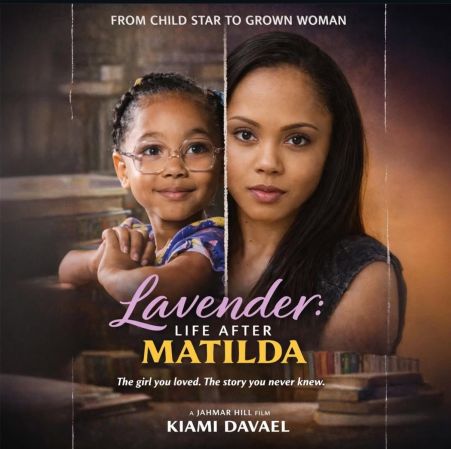
That honesty is the core of the documentary itself. Davael hinted that some of the project’s most emotional moments center around things she had to overcome mentally and emotionally after childhood fame. “There are specific moments where I am touching on different things that I had to overcome mentally and things that I had to work through,” she shared. “Mental health is important. It’s a real thing.”
Faith, throughout our conversation, repeatedly emerged as the anchor holding her steady through reinvention, disappointment, growth, and healing. “I don’t make a move without consulting God first,” she said. Even now, before filming projects, Davael prays. “That’s my foundation.”
Interestingly, she revealed that the documentary itself was never originally her idea. “This actually wasn’t my idea at all,” she said. “Jahmar [Hill] actually had this idea. It was something that came to him, fell into his spirit, and he presented it to me.” At first, she hesitated. Eventually, her faith gave her clarity. “After I prayed about it, and I really just asked God to reveal to me whether this was the right move or not, I felt a sense of peace about it.”
Ultimately, Davael hopes audiences walk away from Lavender: Life After Matilda understanding that healing, growth, and reinvention are all part of the process — even for the people we grew up watching on screen. “I want people to leave knowing that if Kiami can do it, and if Kiami can make it, so can I,” she said. “Because I am no different, I am no better, I am no greater. We just have to do the work.”
RELATED CONTENT: Where Are They Now? Rufio, Nikki From Holiday Heart And Other Child Stars All Grown Up