Dr. Khama Ennis Is Reframing Representation In Medicine
Black Women Make Up Just 2.8% Of U.S. Doctors — Faces Of Medicine Founder Dr. Khama Ennis Is Working To Change That [Exclusive]
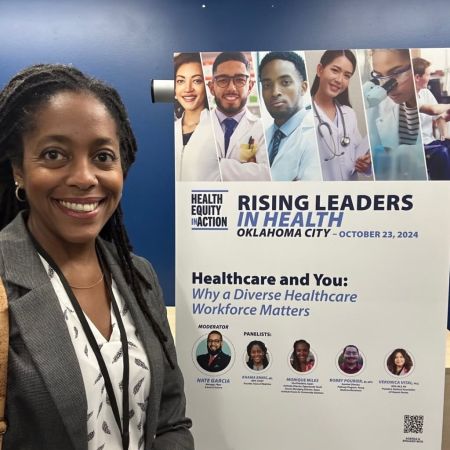
There are moments in a career when a professional title is no longer enough to contain the full weight of what someone is called to do. For Dr. Khama Ennis, that moment came quietly, not in the chaos of an emergency department, but in the realization that spending years as one of the only Black women in the room was not a personal inconvenience. It was a systemic emergency.
An emergency physician and former chief of emergency medicine, Dr. Ennis channeled that recognition into Faces of Medicine, an award-winning documentary series and podcast that pulls back the curtain on the real lives of Black women physicians, not their degrees, but their detours, their doubts, and the doors they had to break through to get where they are. Now, in its second season, the project has earned multiple Telly Awards for social impact and advocacy, and its creator is only getting more focused. In a candid conversation with MadameNoire, Dr. Ennis explains why representation in medicine is not simply a diversity talking point; it is a matter of who lives and who dies.
RELATED CONTENT: These Black Female Physicians Are Ushering In The Next Generation
MadameNoire: How did the absence of representation in your own medical journey become the foundation for Faces of Medicine?
Dr. Khama Ennis: I had tunnel vision, and I just knew from a young age that I wanted to be a doctor, so I didn’t actually explore to figure out how many more people like me were in medicine. I realized it was my last year of medical school, the first time I ever met a Black woman doctor. And then later on in my career, many years in, I’m realizing I’m one of two Black women in the entire hospital that I was at. I needed to make a shift personally, my career shift, and I thought I couldn’t do it, because there was only one other person.
I didn’t want to change or reduce the possibility of patients ever being able to see a Black woman physician, and then I realized that that wasn’t really up to me as a single-handed individual to do. But, if I could create something that could bring more people into the field, we’re only 2.8% of doctors, and that is not nearly enough, I would do it. So that’s how this project was born, to try to show people who look like me, who look like us, ourselves in medicine, so that we know what’s possible. That is our story, too.
Why does the lack of representation in medicine go beyond a diversity conversation and become a life-or-death issue?
There is so much going on in this country right now. There are many things that we could be paying attention to, but I don’t want us to lose sight of the truly awful impact of health disparities, and the likelihood that Black women are going to be 3 or 4 times more likely to die bringing new life into this world than white women. And it’s not about education, it’s not about socioeconomics. I was more likely to die in giving birth to my two children than a white woman who’d finished high school only.
So, these are stories that have been with us for decades, that have been with us since the beginning of this country, and we can’t lose sight of it. The impact is real, both in lived experiences, and also it’s economical, too. It serves our country to have health equity and to make sure that we’re all getting the care that we need, and in all honesty, representation is a huge part of it. It makes a difference in outcomes, and it makes a difference when you have colleagues who don’t look like you, so that you can connect with them, and maybe treat the next person that looks like them differently than you may have otherwise.
Black women make up just 2.8% of physicians in the U.S. What does that statistic fail to capture about the emotional, professional, and psychological weight Black women carry in medicine?
There are so few of us in this space, and there’s also the fact that the statistic has barely shifted in the last couple of decades. When I was starting out, it was probably 2%. We haven’t made that much headway. For me, I was running the emergency department, and I was one of one. Patients get better treatment when there’s diversity in healthcare teams. I often felt like I had to be the person to bring awareness of health equity to the system that I was working in, because it mattered to me for the patients that I was seeing. It matters to me and my family.
This is real. There’s this invisible tax of being the only person in a space and feeling like you’re always the person raising this issue. And you’re doing it in isolation, right? There’s not other people necessarily around, or if there are, there may be one or two. So, you feel very isolated with this extra burden that is in addition to the work of medicine, which is not easy, and it’s not getting any easier in this country.
RELATED CONTENT: 2 Black Women Are Dead After Denied Miscarriage Care—Families Say Texas’ Abortion Ban Is To Blame
What was the moment that pushed you from simply living these experiences to deciding the world needed to hear them in Faces of Medicine?
I was working in the emergency department, and I needed to make a shift for so many reasons. Emergency medicine is wonderful, but it is not good for a person’s sleep. There were lots of things that were going on in my life, and it was time for me to shift gears, and I kept putting off that transition out of the emergency department because of being the only one. I woke up one day and said, the solution isn’t me staying here forever and running myself into the ground. I need to create the space for myself to find my own new path to practice medicine and care for people, but also a different way to share this pathway with people who may not know that it’s accessible.
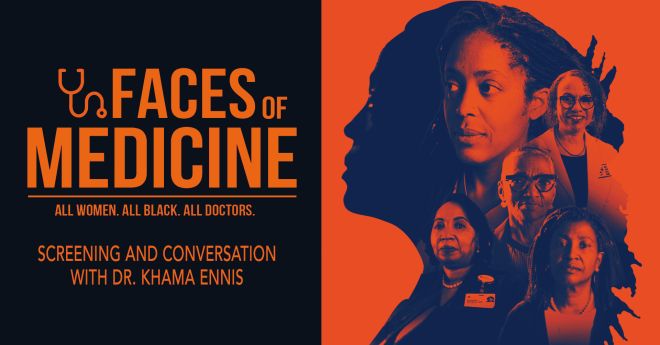
At first, I was going to write a memoir, tell the story of my journey. But to really be able to move the needle, I decided to collect stories from all different perspectives. I wanted to tell the stories of people who are first-generation college graduates, second-generation physicians, people from the East Coast, the West Coast, and in the middle. People from different specialties, people who grew up with 200 years of ancestry in the Deep South, and people like me who are immigrants to this country. And one of the docs who’s going to be profiled, when she first came to this country, there was a portion of her life where she was undocumented. Still here providing medical service, now with all the papers in place. People don’t know that you can have a family that has been damn-near homeless and become a physician. People don’t know that you can take the MCAT three times and become a physician. The path is different for everybody; that is what I really wanted to show.