The Lie I Was Sold as a Church Girl [Op-Ed]
Confessions Of A ‘Good Church Girl’: Like Tina Campbell I Did Everything ‘Right’ — So Why Did I Still End Up Divorced? [Op-Ed]
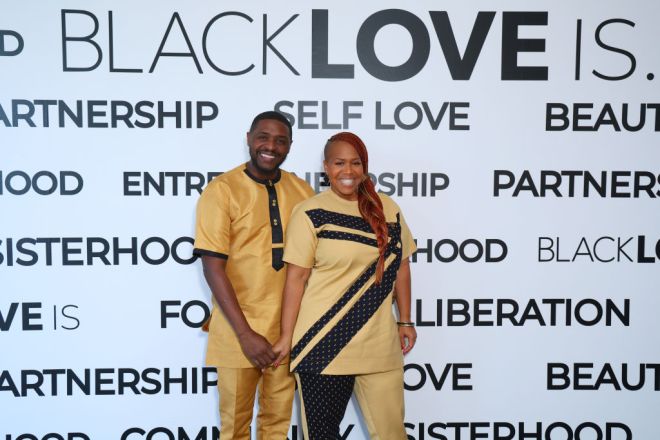
The news about Teddy Campbell filing for divorce from Tina Campbell lands with a kind of cultural déjà vu. After a very public reconciliation following his affair, their story had been held up as proof that faith, forgiveness, and doing things in a Christ-like way could still lead to restoration.
For a lot of Black millennial church girls, that narrative feels familiar. It’s the same The same one I followed.
To be a church girl and not feel “God made this person just for me” when I got married should have been my flag. A small part of 24-year-old me knew that. My intuition was there. It was just quiet. I had not yet learned that it was safe to trust myself over the voices that surrounded me.
I was a good church girl. I did what I was supposed to do, stayed out of trouble, and finished school. I got married and had my children within that marriage. I followed the blueprint I had been handed for as long as I could remember. Still, my marriage ended. That reality forced me to sit with something many Black millennial church girls are now confronting: doing everything “right” does not guarantee forever.
Marriage had always been framed as the natural progression of adulthood. It was not necessarily spoken as pressure, but it existed as expectation. Graduate, get a job, get married, and build a family. Those milestones existed as markers of stability, maturity, and faithfulness. I followed that path.
I got engaged less than a year after graduating from college. I had only lived alone for 10 months before transitioning into marriage. At the time, that felt normal. It felt like momentum. It felt like progress. Looking back, I realize I had barely met myself before I married someone else.
RELATED CONTENT: Lori Harvey Talks Lessons Learned From Dating After Almost Getting Married Too Young
Be Sure to Marry Well
Being a “good church girl” shaped more than my faith. It shaped my identity and expectations of womanhood. It meant being pleasant, meek, and gracious. It meant being demure. It meant being agreeable. It meant understanding that one day, a husband would serve as my covering and the priest of my home.
These ideas were not always framed as restrictive. They were presented as aspirational. They reflected a vision of womanhood rooted in devotion, stability, and faithfulness. Many of us internalized that vision early. Marriage, once again, became the milestone.
No one explicitly said singleness was a failure. Still, if you were single, someone always had a cousin, a friend, or a son they thought you should meet. There was a quiet urgency attached to partnership. What I did not realize at the time was that I was being prepared to marry an archetype, not necessarily to marry aligned. Even if I were,how could I? I knew how to be agreeable. I knew how to be supportive. I knew how to be nurturing. I did not yet know how to be fully myself.
Purity Culture and the Black Millennial Church Girl
Black millennial women came of age during peak purity culture. Pop stars talked about being virgins on international television. Proverbs 31 was everywhere. It showed up in devotionals, sermon series, and women’s conferences. It appeared on journals, wall art, and social media captions. The Proverbs 31 woman became both aspiration and expectation.
At the same time, Christian influencers shaped how many of us viewed marriage and womanhood. Messaging about submission, biblical womanhood, and preparing for marriage circulated widely. Many of us followed her closely, shared her posts, and internalized her teachings.
My upbringing in the Seventh-day Adventist church came with its own version. Jewelry was discouraged, so purity rings were not part of my experience. Instead, we had youth magazines that gave tips on dating as young Adventist adults. These publications emphasized faith, intentionality, and marriage-minded relationships. However, most of the message was consistent across denominations. Marriage was not just encouraged, but also framed as purpose. Looking back, I realize I spent more time preparing to be someone’s wife than learning who I was as an individual.
Marriage Before Self-Discovery
I married young. In hindsight, I can say I was ready for the idea of marriage, not the reality of it. I had just started discovering who I was outside of my parents’ daughter. That discovery was still unfolding after graduating college. While in college, I was reserved. Before my stint in a Christian sorority, I participated in social activities, but I remained measured. I was the girl who pregamed before a school-sanctioned party or went to Adams Morgan with a designated driver. I was not the red Solo cup college girl year-round. I was that girl during the summer, while working as an orientation leader. I was still figuring myself out.
Then I got married.
At the time, compatibility looked like similar faith and similar interests. My ex-husband checked the boxes. He was educated, well employed, and came from parents with their own nice resumes. On paper, it made sense.
Youth, however, has a way of masking deeper incompatibilities. I did not yet understand that compatibility extended beyond shared interests. I did not yet understand the importance of purpose alignment, emotional alignment, and lifestyle alignment. Time would teach me those things.
The moment I realized something was wrong did not come during a dramatic argument. It came during a conversation with a longtime friend who had known me since I was a teenager. They told me they did not recognize me anymore. There was too much truth in that, since I realized I did not recognize myself either. That realization was unshakable. It showed up in the way I moved through my days. I had lost myself, which is extremely easy to do when you don’t know who you are at your core.
RELATED CONTENT: Female Pastor To Women In Congregation, ‘You Better Wear Your Wig’ To Find Husbands
Divorce and the Death of Old Versions
My identity as a “good church girl” influenced how long I stayed. Divorce carried stigma. I had the example of a two-parent household. I believed marriage required perseverance. Over time, however, perseverance began to feel like survival. Life already brings challenges to marriage. Parents age and pass on, jobs lay you off, children need support, and the most unexpected catastrophes happen. Adding constant conflict to that list began to feel unnecessary. No one should hate coming home to their spouse.
We split when I was 31 and divorce brought awkwardness. Some of our mutual friendships faded. The shift in identity was noticeable. I had done everything “right,” yet I found myself divorced. I was angry. I was angry at God. I followed the blueprint. Still, my marriage ended.
I once believed divorce meant failure. Over time, I began to see it differently. Marriage is often framed as lasting until death. I began to wonder what happens when the old versions of ourselves die. Does that count as death? What happens when we evolve beyond the decisions we made before we knew ourselves?

I started appreciating the created space for growth that came with divorce. After divorce, I rediscovered parts of myself that had gone quiet. I returned to journaling and writing poetry again. I rediscovered fashion.
My wardrobe had evolved over time. There was the good girl wardrobe. Then the girl-next-door wardrobe. Then the modest wife-and-mom wardrobe. After separation, I began experimenting again.
I also rediscovered my love for being outside. Even as an introvert, I enjoy exploring new places. I realized I was getting back to myself when I bought two tickets to PJ Morton’s Maryland stop on the Paul tour. I did not know who would join me. I did not care. I wanted to be there, so I would be. I was choosing myself again.
From “Equally Yoked” to Aligned
The same way many of us married around the same time, many of us divorced around the same time. Women who once posted “Dear Future Husband” began reassessing marriage. Some gave themselves permission to explore life differently. Some questioned what the church framed as “good catches.” Divorce created space for many of us to choose differently.
In the time since my divorce, I have had one of the best seats for observing. As I am trying to reinvent myself, I am watching the women who chose to go against the status quo in the first place. They hypothesized what would happen “if I don’t get married by 25,” or “ if I wait until my late 30s to start having kids”–and publicly, thanks to social media. They knew they’d be okay, but now there is evidence. I knew that in the face of whatever divorced life would bring me, I would also be okay. Knowing myself enough to understand what alignment looks like means I am more than okay.
Alignment now means moving in the same direction. Purpose alignment means supporting each other’s goals. Emotional alignment means accountability and emotional intelligence. Lifestyle alignment means not having to convince someone to let you live the life you want. Choosing alignment changed everything.