There’s a new, and admittedly frustrating, side effect making headlines for people taking GLP-1 weight-loss medications like Ozempic, Wegovy, and Mounjaro: hair loss. Before you panic and start eyeing your hairbrush suspiciously, there’s an important distinction to make. Experts say the medications themselves aren’t necessarily directly causing the hair loss, but there is a strong association between GLP-1 medications, rapid weight loss and hair shedding. Here’s why.
According to Dr. Lauren Kole, who spoke with HuffPost about the issue on Aug. 9, GLP-1 medications can trigger hair shedding because of the rapid physical stress placed on the body, along with sudden calorie or nutrient deficits that can accompany fast weight loss. This can lead to a common and usually temporary form of hair loss called telogen effluvium.
Telogen effluvium happens when a shock, stressor, or significant change in the body pushes a large number of hair follicles into their resting phase. Then, two to three months later, those hairs can shed all at once, which can make it seem like your hair suddenly decided to stage a mass exodus.
The good news? This type of hair loss is typically temporary, and hair generally grows back within six to 12 months.
“The most common reason [for hair loss] is a condition called telogen effluvium, which is when any type of stress on the body can cause the body to stop focusing on what it considers superfluous or unnecessary, such as hair growth, and focus on reducing that stress,” explained Kole, an associate professor of dermatology at the University of Alabama at Birmingham, to HuffPost.
Source: SUMAR TOYO / Getty
“GLP-1s cause stress on the body because of the rapid weight loss, and that rapid weight loss will trigger that telogen effluvium,” she added.
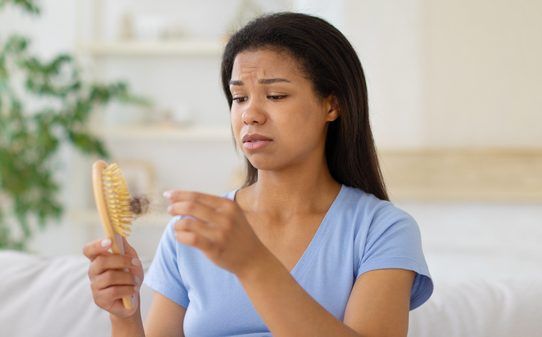
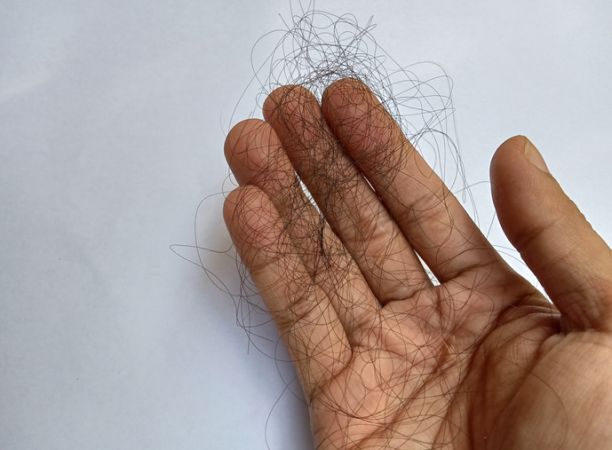
The shedding typically happens over the course of a few months. Many people first notice it when they’re brushing their hair, washing it in the shower, or — perhaps most terrifyingly — discovering a little more hair than usual on their bathroom floor.
Dr. Daniel Bessesen, a professor of medicine in endocrinology, metabolism, and diabetes at the University of Colorado Anschutz, said people often notice the shedding during everyday hair care. The reassuring part is that this GLP-1-associated hair loss generally doesn’t last forever.
“Typically, as time goes by, people will notice that hair loss is slowing down,” Bessesen added to HuffPost.
So, is there actually a connection?
Research suggests there is.
A 2025 study, published on the preprint server medRxiv, analyzed data from more than 1,900 people who were prescribed semaglutide and compared them with about 1,300 people taking an older weight-loss medication, bupropion-naltrexone (Contrave).
Semaglutide belongs to a class of medications called glucagon-like peptide-1 (GLP-1) receptor agonists. These medications work by slowing the movement of food through the gut while also signaling to the brain that you’re less hungry. The result? You may eat less and feel fuller for longer.
The researchers specifically focused on people taking Wegovy, which is approved by the Food and Drug Administration (FDA) to treat obesity. Ozempic is also FDA-approved, but it is technically indicated for blood-sugar management in people with type 2 diabetes.
When researchers examined hair-loss diagnoses in medical records, they found that people taking semaglutide had a 50% higher chance of being diagnosed with a hair-loss condition. Among women, the risk was approximately twice as high as it was among men.
However, the researchers stressed that more testing was needed to fully understand the connection.
And then came the 2026 research.
A newer study released in July looked at more than 12,000 people with Type 2 Diabetes who started taking GLP-1 medications and compared them with people taking other types of diabetes medications. The researchers found that people taking GLP-1 medications had a higher chance of developing hair loss (alopecia) than those taking blood sugar medications such as SGLT-2 or DPP-4 inhibitors.
Specifically, the risk was about 37% higher compared with SGLT-2 medications and about 68% higher compared with DPP-4 medications. The increased risk was mainly linked to non-scarring hair loss, which means the hair follicles are not permanently damaged and the hair loss may be reversible. Overall, the study found that GLP-1 medications were associated with an increased risk of this type of hair loss in adults with type 2 diabetes.
Importantly, the researchers noted that the absolute risk was low and that the findings are an association — not proof that GLP-1 medications directly cause hair loss, but its worth watching.
What should you do if you’re experiencing GLP-1 hair loss?
Yes, GLP-1-associated hair shedding can happen. But before you start mourning every strand in your shower drain, take a breath.
For many people, the shedding is related to the rapid weight loss and physical changes happening in the body, rather than permanent damage to the hair follicles. And in cases of telogen effluvium, the hair typically begins to recover once the underlying stressor settles down.
If you’re experiencing significant or persistent hair loss while taking a GLP-1 medication, talk with your doctor. They can help determine what may be contributing to the shedding, including rapid weight loss, inadequate calorie or nutrient intake, or another underlying cause, and figure out the best plan for you.
Because losing weight may be the goal, losing all your hair does not have to be part of the deal.