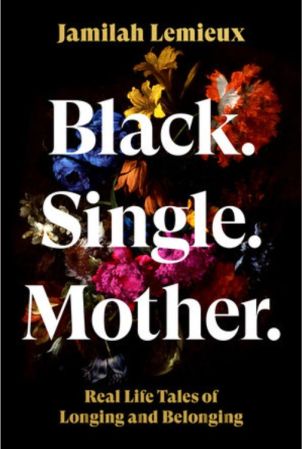
Jamilah Lemieux Talks Debut Book 'Black. Single. Mother.'
‘We Are Not Leftover Women’ — ‘Black. Single. Mother.’ Author Jamilah Lemieux On Love, Labor And Liberation [Exclusive]
In this exclusive interview, Jamilah Lemieux discusses her book 'Black. Single. Mother.,' challenging stigmas and sharing advice on co-parenting, community support, and Black joy.
For decades, the cultural narrative surrounding Black single mothers has been a landscape of jagged edges. These tropes function as strategic tools to coerce Black women into remaining in harmful environments and to rationalize state intrusion into our homes.
Enter Jamilah Lemieux. A powerhouse cultural critic and voice for a generation, Lemieux has spent years disrupting the status quo. Now, with her debut book,Black. Single. Mother., she is doing something radical: she is telling the truth, even when she doesn’t want to. It is the grounded, soul-searching exploration we’ve been waiting for—one that refuses to sacrifice personhood at the altar of parenting. And it’s a book we all should read.
“There wasn’t a book about Black single motherhood that cut through the bullshit,” Lemieux tells MadameNoire in an exclusive interview. “People have talked around and about Black single mothers, but people haven’t talked to us.”
MadameNoire: I have to start with the great Toni Morrison, and her idea that if there is a book you want to read that hasn’t been written, you must write it. What was that missing book for you, and what did it cost to be the one to write it?
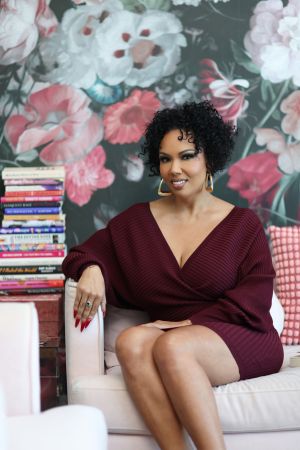
Courtesy of Jamilah Lemieux
Jamilah Lemieux: There was nothing that I could point to in terms of nonfiction books that talked about the ways we have been unfairly maligned and scapegoated for the challenges of our community. I have been talking about writing a book since 2010, but I was afraid that if I wrote a book about being a single mother, I would be a single mother forever. Even though I had gotten past thinking it was a bad thing, it has never been what I wanted for my life.
But when I finally realized this book doesn’t exist, and it needs to, the fact that I’d been so hesitant to write it speaks to why it’s needed. Even someone as evolved as me can still be hung up on the stigma and stereotyping around single motherhood. Somebody finally needed to have the courage or the willingness to be the punching bag and say these things in public.
You talk about how Black single motherhood is often pathologized. What felt most urgent for you to correct regarding how our community views Black motherhood?
One of the biggest misconceptions I wanted to address was this pervasive belief that Black men and boys are so much more disenfranchised than Black women and girls. It has reached a point where we feel we can’t hold them accountable for the way they treat us because we are so busy protecting them from “the system.” There is a loyalty to Black men that Black women have that is largely one-sided, and it starts incredibly early.
From girlhood, I was raised to understand that Black men and boys were, in part, my responsibility. I knew the system was hard on them, so I had to do what I could to protect their mental health, but that is just not a message that most Black boys are getting about us. When Black women and girls are harmed by our men and boys, sometimes they feel like they can’t tell because they don’t want to involve a Black man in a system that targets him.
There is an expectation that motherhood means disappearing into self-sacrifice. How do we resist that pressure to give every part of ourselves to the point of erasure?
You have to be intentional about having that balance between taking care of your child and taking care of yourself—giving your child the best life possible while you’re still living the best life you possibly can. I think my mother was a phenomenal mother, but I wish I had seen her prioritize herself more and develop a life outside of me. She fully believed she could not have children, so she was going to take care of her “miracle,” but I have simply made different choices. It’s important that daughters see mothers enjoying life and having a love life.
I had an uncomfortable moment recently where I had to put my foot down and tell my daughter, “No, I’m not coming to pick you up. You have to go with your dad.” I had work to do, I was moving, and I had tickets to see a group I love. It didn’t feel good, but I knew I wouldn’t be my best self doing school drop-off at 7:30 AM after staying out late. We have to resist the idea that we are somehow irredeemable or discarded women who no longer have a right to be happy.
You’ve been very open about your co-parenting relationship. How did you navigate the shift from being an “ex” to being partners in raising your daughter?
My daughter’s father and I were broken up when we found out I was pregnant. Even when things were difficult and painful for me, I was committed to ensuring our daughter had a great experience with both of us. I had been scared of 50/50 custody her whole life because I thought it would make me less of a mother, but I relented, and it’s been great. It’s allowed me the space to pursue my career, date, and do things like stand-up comedy while allowing her to have a strong relationship with a hands-on dad.
When you stop thinking of them as your ex and think of them as your child’s parent, that is the proper context. Our relationship is no longer the result of what happened between us; it is based on the future of our child. Having a child every other weekend is not co-parenting; that’s just taking the kids to IHOP. You need to be the one getting your kid up and taking them to school. I think co-parenting is the future, involving dads who are beyond just “visiting,” but are actually tying shoes and cooking breakfast.
Why was it essential to include themes of pleasure and support in a book about single parenting?
Regardless of the circumstances of our children’s births, we deserve pleasure. We are not “leftover” women who no longer have a right to be happy; we need time to date, time to masturbate, and time to rest. I think the quality of my motherhood was at its worst during COVID because I was isolated and I didn’t have a space for release. Part of the point of writing this book is not just to help Black single mothers see themselves, but to put a call out to the rest of the world to step up for them.
Real support is a $75 DoorDash gift card so she doesn’t have to cook, or coming over just to keep her company while she straightens up. If you’re able to take something small off a single mother’s plate, or give her the gift of a couple of hours, that’ll go a long way. We need to tell her, “I see you. You’re doing great. I’m proud of you.” Emotional support and material support—the “coins”—are equally essential to our survival.
How do you see the future of the Black family evolving?
I think we will see more non-traditional models of family in the years to come, like two besties deciding to be moms together because they love each other and both want to parent. We will also continue to see more single moms by choice. I think more women than we acknowledge have gone into single parenthood fully knowing they were going to be doing at the very least the majority of the work.
It is a radical act for a Black woman to choose this intentionally in a world that tries to choose for us. I hear women saying online that they’re confident they want to be mothers, but ambivalent about being wives. I still believe in marriage, but I am more clear than ever that it is not the only ticket to happiness for a woman and her family. The dating pool has gotten so mean-spirited and lazy that women are realizing they don’t have to punish themselves or be beholden to one specific idea of family. We are finding that “elusive path” to happiness on our own terms.
As Jamilah speaks, it becomes clear that Black. Single. Mother. is a reclamation. It is an assertion that Black women’s autonomy, even in motherhood, is a site of power. By centering the dignity of the single mother, Lemieux isn’t just shifting the narrative—she’s inviting us to imagine a world where every Black woman has the right to be whole, supported, and unapologetically happy.