10 Times Jesse Jackson Stood Up For Black Women
10 Powerful Times Jesse Jackson Stood Up For Black Women - Page 9
On Feb. 17, the legendary Rev. Jesse Jackson died “peacefully” at 84, surrounded by family, according to a statement shared on the civil rights leader’s Rainbow PUSH Coalition website. His passing marks the end of an era for one of the most enduring figures in the fight for social justice.
In their statement, his family reflected on a life defined by service, noting that his unwavering commitment to justice, equality, and human rights helped shape a global movement for freedom and dignity. From his historic presidential campaigns in the 1980s to mobilizing millions of new voters, Jackson’s work as a tireless advocate for change left a powerful imprint on American political and cultural life.
“Our father was a servant leader — not only to our family, but to the oppressed, the voiceless, and the overlooked around the world,” the Jackson family said in a statement. “We shared him with the world, and in return, the world became part of our extended family. His unwavering belief in justice, equality, and love uplifted millions, and we ask you to honor his memory by continuing the fight for the values he lived by.”
For more than six decades, Rev. Jesse Jackson has been one of the most visible civil rights leaders in America, but one part of his legacy is too often overlooked: his consistent advocacy for Black women. From politics to labor rights to media representation, Jackson has repeatedly used his platform to uplift and defend Black women who were ignored, minimized, or under attack.
MORE: Black Female Athletes Owning Their Worth In The NIL Era
Here are 10 powerful moments that reveal the depth of his commitment and the impact of his support for Black women far and wide.
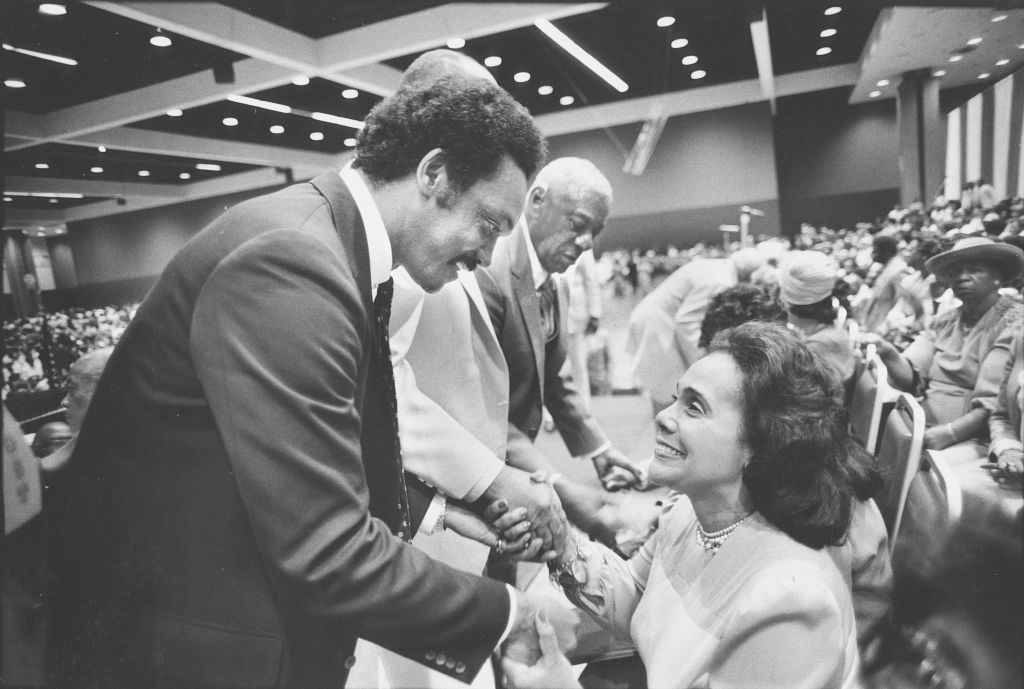
He stood with Coretta Scott King after Dr. Martin Luther King Jr.’s Assassination.
Jesse Jackson carried the devastating responsibility of informing Coretta Scott King that her husband had been shot. As reported by The Guardian, Jackson, King, and several civil rights leaders were staying at the Lorraine Motel in Memphis in 1968 while supporting striking Black sanitation workers seeking safer conditions and fair wages after two colleagues were crushed in a garbage truck. Around 6 p.m., the group was preparing to leave for dinner.
King was standing on the balcony outside Room 306. Jackson, who was in the parking lot eight feet below, later recalled their final exchange, “He said, ‘You’re late for dinner … You don’t even have on a shirt and tie.’ I said, ‘Doc, the prerequisite for eating is appetite, not a tie.’ He laughed and said, ‘You’re crazy.’ We joked around that way.”
Moments later, a bullet struck King.
“It was so instant,” Jackson said. “I think Dr. King was gone at that point.”
Jackson, who had joined Dr. King and the Southern Christian Leadership Conference (SCLC) in 1965, walked back to his room and phoned Coretta. He told her that King had been shot in the shoulder.
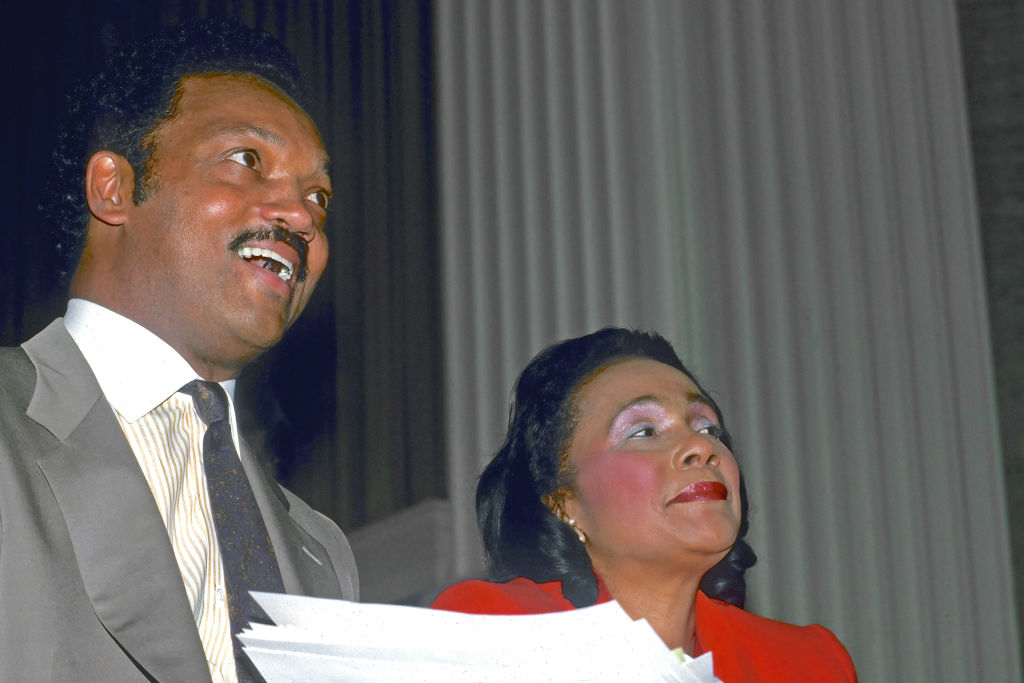
“I couldn’t really say what I had seen,” Jackson explained. He described Coretta’s strength, saying, “She had a certain resolve… She knew the price you paid for trying to make America better… She’d made peace with it over a 13-year period.”
In the aftermath, Jackson said he was determined to “not let one bullet kill the movement,” that Dr. King built, according to the Providence Journal. He added, “Many people who resented him as a marcher raised him up as a martyr… They rejected him in flesh and blood, but now resurrect him in monument and stone.”
While others attempted to sideline Coretta politically, Jesse Jackson publicly reinforced her leadership and activism. His support helped solidify her standing as a central force in the movement. Jackson continued carrying SCLC’s legacy until he left in 1971 to found PUSH, while Coretta continued leading the King Center; they often marched together to preserve Dr. King’s legacy.
Here are nine other times Jesse Jackson stood up, advocated, and supported Black women.
RELATED: From Shirley To Sheffield: 13 Big Wins That Changed The Game For Black Women In Politics
1. Fighting for Black Women Workers Through Operation PUSH.
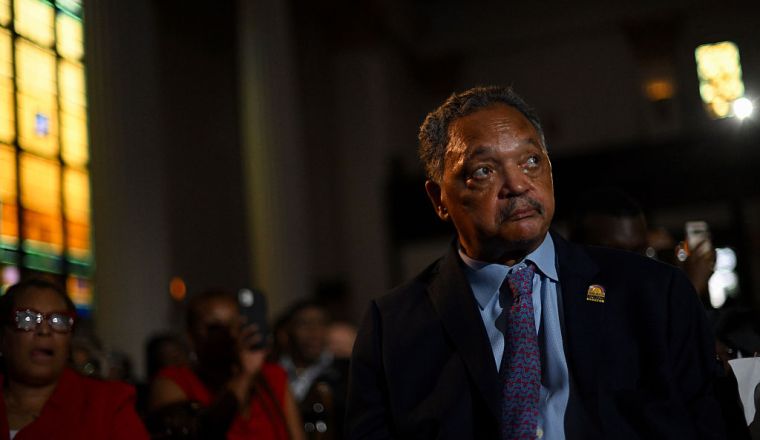
Through Operation PUSH, Jackson mounted national campaigns against corporate hiring discrimination, pay gaps, and workplace inequities, issues that disproportionately burdened Black women in low-wage jobs.
According to the Chicago Public Library, a major foundation of this work grew out of SCLC’s Operation Breadbasket, which prioritized negotiation with business leaders. When companies failed to act, ministers turned to their congregations for economic boycotts. From the pulpit, they urged community members to think critically about spending money with businesses that profited from Black communities while refusing to hire them.
These efforts sparked widespread “Don’t Buy” campaigns — short for Don’t Buy Where You Can’t Work — marked by picketing in front of major supermarkets and retailers. The message was clear: fair employment was non-negotiable.
“Keep a slice of the ‘bread’ in your community” became Breadbasket’s slogan, capturing its mission of economic justice and empowerment.
These initiatives led to increases in hiring and promotion for Black workers, including Black women who were historically shut out of corporate pathways.
2. Uplifting Black Mothers Fighting for Justice.
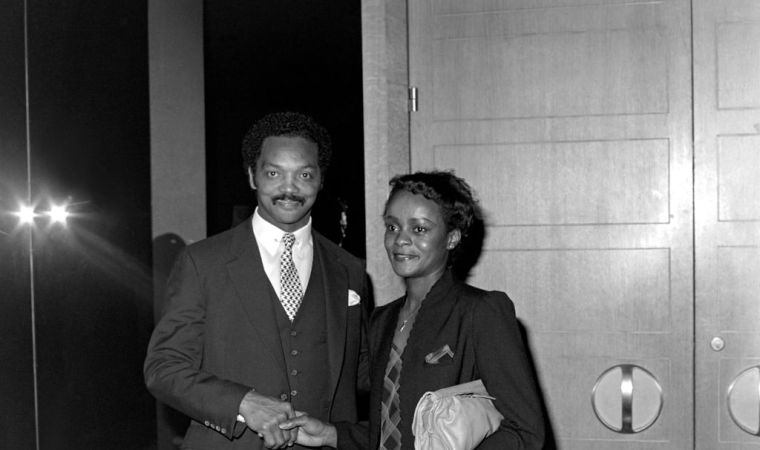
Long before social media amplified the stories of grieving families, Jackson stood beside Black mothers whose children were victims of racial violence or police brutality. His presence in cases throughout the 1980s — and again in 2012 with Sybrina Fulton after the killing of Trayvon Martin — helped generate national attention for Black women fighting for justice.
By lending visibility, media access, and political pressure, Jackson helped elevate their voices during moments when Black mothers were often ignored by government and law enforcement.
3. Defending Anita Hill During the Clarence Thomas Hearings.
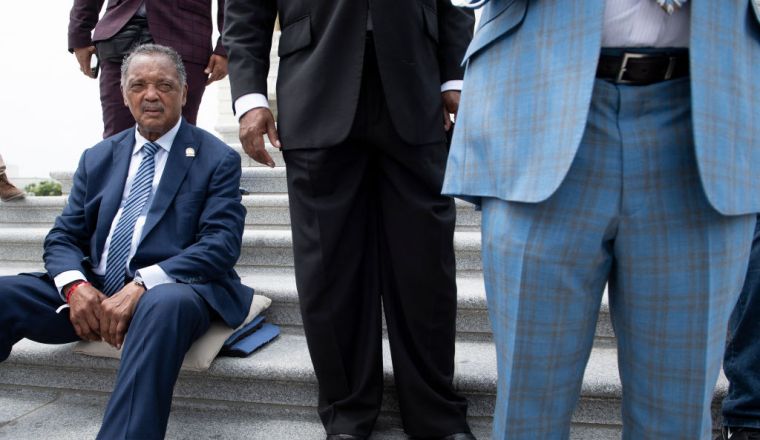
In 1991, as Anita Hill faced public interrogation over her allegations of sexual harassment against Supreme Court nominee Clarence Thomas, Jackson was one of the few prominent male civil-rights leaders who firmly defended her right to be heard. He publicly insisted that her testimony deserved respect — even calling out Democrats who remained silent.
Jackson told the Los Angeles Times:
“The Democrats were sitting there paralyzed as soon as he raised the issue of racism. President Bush dropped a hammer on this woman, who was calm, composed, coherent, and credible. So where were the Democrats to defend her, those on the committee, and where was George Mitchell, the Senate Democratic leader?”
His willingness to challenge both parties placed him among the earliest defenders of Black women confronting sexual violence on a national stage.
4. Advocating for Black Women in Hollywood & the Media.
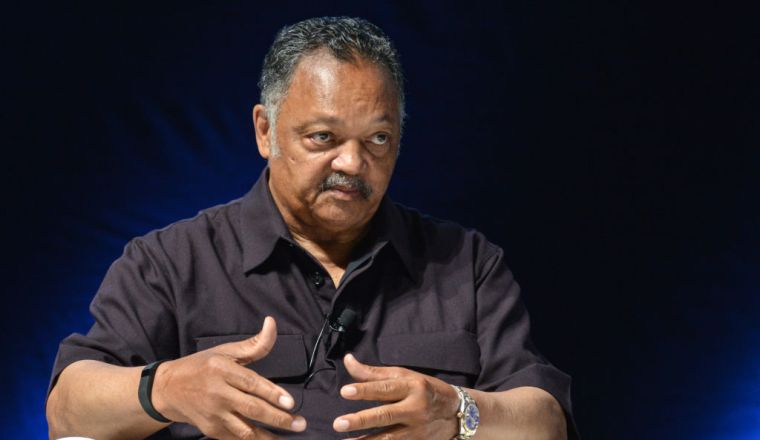
Jackson pushed the entertainment industry to confront systemic exclusion. Through the Rainbow PUSH Media Project in the early 2000s, he urged studios and networks to expand hiring for Black writers, actresses, and executives.
His advocacy actually began earlier: during his 1996 activism, Jackson organized protests — including a call for attendees to wear rainbow pins at the Academy Awards — demanding an end to Hollywood’s lack of diversity. Jackson also met directly with studio executives and threatened boycotts until representation and hiring practices for minorities changed, eventually agreeing on a pact called the Rainbow Covenant, according to CNN.
His commitment continued into the 2010s. Speaking at Cannes Lions in 2017, Jackson criticized Hollywood and Silicon Valley for failing to diversify, urging advertisers and tech leaders to use their platforms to drive cultural change.
He said, according to the Hollywood Reporter, “For too long, Hollywood has stereotyped people in ways that have either damaged the culture or been indifferent to change.”
He added that depictions of Native Americans and Africans were especially troubling, concluding, “Hollywood must open up and tell the truth and be inclusive to who can bring films. It needs to tell more positive, Schindler’s List-type stories with a broader base.”
5. Helped to put a Black Woman in One of Coca-Cola’s Highest Executive Roles.

In 1981, Jackson publicly criticized Coca-Cola at a shareholders’ meeting for its lack of diversity in management and for failing to hire and promote Black workers. PUSH launched a boycott, pressuring the company to adopt sweeping reforms. Coca-Cola ultimately agreed to a $30 million program to increase Black participation across its operations.
According to UPI, the company and Operation PUSH reached what Jackson called a “moral covenant”, which funneled “more than $30 million into Black businesses and the Black community” on behalf of Coca-Cola.
Shortly after, Coca-Cola promoted Ingrid Saunders Jones to Senior Vice President of Corporate External Affairs, making her the highest-ranking Black woman in the company.
Jones went on to transform the company’s global philanthropic footprint, overseeing initiatives in water stewardship, healthy living, recycling, and education. Under her leadership, The Coca-Cola Foundation distributed more than $500 million to community organizations worldwide until her retirement in 2013, according to the brand’s website.
6. Championing Black Women in Politics, From Carol Moseley Braun to Stacey Abrams.
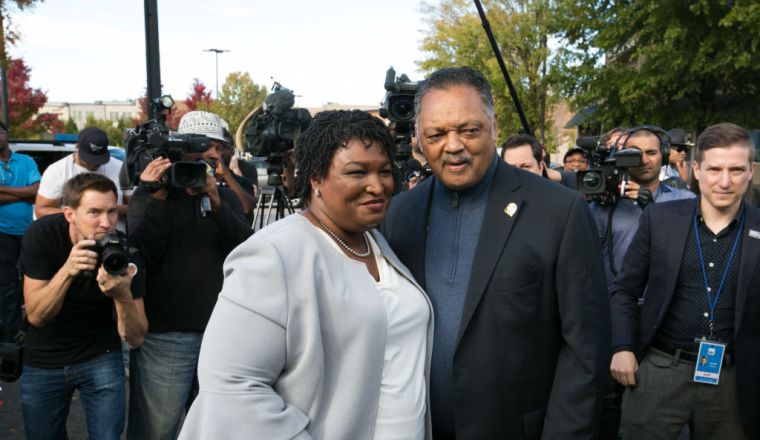
Jackson has long supported Black women in political leadership, endorsing candidates such as Carol Moseley Braun in Chicago’s 2011 mayoral race and backing Stacey Abrams during her voting rights mobilization and 2018 gubernatorial run.
Notably, during the 2018 Georgia election, Jackson visited polling sites to spotlight voter suppression concerns. At the Pittman Recreational Center in Southwest Atlanta, he reported long lines and limited machines, saying he witnessed “about 300 people, standing in line, waiting to cast ballots on just three voting machines,” according to a Facebook post.
He publicly criticized Brian Kemp’s refusal to step down as Secretary of State while running for governor and declared, “We Won’t Allow Anyone to Steal Our Rights or Our Democracy.”
His activism strengthened national scrutiny on efforts that disproportionately impacted Black women voters.
7. Calling Out Misogynoir in Hip-Hop and Media.
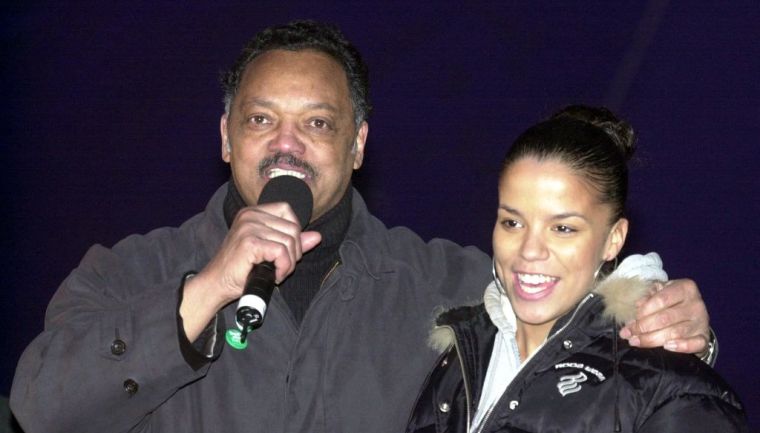
Throughout the 2000s, Jackson condemned the growing trend of misogynistic and demeaning portrayals of Black women in music and media. In a 2014 interview with Sway, he affirmed that artists hold tremendous power but must use it responsibly. He warned that using slurs and perpetuating violence against Black women undermines cultural progress.
Jackson said that artists have the power to emancipate but also “have the power to be negative,” and he stressed that while rap had become less violent, “there’s never a justification for self-denigration.” He added, “Music and art almost must always be uplifting, inspiring, and uplifting you.”
8. Giving Credit to Black Women’s Influence — Including His Mother, Helen Burns.
![Helen Burns [& Family];Jesse L. Jackson [& Family];Jesse L. Jackson](https://madamenoire.com/wp-content/uploads/sites/9/2025/11/17634965942549.jpg?w=300&strip=all&quality=80)
Jackson often speaks about the profound influence of Black women on his life and activism, beginning with his mother, Helen Burns. After her passing in 2015 at age 92, he reflected on her incredible impact.
“She was an incredible woman blessed with a long life,” Jackson told CBS News. He described her as a gifted musician, a committed church member, and a model of service. Born in 1923, she “lived under very trying circumstances, but she was so determined to make a contribution,” he said.
Jackson kept the love flowing about his mother, telling the Greenville News that same year, “She helped a lot of people… I need my hair to be dressed, but I don’t have any money.’ She would say, ‘Come on anyhow.'”
He also remembered how she assisted neighbors who were unable to read or write by helping them complete government paperwork. Her compassion and resilience deeply shaped his own commitment to community service and justice.
9. Jesse Jackson praised Kamala Harris when she became Vice President in 2021.
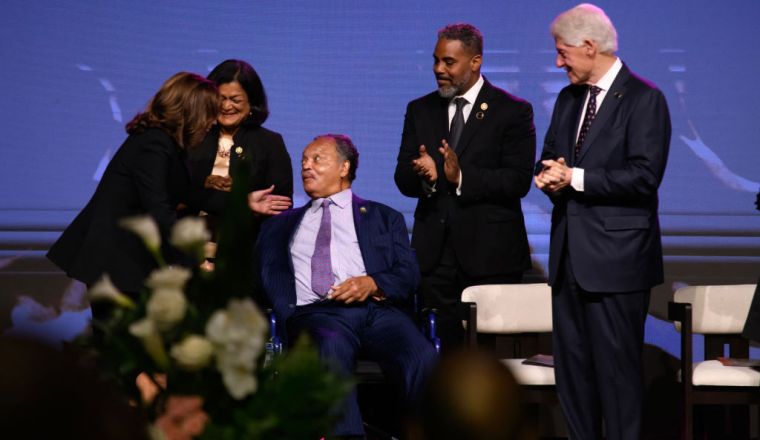
Jesse Jackson praised Kamala Harris in 2021 for making history as the first Black and South Asian Vice President.
“I’m hopeful in the leadership now, and the Cabinet members are just excellent, diverse, and very well qualified. And of course, Kamala Harris, she is something special to me,” said Jackson at the time, according to BET. Notably, Harris was a supporter of Jackson’s presidential campaign in the ‘80s.
“When I ran in 1984, they said a Black president was a joke. Then in ’08 when Barack [Obama] did win, we had to knock a lot of bushes down and take it on to the end zone, and to see Kamala Harris now just makes my heart rejoice. She will do well for the nation,” he added.
RELATED CONTENT: World Parkinson’s Day: 5 Black Celebrities With Parkinson’s Disease