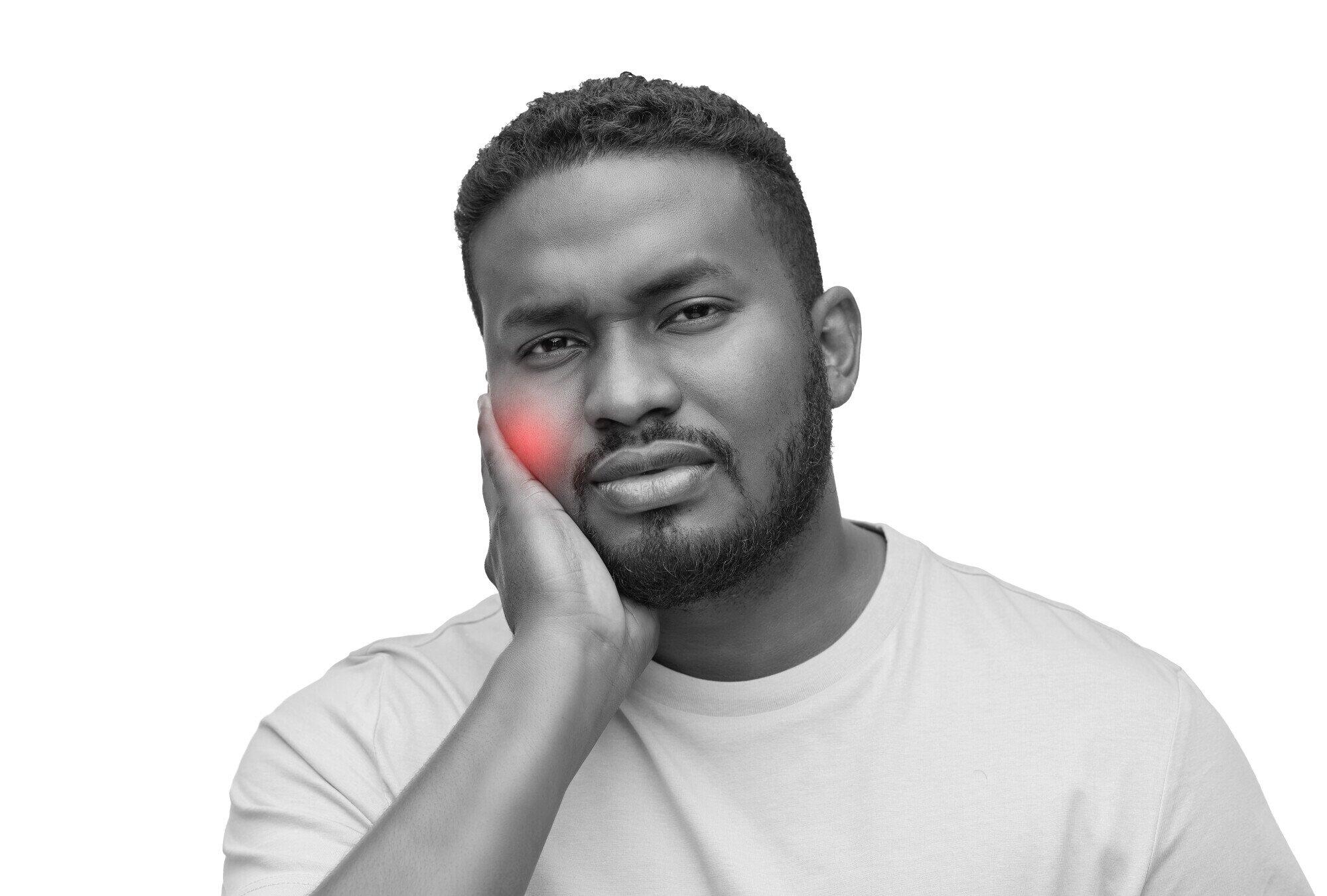
ShutterStock royalty-free image #1838431528, ‘people, dentistry and health problem concept – african american man suffering from toothache over white background’ uploaded by user #301539971, retrieved from ShutterStock on June 8th, 2023. License details available at https://www.shutterstock.com/license, image licensed under the ShutterStock Standard Image License
Some health challenges that follow jaw trauma are changes in bite alignment, difficulty eating, headaches, facial tension, and poor sleep quality, all of which can appear right away after the injury or gradually over time.
Jaw injuries are usually associated with symptoms such as pain, swelling, bruising, and difficulty chewing. Whatever the reason for your jaw injury, be it a car accident, a sports injury, a workplace accident, or a fall, trauma to the jaw can be painful and disruptive, and needs to be dealt with the right way the first time around.
Even if your initial injury feels healed, it might not be, and you might have lasting repercussions. In some cases, individuals develop ongoing health challenges that emerge gradually over time. These oral trauma complications may affect daily activities such as eating, speaking, sleeping, and even overall well-being.
One of the most common lingering effects of facial trauma is chronic pain.
While some discomfort is expected during the recovery process, pain that continues for weeks, months, or even years may indicate underlying issues. Damage to various body parts can sometimes create ongoing discomfort long after visible injuries have resolved, such as:
Muscles
Ligaments
Joints
Surrounding tissues
Chronic jaw pain may worsen during activities such as:
Chewing
Talking
Yawning
Clenching the teeth
In some cases, pain may radiate to the:
Face
Neck
Shoulders
Ears
Because symptoms can develop gradually, some individuals may not immediately connect them to a previous injury.
Temporomandibular Joint Problems May Emerge
The temporomandibular joints, commonly called TMJs, connect the jawbone to the skull and allow the jaw to move properly.
Trauma can sometimes affect these joints, leading to a variety of functional issues. Individuals may experience:
Clicking
Popping
Grinding sensations
Jaw stiffness
Difficulty opening and closing the mouth
These symptoms are often associated with temporomandibular disorders, which may develop after injury to the jaw or surrounding structures.
When jaw movement becomes restricted or uncomfortable, everyday activities can become more challenging.
Changes in Bite Alignment Can Affect Oral Health
Jaw trauma has the potential to alter the alignment of the teeth and bite.
Even small changes in how the upper and lower teeth fit together can affect chewing efficiency and place additional strain on jaw muscles and joints. Some individuals notice that their bite feels different following an injury, while others may experience gradual changes over time.
Misalignment can sometimes contribute to:
Uneven tooth wear
Increased pressure on certain teeth
Ongoing discomfort
Monitoring changes in bite function can be an important part of long-term injury recovery.
Difficulty Eating May Impact Nutrition
Source: Yuliia Kaveshnikova / Getty
The jaw plays a critical role in chewing and food preparation.
When trauma results in pain, limited mobility, or bite problems, individuals may begin avoiding certain foods that are difficult to chew. Hard, crunchy, or fibrous foods may become uncomfortable to eat.
Over time, these dietary adjustments could potentially affect nutritional intake if not managed carefully. Maintaining a balanced diet can become more challenging when eating causes discomfort or fatigue.
In some cases, nutritional concerns may emerge as an indirect consequence of jaw-related problems.
Headaches and Facial Tension Are Common Complaints
Many individuals who experience jaw trauma later report post-trauma health effects like recurring headaches or facial muscle tension.
The muscles that control jaw movement are closely connected to other structures throughout the head and neck. When jaw function becomes disrupted, surrounding muscles may compensate, leading to increased strain.
This tension can contribute to:
Headaches
Facial discomfort
Neck pain
General muscle fatigue
Because these symptoms often resemble other conditions, the connection to a prior jaw injury may not always be immediately recognized.
Sleep Quality May Be Affected
Jaw-related issues can sometimes interfere with sleep, which is unfortunate because most Americans (around 40%, according to the CDC) are already dealing with sleep disorders.
Pain, muscle tension, teeth grinding, and joint discomfort may make it more difficult to achieve restful sleep. Some individuals may unconsciously clench their jaw during the night, which can further aggravate symptoms.
Poor sleep quality can create additional challenges, including:
Daytime fatigue
Reduced concentration
Irritability
Decreased overall well-being
Addressing TMD may help improve both comfort and sleep quality, which is crucial when you are healing from a painful jaw injury, a car accident, or some other traumatizing event.
Frequently Asked Questions
Are There Any Emotional and Psychological Effects of Jaw Trauma?
Yes, absolutely, there are. You cannot have one without the other. Living with chronic pain or functional limitations can affect emotional health as well.
Individuals experiencing ongoing jaw problems may feel frustrated by persistent symptoms or limitations in daily activities. Social situations involving eating, speaking, or prolonged conversation may become more stressful.
Over time, chronic discomfort can influence:
Mood
Confidence
Overall quality of life
Recognizing the emotional impact of long-term health challenges is an important part of comprehensive recovery.
Does Earlier Attention Reduce or Mitigate Jaw Injury Risks?
Yes, indeed it does. While not every jaw injury leads to long-term complications, it is important to monitor symptoms that persist or worsen after trauma.
Most people assume that if they didn’t get severely injured in a car accident or fall, they are safe. That is not the case, though.
The effects of jaw trauma can sometimes develop gradually, making them easy to overlook. By paying attention to symptoms and seeking appropriate evaluation when concerns arise, individuals may be better positioned to address problems early and support long-term health.
It can reduce jaw injury risks and also mitigate post-trauma health effects.
Protect Yourself After Jaw Trauma
If you are dealing with a jaw injury or any kind of jaw trauma, you probably have no idea how to deal with it on your own. That’s why it’s important to bring in professional help, that is, medical professionals who would be able to treat you with care and experience.
Jaw injuries may heal on the surface, but the hidden challenges that follow can have lasting effects. Please check out related articles on our website for more interesting content on a wide variety of topics.