Was Juliana Nzita's Hanging 'Suicide' A Modern-Day Lynching?
Another Black Child Hanging From A Tree? — Why Juliana Nzita’s ‘Suicide’ Is Stirring Fears Of A Modern-Day Lynching
A community in Charlotte, N.C. is demanding answers and asking the hard questions after Juliana Nzita was found hanging from a tree 11 days after she disappeared.
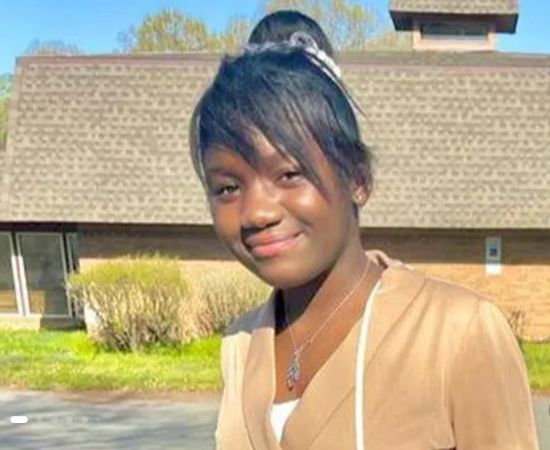
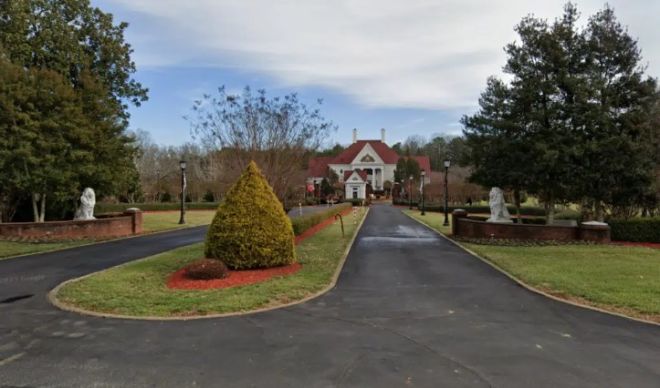
The gruesome discovery of 16-year-old Juliana Nzita’s lifeless body hanging from a tree on the property of the United House of Prayer for All People Church in Charlotte, N.C., on May 8, has left a community heartbroken and forced us all to revisit America’s shameful past.
Juliana, who recently migrated to North Carolina from the Democratic Republic of the Congo and lived with her family, was reported missing on April 28, according to The North Carolina Beat, an independent local news outlet. For nearly two weeks, loved ones and supporters searched for her while online posts and tips spread across social media.
Sadly, the search ended in tragedy on May 8, when Kenneth “Mufasa” Tolbert, a volunteer with Brothers Helping Brothers,found Juliana’s corpse hanging from a tree on the church’s property while walking his dog. According to accounts of the discovery reported by The North Carolina Beat, Tolbert alerted church personnel and then contacted authorities.
“I alerted nearby church members first, then police, and later continued on because I was on my way to the courthouse and under a filing deadline,” he told The North Carolina Beat.
Source: Juliana Nzita / GoFundMe
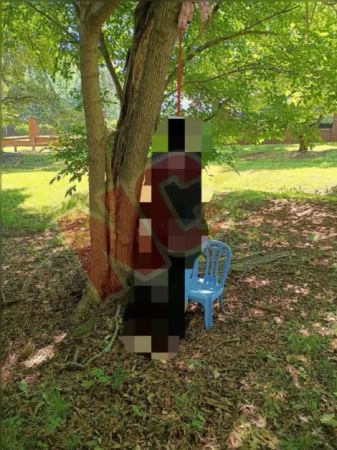
Additionally, he provided the outlet with disturbing video footage taken right after finding the corpse, which showed a small plastic blue chair under a tree with a rope hanging above it and Juliana’s feet grazing the ground. In the video, a church member mentioned checking the same area the previous day, but “didn’t see anything.”
Charlotte-Mecklenburg Police Department officers responded to the scene, and later, a police report officially ruled Juliana’s death a suicide, stating, “On 05/08/2026 at 12:40 p.m., the listed victim was pronounced deceased at this location. This occurred in the 4200 block of West Sugar Creek Road.”
The math ain’t mathin’
Source: The United House of Prayer for All People Church / The North Carolina Beat
The police’s ruling should represent resolution; however, for many community members and those following the case from afar, there are still lingering questions and concerns about how investigators reached their conclusion, the lack of publicly released information, and missing details regarding Juliana’s whereabouts during the 11 days between her disappearance and the discovery of her body.
Another wildly waving red flag, is the fact that the United House of Prayer for All People Church, a massive multisite Apostolic Faith Church with congregations across the country and a history that dates back more than 100 years, has yet to release a statement about Juliana’s death.
Internet detectives have also focused on the physical circumstances at the scene with some critics questioning if Juliana could have hung herself using the blue chair reportedly seen in the video footage based on it’s location. Others have thoroughly reviewed reports describing the position of her body when she was found.
Source: Alleged photo of the scene / The North Carolina Beat
In other words, the math ain’t mathin’ and people, we, I, are demanding more transparency from both law enforcement and church officials.
“Ain’t noway that beautiful babygirl done kills herself like that. That ain’t no thang. Where she gone get a chair and rope out in the woods? Whypepo did this,” commented a user named LaQueefa on The North Carolina Beat.
“Incredibly suspicious,” wrote Jasmine, asking, “Where was she for 10 days? Where did she or someone else get the chair and the rope? How did she reach to get the rope where it was?”
While Veraspresser simply wrote, “Something is rotten in the state of N. Carolina [sad face emojis].”
An act of terror
A new Historic marker detailing lynching in Anne Arundel County and in America at Whitmore Park on Calvert Street is seen September 17, 2019 in Annapolis, MD. The Equal Justice Initiative historical marker is the first installed in Maryland. Source: The Washington Post / Getty
The United States of America, particularly the southern states, has a very dark and deep-rooted history of lynching, which the NAACP defines as “the public killing of an individual who has not received any due process. These executions were often carried out by lawless mobs, though police officers did participate, under the pretext of justice.”
During the 19th and 20th centuries, lynching was a common threat and served as an act of terror intended to spread fear among Black people and ultimately to celebrate and preserve economic, social, and political white supremacy.
We most commonly associate lynchings with images of Black bodies hanging from trees, but they were much more sadistic and savage in nature, usually involving torture, mutilation, desecration, decapitation with some victims being burned alive. What’s worse, lynchings were often public spectacles attended by the white community, who would gather in mass with family and friends to watch the end of a Black person’s life in hopes of improving their own.
Always check your blindspot
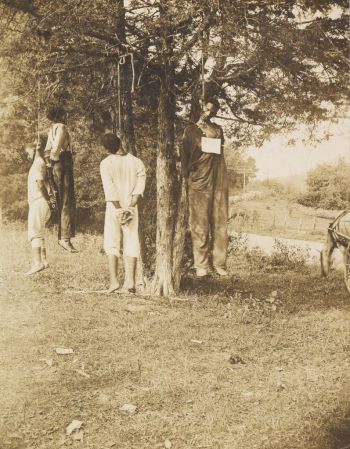
The bodies of four men who were lynched by a mob, Russellville, Kentucky, 1908. Source: Sepia Times / Getty
Most of us would like to believe that the practice of public lynching is far in our rear view, but the truth is that, like a blindspot, it still exists in plain sight. A recent study by JULIAN, a civil rights and international human rights non-profit organization, offers an in-depth analysis of modern-day lynchings (MDLs) that took place from 2000 to 2025. Titled, “Crimson Record” the study attempts to debunk reports that the last lynching in the U.S. took place in 1981. It investigates patterns in suspected lynching cases, which are often ruled as suicides in the Southern states.
The non-profit’s analysis “reveals recurring patterns of violence, systemic neglect, and law enforcement misconduct that echo the racial terror of earlier eras.”
“Lynching has never disappeared — it has adapted, hidden behind silence and indifference,” said JULIAN founder Jill Collen Jefferson per Yahoo News.
The study explains that the difficulty with lynching is that it’s one of the hardest crimes to prove and is usually incorrectly ruled suicide. Modern-day lynchings (MDLs) are defined as “a multiple perpetrator homicide, targeting a group or individual, driven by race, gender identity, or other bias with the intent of causing community terror or carrying out an extrajudicial homicide for a perceived threat or wrongdoing.”
From 2000 to 2025, the study identified more than 70 modern-day lynchings across the seven southern states, Texas, Mississippi, Georgia, Louisiana, Florida, Tennessee, and Alabama. Mississippi reported the highest number, 20, which includes Tory Medley, who was found hanging from a tree in 2025. In fact, in 2021 experts first flagged the rising trend of MDLs in Mississippi, specifically.
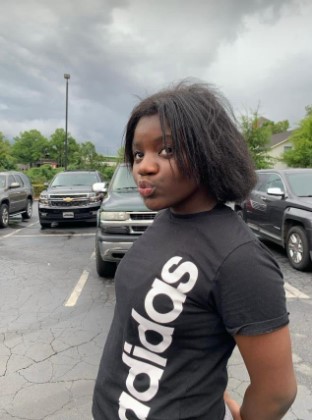
Source: Juliana Nzita / GoFundMe
Still, it’s imperative to understand that modern-day lynchings don’t only occur in the south. There are multiple possible cases of modern-day lynchings across America such as Trey Reed, who was found hanging from trees in the midwestern state of Wisconsin.
“[MDLs] thrive in silence—in the gaps between coroner’s reports and truth, between official explanations and the lived experience of grieving families,” the study reads, adding, ” What was once a public ritual of white supremacy has become a quieter machinery of neglect, operating through misclassification, inadequate investigation, and the failure to see Black, Brown, LGBTQIA+, indigenous, and physically impaired lives as fully grievable.”
As Juliana’s family and friends to continue to mourn her death and search for answers, we must insist on full tranparency, accountability, and justice in all instances of hanging deaths. Amplify the stories of all the Black men, women, girls, and boys who were murdered under the guise of so-called “suicide.”