My Life With Multiple Myeloma — What Black Woman Need To Know
Multiple Myeloma Awareness Month — My Journey Living With Blood Cancer & 5 Things Every Black Woman Needs To Know - Page 3
Let me tell you about that time I had my heart broken by a white man. This was not the traditional heartbreak sis, it is a different kind of hurt. Yes, it came with tears, a loss of appetite, and fear, but still, this differed from anything I had ever experienced.
On December 11, 2017, Dr. Thomas Neal walked into the room, looked me in my eyes, and said, “Ms. Bigelow, you have cancer.”
And just like that… everything changed.
RELATED CONTENT: How Being Diagnosed With Multiple Myeloma Changed My Life
That moment broke my heart. Hell, it broke my spirit momentarily. It shifted my entire world. And if I am being honest, I have never been that terrified.
I had been dealing with symptoms that did not quite make sense for years, persistent pain, unshakable fatigue, and an overall sense that something in my body was not right. However, I gave the credit to uterine fibroids and the havoc they were causing. And although I felt horrible, like so many Black women, I pushed through.
However, on December 11th, I finally got an answer: Multiple Myeloma, a blood cancer that affects plasma cells in the bone marrow. A cancer that is technically incurable. A cancer that robs you of so much life.
From that day until today, a quote by Susan L. Taylor has stayed with me throughout this journey.
“In every crisis there is a message. Crises are nature’s way of forcing change, breaking down old structures, shaking loose negative habits so that something new and better can take their place.”
That diagnosis was my crisis. That diagnosis got my attention. That diagnosis forced me to change. Oh, and while I could not see it then, now I know that crisis forced me to be more intentional and even greater.
Blood Cancer United describes Multiple Myeloma as rare. However, it is not rare for us, and by us, I mean Black women. Black women are twice as likely to be diagnosed with Multiple Myeloma compared to white women, and we are part of a growing population of individuals living with this disease, per Blood Cancer United. Yet like with so many other diseases, we are underrepresented in awareness, underdiagnosed in clinical settings, and too often dismissed when we speak up about our symptoms.
I was dismissed and made to feel crazy so many times before I was diagnosed. Truthfully, I began to feel like doctors were right. I felt crazy because why was I in so much pain? Why was I so tired—all the damn time? Why was I having so many dental issues when I once had perfect oral health? Was I exaggerating? Before Myeloma was my reality, it had already begun challenging my body and my mind. The naming of the thing was just icing on an unbelievably bad cake.
Once the shock wore off, I had to decide how I was going to live. Because my first thought was death, literally. I could not imagine showing up for myself much less surviving. How would my children navigate through life without me? How would my parents process this loss? There was so much more I needed to do, but I could not because I was dying. That thought immediately had me grieving for my loved ones.
And then, I decided that I deserved to enjoy the life I had left. I started living again, but this time, differently—more aware, more intentional, more disciplined, more aligned. I decided I did not want to just survive cancer. I wanted to kick cancer’s ass. I wanted to show women how to live well while living with cancer.
It has been almost nine years, and I have learned so much. Much of what I have learned will not be found on Google because it is not there. No, we are not shadow-banned—the data just does not exist. Like so many other conversations, Black women are not included, intentionally.
Listen sis, if there is anything my journey has taught me, it is this: if you want to protect yourself, it begins with awareness. Here are five things every Black women needs to know about Multiple Myeloma.
4. Lifestyle Is Part Of The Strategy
Medical care is essential, but so is how you live and love on yourself. What you eat, how you move, how you manage stress, how you rest are vital factors when you are living with a disease like Multiple Myeloma. Your body is already doing a lot. Then the question becomes: are you supporting it, or are you working against it?
For me, that meant getting honest about my habits, and God knows I had several awful habits.
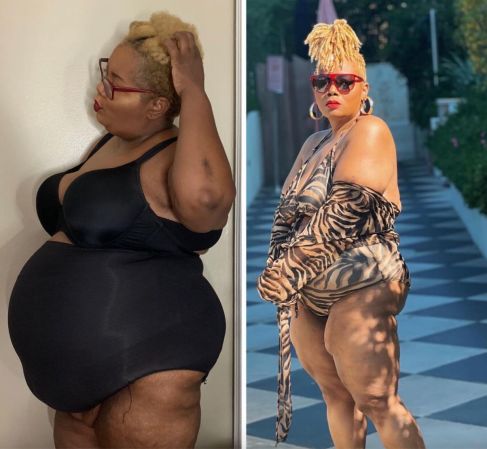
I had an extremely unhealthy relationship with food. I was overeating. My sugar consumption was ridiculous. I rarely exercised. And at 376 lbs, it showed.
I had to start fueling my body with good intention. So, I decided to make significant lifestyle changes. I stopped eating my fears and feelings. I started eating to heal. I cut out sugar. And I started moving. Myeloma destroys your bones, so incorporating movement into my lifestyle was vital. Losing weight helped save my life.
I also prioritized protecting my peace like it was part of my treatment plan because it is.
My goal was not perfection; it was alignment. I started small, consistently making choices that helped my body do what it was designed to do, fight, heal, and sustain me.
Sis, lifestyle is strategy. Everything else is secondary.