Six Years After Breonna Taylor's Death: Has Anything Changed?
Six Years After Breonna Taylor’s Death: Has Anything Actually Changed?
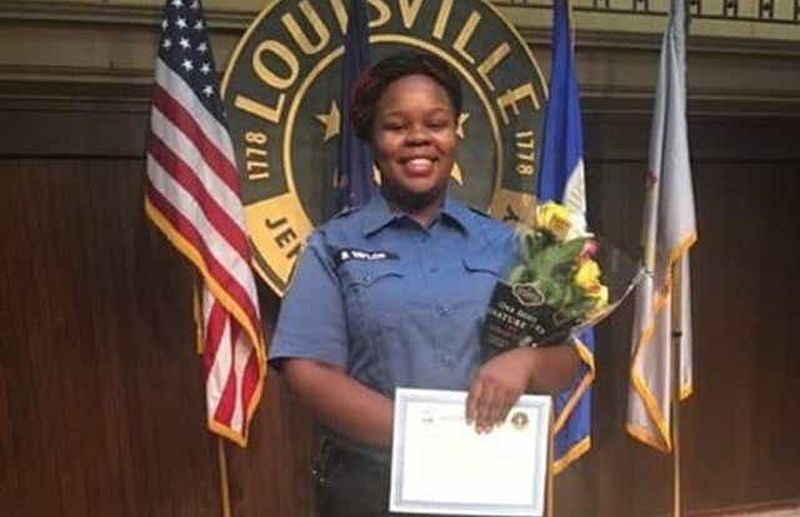
In 2020, the Louisville Metro Council banned the use of no-knock warrants following the tragic death of Breonna Taylor. The policy change became a major symbol of police reform efforts across the United States and led to broader changes within the U.S. Department of Justice. Now, years later, some of those protections are being rolled back.
A newly reported memo from Todd Blanche indicates that the Justice Department is rescinding a policy implemented during the Biden administration that tightly restricted when federal law enforcement could conduct no-knock entries during search warrants. Sadly, the change comes on the anniversary of Taylor’s death, six years after the incident that sparked national outrage and renewed debate over police tactics.
What the New Policy Changes
According to a DOJ memo obtained by MSNBC NOW, Blanche’s order broadens the circumstances under which federal agents can enter a home without first knocking or announcing themselves.
RELATED CONTENT: 5 Years After Breonna Taylor’s Murder—Black Women Are Still Under Attack [Op-Ed]
Under the new directive, no-knock entries are allowed not only when officers believe there is a serious threat to safety, but also when they believe evidence could be destroyed.
Blanche defended the change in the memo, writing:
“We must allow our brave men and women in law enforcement to carry out their duties to the fullest extent permitted by law.”
However, former prosecutors told MSNBC NOW that the justification of potential evidence destruction could be used in nearly any search warrant request, potentially making no-knock entries far easier to approve.
What Is a No-Knock Warrant?
A no-knock warrant allows police officers to enter a home without first announcing their presence or giving occupants time to open the door. Officers may force entry immediately, often during late-night or early-morning raids.
The tactic became widely scrutinized after the killing of Breonna Taylor on March 13, 2020, in Louisville.
Taylor, a 26-year-old emergency medical technician, was killed when seven police officers executing a search warrant entered her apartment as part of a drug investigation. Taylor herself was not suspected or accused of any crime. During the raid, officers fired 32 rounds; at least six struck and fatally wounded her.
The case drew nationwide attention and sparked widespread protests over policing practices. Only one officer involved in the shooting was ultimately convicted.
The Reform That Followed: “Breonna’s Law”
In June 2020, Louisville officials passed legislation known as Breonna’s Law, which banned no-knock warrants within the city and established new requirements for executing search warrants.
Under the law, officers were required to physically knock on the door in a way that can be heard by occupants and clearly announce themselves as law enforcement while executing a search warrant.
The law also introduced strict body-camera requirements, mandating that officers activate their cameras at least 5 minutes before the operation begins.
Federal Restrictions After 2020
In September 2021, the Justice Department updated its department-wide policy to significantly limit no-knock entries. Under that rule, federal agents could only request a no-knock warrant if they had reasonable grounds to believe that announcing their presence would create an imminent threat of physical violence to officers or others.
Agents were also required to obtain supervisory approval from both a federal prosecutor and leadership within their law-enforcement agency before seeking such warrants.
The goal of the policy was to restrict the tactic to situations where physical safety, not evidence preservation, was at risk.
Other Cases That Fueled the Debate
Sadly, concerns about no-knock raids continued after Taylor’s death.
In February 2022, Amir Locke was fatally shot by officers from the Minneapolis Police Department while they executed a no-knock search warrant at an apartment in downtown Minneapolis.
Body-camera footage showed Locke, 22, waking under a blanket on a couch and holding a firearm just before officers shot him, about nine seconds after entering the apartment. Locke was not named in the warrant tied to the investigation.
Following the shooting, Minnesota officials implemented stricter guidelines governing when such warrants could be used. A 2025 report from the Minnesota Bureau of Criminal Apprehension found that the number of no-knock warrants served in the state had dropped by 92% since 2022, due to the updated guidelines, according to reporting by KSTP-TV.
A Long and Controversial History & Renewed Risks
No-knock warrants became more common during the U.S. “war on drugs,” a decades-long law enforcement campaign aimed at reducing drug trafficking and drug use, according to NewsOne.
But critics argue that the tactic has often relied on flawed assumptions and has disproportionately impacted Black communities.
In 1997, the Supreme Court of the United States ruled unanimously that drug investigations alone do not automatically justify the use of no-knock warrants. Despite that ruling, judges have continued to approve them in many cases.
The new Justice Department directive risks undoing years of reform efforts sparked by Breonna Taylor’s death. Expanding the use of no-knock entries could once again increase the likelihood of deadly mistakes during police raids.
RELATED CONTENT: Breonna Taylor Was Not ‘Expendable’—Judge Sentences Ex-Officer To 33 Months, Blasts DOJ’s 1-Day Proposal As ‘Inappropriate’