What This Viral Hair Debate Reveals About Policing Black Girlhood
Bobos Or Bussdowns? The Internet’s Latest ‘Too Grown’ Hair Debate Reveals A Bigger Conversation About Over Policing Black Girlhood [Op-Ed]
The internet recently found itself in a surprisingly heated debate over a hairstyle.
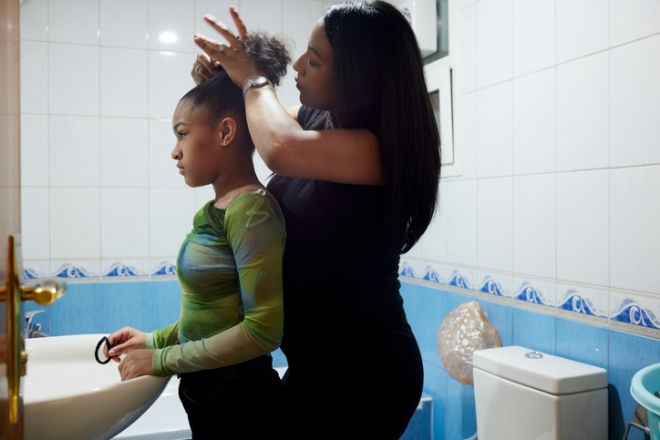
In a now-viral video, a Black mother films her daughters while they’re out and about. The twins—tall 11-year-olds—sit with their hair styled in a look many Black women recognize instantly: hair baubles, also known as bobos, knocker balls, bubbles, or knockers depending on where you grew up. In the video, the mother asks the girls whether they like their hairstyles and whether anyone at school teases them about it. The girls seem unbothered, as they share they also wear crochets and braided styles. The comment section, however, not so much.
What followed was a flood of opinions from Black women who grew up with those same plastic hair ties marking a very specific era of childhood. Some commenters argued that the style kept the girls looking appropriately young. Others said the girls had outgrown it years ago and that there were more tween-friendly hairstyles that still honored their age without making them look like toddlers. Watching the conversation unfold, I couldn’t help but think: surely there has to be some middle ground. There can’t just be the polarity of bobos or bussdowns.
RELATED CONTENT: Roller Sets Are The Old-School Hair Move We’re Loving Again This Fall—Here’s How To Master It At Home
Beneath the hairstyle debate is a much bigger conversation about Black girlhood—specifically what the transition into young womanhood should look like for Black girls today.
RELATED CONTENT: No Notes From This Mom! — ‘Sesame Street’ Aces Assignment That Teaches Kids The Black History Behind Iconic Hairstyles
The Language of Black Girl Hairstyles
For many Black women, hairstyles were the unofficial markers of childhood milestones.
When I was growing up in 1990s New York City, bobos and barrettes were firmly in “little girl” territory. My mom took that responsibility seriously. She traveled all over the city collecting them in every color imaginable. We had the whole rainbow, plus clear and metallic bobos with matching barrettes. She kept them organized by color in sandwich bags stored inside an old party ice cream pail. For special occasions—church, family events—I had big lace or satin bows. When my hair wasn’t in bobos, it was in cornrows or plaits with beads, finished with a tiny wad of aluminum foil at the ends to keep them from sliding off. Those styles were childhood. By the time many of us reached the later years of elementary school, something shifted.
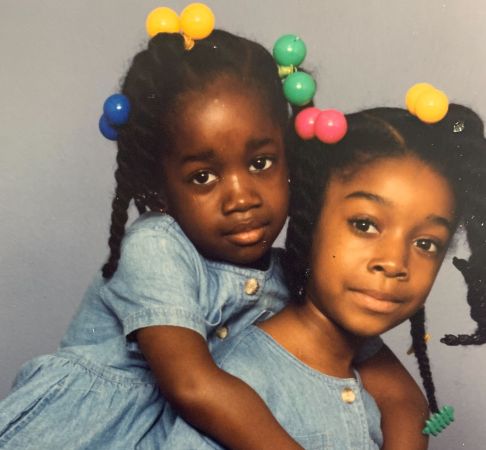
For millennials, one of the first signs of growing up was being allowed to wear our hair “out” in some capacity. I remember my friend from church and I celebrating the first time we were allowed to wear Shirley Temple curls for a gospel concert. It felt monumental! Roller sets, blowouts, and eventually relaxers were considered “big girl” hairstyles. Girls who stayed natural often transitioned to mini twists or twist-outs, though we didn’t have the unifying names for those styles yet.
By fourth and fifth grade, Fulani braids or flat twists with flexi-rod curls in the back were popular. We experimented with the futuristic looks we saw on TV characters like Zaria Peterson from The Parent ’Hood or Tia and Tamera on Sister, Sister. We parted our hair in zigzags for pigtails, stuck chopsticks in buns, and covered everything in butterfly clips. Entering double digits felt like a milestone. As the older sister in my own household, there was no way I wanted to wear my hair exactly like my younger sibling once I hit double digits. Being ten or eleven meant you were a pre-teen, and girls wanted that transition reflected in how they looked.
The Tween Culture We Used to Have
Part of what made that transition easier was the culture surrounding us.
Millennials grew up during a time when tween culture was everywhere. On television, we saw girls navigating that awkward in-between stage—too old for dolls and handclapping games but too young for serious boyfriends or full faces of makeup.
Black teen role models didn’t present tween characters as overly mature. On early seasons of shows like Sister, Sister and Moesha, the girls looked cute, fashionable, and covered up. Their hairstyles were fun and experimental without being sexualized.By the time we were approaching our teens, we had Black teen idols like Raven-Symoné, Kyla Pratt, Giovannie Samuels, Andrea Lewis. Even when the icons weren’t Black, they still occupied that cultural space. Mary-Kate and Ashley Olsen practically built an empire teaching girls how to dress, accessorize, and exist in that middle ground between childhood and teen years. Those figures gave girls public permission to still be kids. They showed us that it was perfectly fine to still care about sleepovers, nail polish, glitter lip gloss, and matching accessories with your friends. Today, that space feels much smaller.
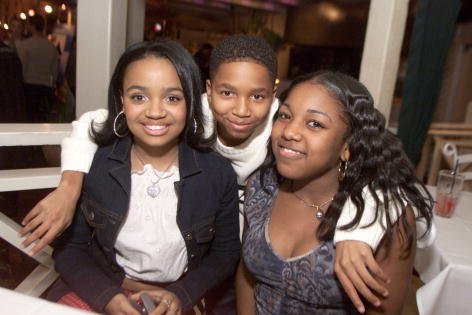
As a former ninth-grade teacher, I saw firsthand how quickly childhood seems to collapse now. One year, a student walked into class during the first week of school explicitly recounting how she had spent time with her boyfriend over the summer. Another year, a ninth grader casually referred to her boyfriend as “my n***a.” Those moments stayed with me, not because teenagers having relationships is new, but because the transition felt unsettling. Something about the cultural buffer that used to exist for tweens and early teens has eroded.
Gen Alpha is growing up in a world where the algorithm is often their loudest cultural influence. Platforms like TikTok and Instagram don’t filter content based on developmental stages. A child’s For You Page doesn’t distinguish between adult aesthetics and age-appropriate ones. If a young girl searches for hair tutorials or beauty tips, the algorithm will feed her whatever content performs best—not necessarily what reflects her age.
Without a strong tween culture to model what that middle stage looks like, many kids end up looking to adults or celebrities far outside their age bracket. Even when they do have young public figures to watch—like Blue Ivy, Shai Moss, or North West—their lifestyles aren’t exactly easy to replicate for the average kid navigating middle school. When conversations arise about hairstyles like bobos, they aren’t just about hair. They’re about identity, belonging, and figuring out where a child fits socially.
The “Fast Little Girl” Narrative
Layered on top of all of this is a long-standing cultural anxiety within Black communities: the fear of raising a “fast” little girl.
Historically, that concern often comes from a genuine place of protection. Many Black women grew up hearing stories—or experiencing firsthand—how quickly young girls can become targets of adult attention. Somewhere along the way, the focus sometimes shifted to policing the girls themselves. However, I strongly believe a child is never going to be fast enough to catch an adult who isn’t already a predator. Yet in many cases, it has felt easier to govern children’s appearance and behavior than to confront the adults who might harm them. Especially in earlier generations when financial dependence, family reputation, and cultural silence around abuse made it difficult to challenge men directly. That dynamic still echoes in how we talk about young Black girls today.
What does “too grown” even mean? The goalposts shift depending on who is doing the policing. Unicorn braids—a whimsical style using pastel-colored kanekalon—are often dismissed as ‘”too grown” simply because they involve extensions and color. Adding highlights to a child’s hair is “too grown.” Even wearing natural, long Black hair down and loose is frequently labeled “too grown.” While a common retort is, “Nobody says anything when white girls wear their long hair down,” our standards for our daughters shouldn’t hinge on what white children do. We shouldn’t overpolice a style when it is literally the healthy hair that grew out of a Black girl’s head. When we unreasonably label a child’s natural features or creative expressions as too grown, we are projecting adult anxieties onto their bodies.
As girls approach puberty and their bodies begin to change, their clothing, hairstyles, and movements are often placed under intense scrutiny. Encouraging modesty frequently centers the male gaze. We attempt to avoid provoking predators or causing “a brother in Christ to stumble,” but age-appropriate expression is something different. It’s about helping children grow into themselves without shame.
While we fear the adultification of our daughters, there is still some harm in the forced infantilization of Black girls. When we mandate that 11- and 12-year-olds remain in hairstyles associated with younger ages to “keep them in a child’s place,” we are stifling their developing autonomy. This rigid control can create a “developmental mismatch,” where a girl’s outward appearance is out of sync with her internal cognitive and social growth. By denying them the agency to graduate into “big girl” styles, we risk making them feel socially alienated and ill-equipped to navigate the transitions of puberty. True protection isn’t found in freezing a child in time, but in guiding them through the natural, messy stages of growing up. Even though the mother and daughters in the viral video shared that this isn’t an issue for them, there is still a risk.
The Parenting Tightrope
None of this is easy for parents. Black mothers in particular often feel tremendous pressure to preserve their daughters’ innocence for as long as possible. Part of that instinct comes from knowing how vulnerable many of us were growing up. Protecting our girls can feel like a way of rewriting painful histories. In the age of social media, parenting choices are constantly under public scrutiny.
Videos like the viral one of the twins become lightning rods for commentary from strangers who may not know the full story. The mother may have already faced criticism offline—or anticipated it—before posting the video. That pressure is real. Still, good intentions don’t always produce the healthiest outcomes. Stifling expression isn’t protection.
Children benefit from guardrails, but those guardrails shouldn’t be so restrictive that they infantilize them. Learning personal style, experimenting with identity, and figuring out what makes them feel confident are all part of healthy development.
Finding the Balance
Tweenhood is where many girls first learn how to navigate their sense of self. It’s where friendships deepen. It’s where they start experimenting with fashion and hair alongside their peers. It’s where they begin paying attention to how they move through the world.
When girls feel completely out of sync with their peers because their appearance is tightly controlled, it can lead to self-consciousness or confusion about their own preferences. Later, when the guardrails finally come off, some women struggle to figure out what actually suits them because they never had the chance to explore. Hair, clothes, and accessories may seem trivial to adults, but to kids, they are deeply tied to belonging.
The truth is, there is a lot of space between bobos and a bussdown. A healthy transition into womanhood for Black girls means allowing exploration while still maintaining boundaries. It means listening when kids express how they want to show up in the world. It means recognizing that today’s girlhood looks different from the one many of us experienced.
For many reasons, I wish tween culture would make a stronger comeback. Kids deserve spaces that celebrate that in-between stage—whether through media representation, safe social environments, or simply community conversations that acknowledge their evolving identities. Ultimately, we can’t raise our kids for a world that doesn’t exist anymore. Black girls deserve the freedom to grow into themselves without being forced to choose between staying little forever or becoming grown overnight.
RELATED CONTENT: Tales From TikTok: Mama Don’t Play That! Tisha Tried It Wearing A Thong On ‘Being Fast In The ’90s’