Black Women and ADHD — The Dangerous Research Gap
In 50 Years Of ADHD Research, Black Women Were Centered Once. That’s The Problem [Op-Ed]

In 1798, behaviors that looked like what we now call attention-deficit hyperactivity disorder (ADHD) were documented. By 1968, “hyperkinetic syndrome” appeared in the second edition of the Diagnostic and Statistical Manual of Mental Disorders. Today, ADHD is internationally recognized as a neurodevelopmental disorder. Its symptoms include inattention, hyperactivity, impulsivity, and challenges with executive function. People with ADHD also often have co-occurring conditions like anxiety, depression, substance use, and eating disorders. This is backed by decades of research, clinical guidelines, and treatment protocols.
RELATED CONTENT: The ‘Aha’ Moment: Black Mothers Of Neurodivergent Children Are Discovering More About Their Own Mental Health
In more than two centuries of documentation and nearly 60 years of formal study of ADHD, the experiences of Black women have been almost entirely ignored. This means that the research doesn’t reflect reality because Black women do have ADHD. But they’re not represented in the data used to estimate how many people have ADHD and how it affects them. absense


In 2020, researchers looked at 21 studies and estimated that 15% of Black people in the U.S. have ADHD. However, just two of those studies examined adults. The result is a prevalence rate that tells us little about Black adults, especially Black women. This underscores a persistent problem: The data that shapes diagnosis and treatment doesn’t reflect the full spectrum of people who have ADHD.
There is a cost to being misunderstood.
The harm of being misunderstood isn’t abstract. It plays out in diagnoses, treatment, and daily life for Black women with ADHD.
The consequences begin early. Researchers are increasingly examining how untreated or undiagnosed ADHD may elevate risk factors associated with incarceration. Black girls, meanwhile, are already disproportionately disciplined. According to the Government Accounting Office, Black girls are more than five times more likely than White girls to receive out-of-school suspensions. Layer undiagnosed ADHD onto that disparity, and the risks compound.

Studies relying on clinical records show that Black women are far more likely than White women to be diagnosed with conduct disorder or oppositional defiant disorder instead of ADHD. One large-scale study found they had 73% higher odds of receiving a conduct disorder diagnosis. An ADHD diagnosis opens doors to accommodations, medication, and targeted support. But a conduct disorder label limits access to services and reinforces stigmatizing perceptions.
The same research found that Black women are also less likely than Black men to receive an ADHD diagnosis. This suggests a double burden: the longstanding underrepresentation of women in ADHD research and racial bias embedded in diagnostic systems. This “double tax” is not incidental. It’s the predictable result of frameworks built without Black women in mind.
Beyond institutions, the cost of being misunderstood shows up at home and in communities. At Understood.org, a leading nonprofit supporting the 70 million people in the U.S. who have learning and thinking differences, such as ADHD and dyslexia, a recent Reddit deep dive surfaced dozens of stories from Black women. They described how their families dismissed ADHD as “not real” or “just an excuse.” Traits like talkativeness, distractibility, or emotional intensity—well-documented ADHD characteristics—are often interpreted as “attitude” or “defiance.” Without research centering their experiences, Black women are left without language to describe what they’re navigating and without support systems to help others understand it.
Even As ADHD Research Evolves, Blind Spots Remain.

There’s growing attention to how ADHD shows up differently in women. This includes emerging studies on hormones and symptom fluctuation across the menstrual cycle. Estradiol has been identified as a key factor in symptom severity. Research has also documented differences in estradiol patterns among Black women. Yet these bodies of knowledge rarely intersect. Without considering how hormonal research applies specifically to Black women, new treatment frameworks risk being poorly calibrated from the start.
Neurodivergent frameworks have challenged myths that ADHD reflects laziness or weak character. But to serve Black women effectively, these frameworks must also account for cultural narratives layered on top of deficit-based myths. Expectations shaped by the “strong Black woman” or “superwoman” schema—valuing self-sacrifice, emotional restraint, and relentless competence—leave little room to acknowledge overwhelm or seek support. When ADHD struggles collide with these roles, symptoms may be masked, internalized, or reframed as personal failure rather than as neurodivergence.
We Need More Research, More Diagnoses, And Better Resources And Tools For Black Women With ADHD.
Recent years have seen meaningful progress in research, diagnosis, and accessible, actionable tools for women with ADHD. Between 2020 and 2022, new ADHD diagnoses among women ages 20–49 nearly doubled, reflecting greater awareness and a long-overdue effort to catch up.
Free, accessible resources designed by women with ADHD for women with ADHD—like Understood.org’s hub for women with ADHD and ADHD Unstuck, a 10-minute intervention to help with emotional regulation—reflect this shift. These resources are an important step forward for women who have been underdiagnosed and unsupported.
But there’s still a lot of catching-up needed to repair decades of research that ignored Black women. The solution is not abstract. It requires funding and research that explicitly centers Black women across the lifespan. It requires reexamining diagnostic criteria and training clinicians to recognize how bias distorts interpretation. And it requires building culturally responsive, accessible tools now, not decades from now. Better research would refine diagnostic tools, create frameworks that resonate culturally and practically, and ensure that treatments are designed for, not retrofitted to, Black women.
Awareness and tools alone cannot close a gap created by generations of underrepresentation. For too long, the data has told an incomplete story. If ADHD science is meant to serve everyone, then everyone must be visible within it.
Two studies have focused on Black women in limited contexts: One focused on Black pregnant women (Jones et al., 2018; https://pubmed.ncbi.nlm.nih.gov/29782211/) and one on Black mothers (Baker et al., 2025; https://www.nature.com/articles/s44220-025-00387-6). However, no study to date has examined Black women with ADHD holistically across age, life stage, or broader social contexts.
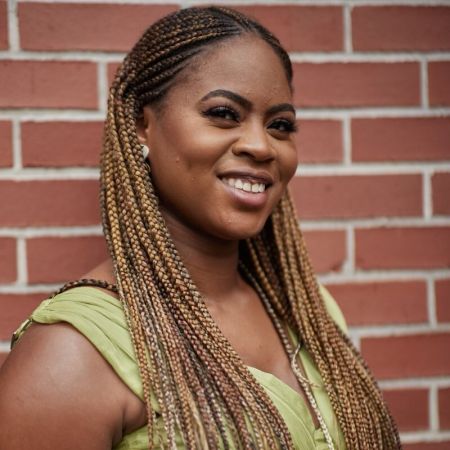
Keona J. Wynne, PhD, MBE, is the Senior Research Manager of Interdisciplinary Research at Understood.org. She contributes advanced research methods and design expertise, focusing on developing new knowledge for underserved populations traditionally excluded from research studies by contextualizing neurodiversity within the history and lived experiences of people of color. Read her full bio here.
RELATED CONTENT: ‘Truth Hurts’—Lizzo & 5 Other Famous Black Women Who’ve Shared Their Mental Health Struggles