A Guide To Recognizing The Signs Of Depression In Black Girls
The Cost of Being ‘The Strong Black Girl’ — Why Depression In Our Daughters Often Goes Unseen

The weight of being “strong” isn’t just a burden Black women pick up when we become adults; it’s a heavy hand-me-down draped over our shoulders before we’ve even lost our baby teeth. It demands that we become the rocks and the rescuers for everyone else, while our own needs go unseen, unnamed, and unmet.
Because this “armor” is so common, many parents and mentors miss the early signs of depression in Black girls, mistaking their silence for strength. For our daughters, this habit of following what experts call the Superwoman Schema—a cycle where they feel forced to act tough, to hide their feelings, and to never, ever, show any “weakness”—starts while they’re still picking out outfits for their favorite Barbies.
RELATED CONTENT: What Keyshia Ka’oir, Kim Kardashian, And Everyday Women Teach Us About Mental Health In Relationships [Op-Ed]
Research from Johns Hopkins University shows how this pattern works as a survival tool. While this internal armor helps Black girls and women get through hard times, the constant effort of maintaining it often leads us towards deep sadness, hopelessness, and total burnout.
It’s an unspoken rule that we have to be the backbone of our family, the ultimate peacemaker out in the world and in our homes, and the person who never, ever, falls apart, no matter how much pressure we’re under. This cultural mandate creates the expectation that we’ll take hits without flinching, handle unfair treatment with a smile, and work twice as hard just to be treated half as well by others, including our own.
In the Black community, we call this set of behaviors being resilient; we call it being “grown”; we call it having a “good head on our shoulders.” But beneath that perfect image of Black girl high achievers, there’s a quiet crisis bubbling up.
As recently reported by Click2Houston, depression in our girls doesn’t always look like crying or “bed rot.” We have to be more vigilant because the typical signs of depression in Black girls are often normalized as just “part of growing up.”
Essentially, we tell our daughters that their worth is measured by how much weight they can carry. When we praise them for being high-achieving, but also “low maintenance,” we’re unknowingly telling them that their feelings are a problem to be solved.
This creates a dangerous path where emotional pain gets buried under a layer of “being the best,” leaving so many of our girls to suffer in silence.
The numbers are scary. Recent data from the CDC shows that nearly 1 in 4 Black teenage girls said they seriously thought about suicide in 2021—a huge jump over the last ten years. Even worse, emergency room visits for suicide attempts among teenage girls went up by over 50% during the pandemic. Despite this, our girls are often the last ones to get a proper diagnosis or the support they need.
I know this because I lived it. As a teen, my depression didn’t look like a scene from some sad movie. To the adults around me, it looked like a “bad attitude.” I was labeled as “too grown,” “lazy,” or “difficult,” when in reality, just getting through the day often felt like I was attempting to walk through quicksand.
I needed my individual experience validated and supported, but because I was a Black girl, my exhaustion wasn’t seen as a cry for help—instead, it was seen as a character flaw. I didn’t get professional help, a therapist, or any conversations about medical interventions, until I was well into my twenties.
RELATED CONTENT: ‘Truth Hurts’—Lizzo & 5 Other Famous Black Women Who’ve Shared Their Mental Health Struggles
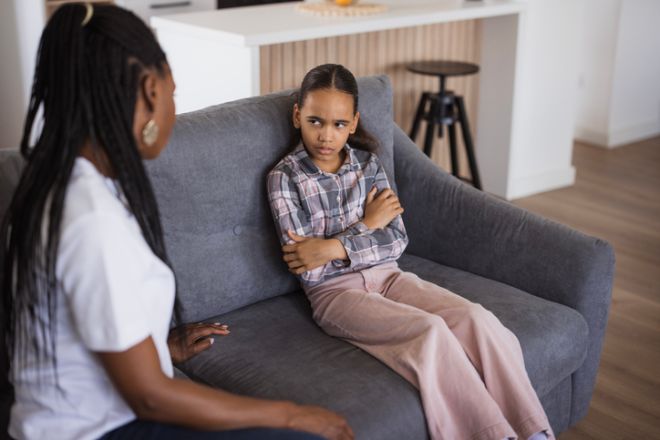
“Depression in Black girls often hides behind how well they’re doing, just like it does for Black women,” explains Nikquan Lewis, a Licensed Marriage and Family Therapist. “She might still be getting good grades. Still showing up to practice. Still smiling in pictures. So adults assume she’s fine.”
Sadly, the kind of depression Black girls often experience shapeshifts. Since the world already side-eyes Black girls for everything, being “sad” feels like a luxury they can’t afford. Instead, the pain comes out as being snappy, being tired all the time, or feeling physically sick.
We rarely stop to ask Black girls what’s happening mentally and emotionally while they are committing to that 4.0 GPA or winning that prestigious award. If they are winning, we rarely ask what it’s costing them. We have to start looking for the signs of depression in Black girls that hide in plain sight: snapping at family, trying way too hard to be perfect, or having constant headaches and stomachaches that don’t have a clear cause.
The wall between Black girls and mental health care is often built through “Adultification Bias,” which is a fancy way of saying people treat Black girls like they’re older than they really are. A major study by Georgetown Law found that adults view Black girls as more mature and less innocent than white girls as early as age five.
What happens to a child when the world forgets she’s a child? When we see kids as “grown,” we take away their right and ability to be vulnerable. If a girl learns her tears will just lead to a lecture on “being strong,” she’ll eventually stop crying and just build a wall. She’ll then go on to become that “Strong Black Woman” we all praise, while her inner world is falling apart.
“We’ve got to be honest about this,” Lewis says. “Black girls are often treated like adults… when you add racism to that, you get a child who learns early on that being soft isn’t safe.”
I suppose the biggest question here is: how do we stop this? We have to begin by looking at what we’re modeling for the Black girls around us. Can we really expect our daughters to care for their mental health if they never see us doing the same? We can’t ask them to be open with us if we treat our own burnout like a badge of honor.
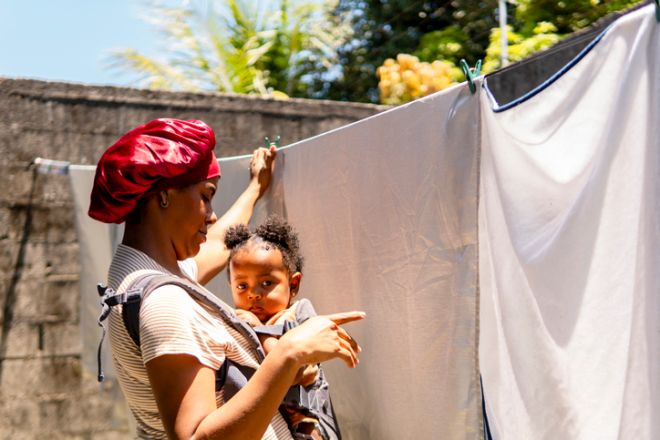
“Health is something you show, not just talk about,” adds Lewis. “If a girl grows up watching her mom push through being exhausted and carrying everything alone, she’s going to copy that Superwoman Schema.” To save our girls, we have to give ourselves permission to be human first. When we take care of our own healing, we show our daughters it’s okay to be whole, soft, and properly cared for.
If you think your daughter is struggling with low mood or depression, the answer isn’t just placing her in therapy—it’s about changing the energy in your home so she feels safe being her most authentic self, sticky sweet or solemn and surly. Lewis suggests making check-ins a normal thing:
- Make Feelings a Normal Topic: Use simple, open questions like:
- “What was the heaviest part of your week? What was the lightest?”
- “When did you feel the most pressure today?”
- “If you could skip one part of your day, what would it be?”
- “How is your ‘internal weather’ today? Is it stormy or calm?”
- Validate Before You Correct: When she gets “moody,” don’t jump straight to a lecture. Try: “You seem really frustrated. What’s going on underneath that?”
- Show Her What Rest Looks Like: Let her see you resting without feeling the need to explain why you “earned” it. Worth isn’t about how much you get done.
- Find a Therapist Who Gets It: Only about 4% of psychologists in the U.S. are Black. It’s important to find a professional who understands the specific pressure of being a Black girl.
We can’t wait for our Black girls to reach a breaking point before we decide to show up. Being proactive about depression signs in Black girls means more than just finding a therapist; it means changing the vibe at home so they feel safe being real. It is unfair to the Black girls in our lives—the ones we have a hand in guiding and protecting—that they should have to hit a wall before we truly show up. They deserve more than just a life built on survival. They have the right to be soft, the right to be supported, and the right to just be kids.
Josie Pickens is a Black feminist writer, cultural critic, and community organizer whose work explores love, power, and the interior lives of Black women. Follow Josie on Instagram and Threads at @jonubian.
RELATED CONTENT: 3 Things You Should Never Say To Someone Struggling With Depression