‘Sesame Street’ Teaches Kids The History Behind Black Hairstyles
No Notes From This Mom! — ‘Sesame Street’ Aces Assignment That Teaches Kids The Black History Behind Iconic Hairstyles
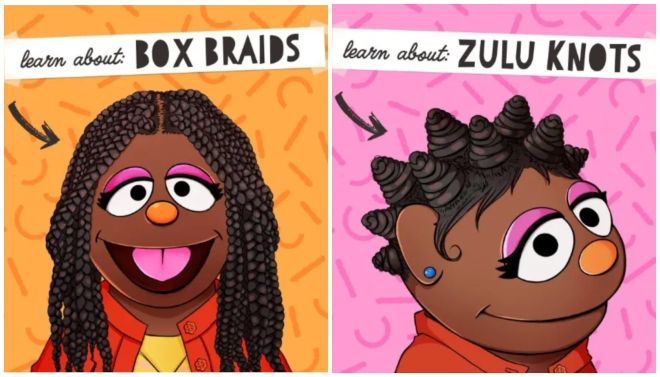
U is for “understood the assignment,” and Sesame Street gets an A+!
The beloved children’s show is celebrating Black History Month by showcasing the beauty and long-standing legacy of Black hair. The educational series teamed up with Dove and the #CROWNLove campaign to give a few of its characters new hairdos rooted in centuries of Black culture and tradition.
This month, Sesame Street is spotlighting three iconic styles: box braids, cornrows, and Zulu Knots. But beyond aesthetics, the project also aims to teach kids about the unique history and meaning behind each iconic ’do.
“Hair is an important part of who we are,” Sesame Street shared in its Instagram caption. “It helps us express ourselves, and can tell important stories about a person’s culture and heritage.”
RELATED CONTENT: Dove Launches Guide To Improve Black Hair Representation In Video Games
To ensure that the messaging resonates with younger viewers, Sesame Street tapped Gen-Alpha creators like 7-year-old social media sensation VanVan. The “Wear your crown” artist joined characters Gabrielle, Elmo, and Abby Cadabby to sing about morning routines and hair pride, rapping, “Kinky, curly, wavy, straight, I love what I got.”
Known for breaking ground and barriers, Sesame Street first tackled the subject of Black hair more than a decade ago with the viral “I Love My Hair” campaign and later episodes like “Wash Day,” which focused on hair care, routines, and family traditions. The series kicked off after higher-ups realized that Black children were internalizing negative messages about their hair texture and styles.
This year’s project is equally educational, giving historical context to the three hairstyles, explaining that Gabrielle‘s gorgeous box braids date back thousands of years.
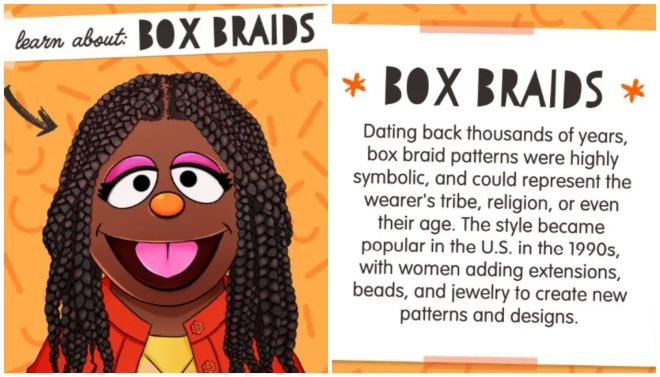
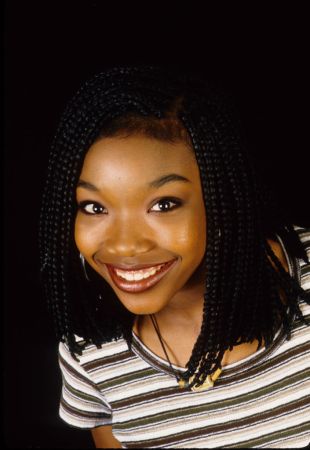
“Box braid patterns were highly symbolic, and could represent the wearer’s tribe, religion, or even their age,” stated the post, adding, “The styles became popular in the U.S. in the 1990s, with women adding extensions, beads, and jewelry to create new patterns and designs.”
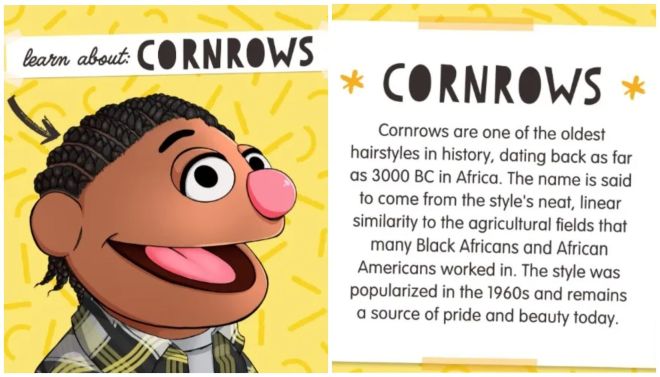
The campaign also explained that the origin of the name “cornrows” comes from “the style’s neat, linear similarities to the agricultural fields that many Black Africans and African Americans worked in. The style was popularized in the 1960s and remains a source of pride and beauty today.”
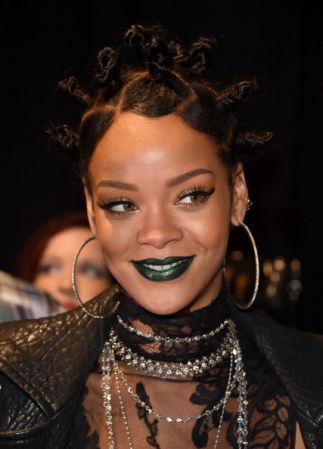
As for Zulu Knots, also known as Bantu Knots or Nubian Knots, Sesame Street made sure to note that this statement style goes by different names depending on the culture and region.
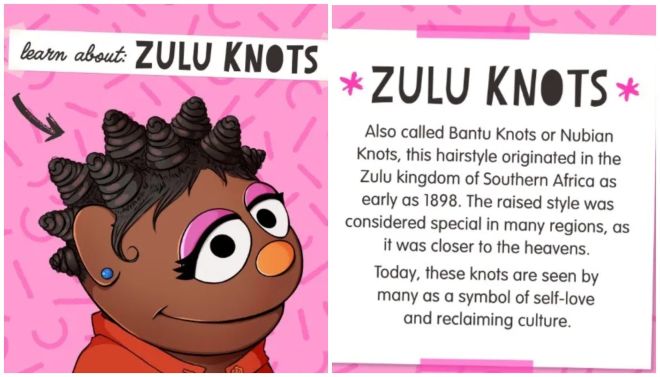
For example, in Jamaican culture, we call the style—thought to bring its wearer “closer to the heavens”—Chiney Bumps. “Today, these knots are seen by many as a symbol of self-love and reclaiming culture,” the post concludes.

The reactions on social media platforms have been overwhelmingly positive, with a broad range of people chiming in to share their thoughts on the campaign.
“Thank you Sesame Street for always teaching not only our children, but our adults the beauty of diversity!” gushed one commenter.
“Oh this is so fun! I’m a grown up but i still learned a lot!” wrote Andrew Wiedenhofer, a Cornell University-educated white man.
I’m a first-time mom to a 9-month-old Black baby girl, and I am wholeheartedly dedicated to nurturing her self-confidence and racial pride through education. My daughter already has a library of more than 50 books, including titles like Mae Among The Stars, ABC’s for Brown Babies, and one of her absolute favorites, Hair Love.
Sesame Street‘s ongoing commitment to amplifying Black voices and spreading cultural awareness is much needed and greatly appreciated. So, to borrow some Gen Z slang, no notes!
RELATED CONTENT: Black Women Feel Pressure To Straighten Their Natural Hair For Job Interviews, New Study Finds