Micro-Grants Are Fueling Black Girl Leadership Across The South
Why Funding Joy Is Transformational: How Micro-Grants Are Fueling A Movement Of Black Girl Leadership Across The South [Op-Ed]
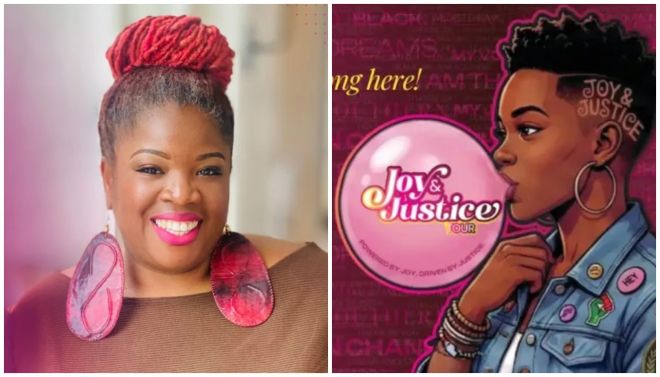
Growing up in Selma, Alabama, I was once a girl who benefited from organizations specifically designed for young Black girls. That truth lives in every decision I make as the Executive Director of Southern Black Girls and Women’s Consortium, an organization reshaping what philanthropy looks like when it centers the people it claims to serve.
So when someone asks me what our strategy is—what framework we use to cultivate the next generation of leaders—my answer is simple and unapologetic: joy.
Not joy as sentimentality. Not joy as a slogan. Joy as a measurable, transformative investment in the mental health, resilience, and leadership of Black girls and femme-identifying youth across the South.
RELATED CONTENT: MadameICON — Coach Dawn ‘The Diva’ Thornton Leads Alabama A&M To History In Heels — Her 9 Most Baller Looks
Since 2017, Southern Black Girls and Women’s Consortium has been on a mission to channel resources to underfunded organizations empowering communities across 13 Southern states, from West Virginia to Texas. Our work was born from a staggering reality: Black women and girls receive less than one percent of the South’s $4.8 billion in philanthropic investments. That is a deliberate choice but we are committed to reversing it.
To date, we have awarded over $11.4 million to more than 250 Black women-led organizations. But one of our most celebrated initiatives is also one of our most personal: the #BlackGirlJoyChallenge.
Launched in 2020 as a response to the isolation and grief of the COVID-19 pandemic, the #BlackGirlJoyChallenge is a micro-grant program that awards $550 to Black girls and femme-identifying youth, ages 13 to 24 who have innovative, joy-centered ideas for their communities. We have now reached more than 1,000 recipients and invested over $8600,000 in their visions. And what they have built with those resources demonstrates that young Black girls are ready to lead.
Past recipients have launched programs to combat period poverty in several states across the South, formed all-Black girls’ robotics teams, organized park restoration efforts, and hosted community drive-in movies when the world felt like it was falling apart. One recipient, at just 12 years old, founded a beauty and fashion company after being told by another child that Black people are “mean and dirty.” She used her grant to hire a youth graphic designer and sell branded products that celebrate Black beauty. Another, Destiny Burse, discovered the Challenge during her senior year in the Mississippi Delta and went on to become one of our Youth Ambassadors, now pursuing a STEM MBA, leading community change, and helping decide how our grant dollars are distributed.
We have the data. Ninety-five percent of our #BlackGirlJoy awardees reported being introduced to joy as a self-care and mental health strategy for the first time. Ninety-nine percent of attendees at our Black Girls Dream Conference said they saw themselves in a positive light. Ninety percent of our #BlackGirlJoyChallenge respondents reported gaining leadership skills in spaces facilitated by Black women leaders.
These numbers tell the story. In a country where Black girls are disproportionately disciplined in schools, adultified in community and courtrooms, and overlooked by funders, our young people are telling us that joy changed the way they see themselves. That joy taught them they could lead. That a $550 investment unlocked something no deficit-based program could touch.
This is what our Visionary Founder, LaTosha Brown, has always understood: “If you change the life of a Black girl, you change the world.” That is not poetry. It is a theory of change backed by nearly a decade of proof.
And yet, the philanthropic sector continues to underinvest. At a time when DEI commitments are being rolled back and funding for organizations that dare center the needs of Black communities is being slashed, our work is more urgent than ever. The gap is not closing on its own. It requires intention, resources, and a willingness to trust Black girls with real decision-making power.
That is exactly what we do. Our Youth Ambassadors—ages 13 to 24, spanning all 13 states we serve—do not simply receive grants. They review applications, score proposals, and help select grant recipients. They connect the issues in their schools and neighborhoods to the broader policies that shape their lives. They are not the future of our movement. They are the present. We like to say “we got now!”
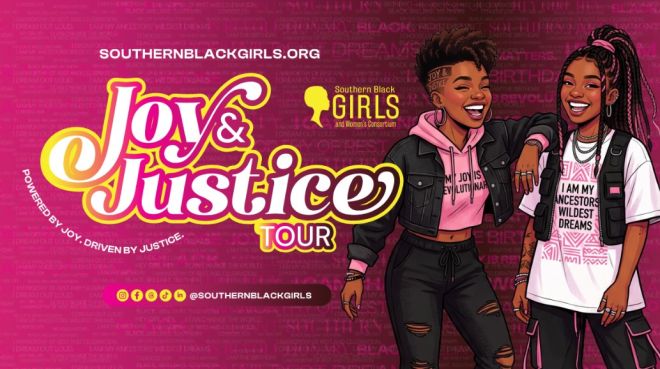
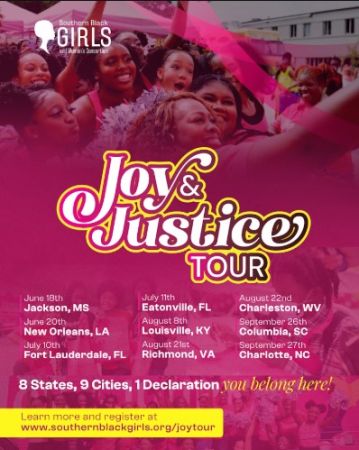
As we prepare to take our Joy and Justice Tour across eight Southern states this year, I am thinking about what it means to scale joy. Not dilute it. Not commodify it. But to bring it directly to the communities where Black girls are dreaming, building, and leading, and to ensure they have the resources, support, and space to thrive.
I am also thinking about the philanthropy leaders reading this, the program officers, the foundation executives, and the donors wondering where to put their money. I want to offer you a challenge of your own: fund joy. Not as a line item. Not as a pilot. As a strategy.
Because when you invest in the joy of a Black girl, you are investing in girls that needed this support like me, you are investing in a drive-in movie that brings a neighborhood together during a pandemic. You are investing in a robotics team that changes what STEM looks like in a rural Southern town. You are investing in a young woman from the Mississippi Delta who stands before Congress one day and says, “I learned I could lead because someone believed I was worth $550.”
That is not a luxury. That is the most strategic investment you will ever make.
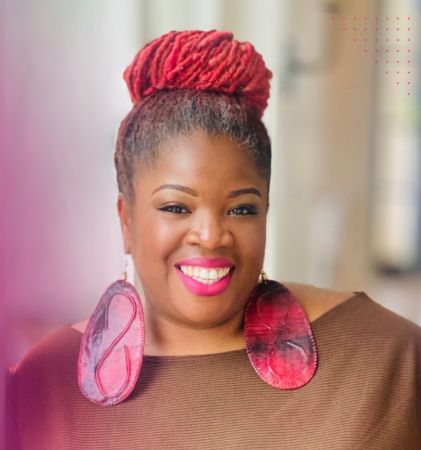
Chancée Lundy is the Executive Director of the Southern Black Girls and Women’s Consortium. Founded in 2017 by LaTosha Brown, Margo Miller, Felecia Lucky, and Alice Eason Jenkins, Southern Black Girls channels resources to underfunded organizations empowering Black girls and women across 13 Southern states. Learn more at southernblackgirls.org.
RELATED CONTENT: Bama State Baddies Shut It Down: Inside Alabama State’s Hottest Homecoming Yet