Lizzo’s Vegan Confession Proves Healthy Eating Isn't A Trend
Lizzo’s 50-Pound Weight Gain Revelation Exposes The Biggest Lie We’ve Been Told About Veganism [Op-Ed] - Page 2
A vegan lifestyle is different, but the difference is not the label; it's the education. Lizzo and many others, myself included, have had to learn this lesson the hard way.
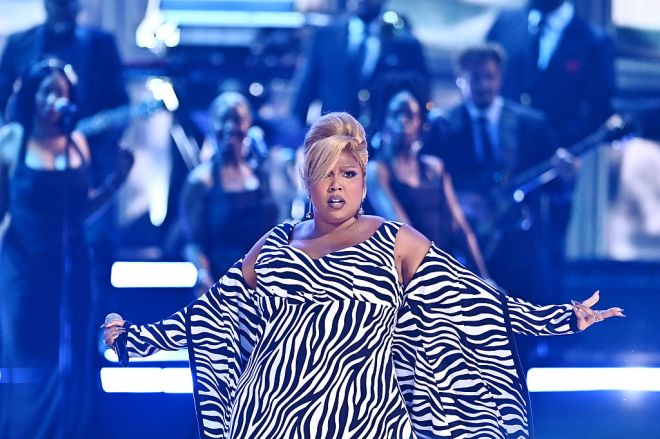
Source: LOS ANGELES, CALIFORNIA – JUNE 28: Lizzo performs onstage during the BET Awards 2026 at Peacock Theater on June 28, 2026 in Los Angeles, California. (Photo by Paras Griffin/Getty Images for BET)
To some, becoming vegan is the ultimate wellness flex. Trading the “all beef patties” for Beyond Meat. Swapping the dairy for the oat milk. Oh, and you gotta add the green juice. Sounds simple. Right? That, I assume is what led us to believe being “vegan” was a walk in the park and it automatically meant “healthy” living.
Lizzo’s recent revelation reminds us that vegan and healthy are not always synonymous. While reflecting on her recent weight-loss journey, the Grammy Award-winning singer shared that she gained nearly 50 pounds while she tried to adopt a vegan lifestyle. According to her, processed meat alternatives and French fries became staples in her diet before she realized the lifestyle was not that simple and that what she was doing was not working for her body.
Her comments immediately reignited conversations about her weight loss over the years. Some praised her commitment to improving her health. Some questioned whether her weight loss somehow contradicted the body-positive movement she spent years championing. Others, called BS because how could she be vegan AND gain that much weight. While Lizzo’s body is no one’s business except hers we are asking the wrong question.
Instead of debating whether Lizzo should have lost weight, we should be talking about what her experience teaches us about nutrition. Weight loss has become one of the biggest wellness conversations of this generation. However, the conversation often excludes discussion of nutrition. From social media before-and-after photos to the growing popularity of GLP-1 medications like Ozempic, Wegovy, and Zepbound, millions of people are searching for fast, effective ways to lose weight. While prescription medications have become a huge part of that conversation, many people are also choosing to support their journey with nutritional lifestyle changes.
More Americans are embracing veganism, vegetarianism, pescatarian eating, and other plant-based lifestyles, not just because of animal welfare or environmental concerns, but because they hope these eating patterns will help them lose weight, reduce inflammation, improve chronic health conditions, and feel better overall.
The intention is great and admirable. However, execution oftentimes falls short. Because changing what you eat is not the same thing as understanding how to nourish your body. This is where people get confused, and they fall short. There are so many misconceptions with one of the biggest surrounding plant-based eating. Because eliminating meat is supposed to automatically improve your diet, right? WRONG!
French fries are vegan.
Potato chips are vegan.
A lot of cookies, candies, and processed snacks are vegan.
You can consume thousands of calories a day on foods that are technically vegan while still falling short on protein, fiber, vitamins, and other essential nutrients.
Listen, I am not throwing shade at veganism because when well played and well-planned a vegan lifestyle can be a nutrient-rich way to eat. Veganism emphasizes vegetables, fruits, legumes, whole grains, nuts, seeds, and healthy fats. A vegan lifestyle is different, but the difference is not the label. The difference is education. And that is something that Lizzo and many others have learned the hard way.
Lizzo is not alone in discovering that plant-based eating requires more than simply replacing chicken with processed alternatives. Singer SZA previously shared that her first attempt at veganism was not successful because she had not yet learned how to balance her meals. Like many people making the transition, she discovered that eating vegan requires just as much nutritional knowledge as any other eating style.
R&B singer Mya has often spoken about her long-term commitment to a vegan lifestyle. Mya often credits Whole Foods, fresh produce, and mindful eating with her success, not just dropping meat for helping her maintain her health and banging body. Mya’s approach reflects what many registered dietitians recommend: build your meals around nutrient-dense foods rather than relying on heavily processed substitutes.
Actress and author Tabitha Brown is undoubtedly one of the most recognizable voices in the plant-based community. Tab encourages people to view veganism as a sustainable lifestyle rather than a restrictive diet. Her recipes center on flavor, accessibility, and whole-food ingredients, reminding followers that healthy eating is not a punishment.
Each of these women had a different journey, but they share one important truth. No diet or lifestyle change works if you do not understand nutrition.
We have watched Lizzo’s body change, and y’all— not me— have had something to say every step of the way. For years, Lizzo’s body has been the subject of public debate. Shaking fingers at her because her weight fluctuates. Some celebrate her confidence while others criticize her size. People accuse her of betraying body positivity simply because she decided she wanted something different for herself. The irony is that loving your body and wanting to improve your health have never been mutually exclusive.
To be clear, self-love does not require stagnation; it does not demand that we stay exactly as we are forever. We straighten our teeth. We go to therapy. We obtain degrees. We heal emotionally. We build wealth. We evolve. Why shouldn’t our health evolve, too?
For anyone considering a plant-based lifestyle, experts recommend focusing less on processed convenience foods and more on nutrient-dense, whole-food ingredients. That means prioritizing things like:
Beans, lentils, and legumes for protein and fiber.
Tofu, tempeh, and edamame are complete plant proteins.
Colorful vegetables and leafy greens are rich in vitamins and antioxidants.
Fruits that provide natural sweetness and essential nutrients.
Whole grains like quinoa, brown rice, and oats.
Healthy fats from avocados, nuts, and seeds.
Vitamin B12, iron, calcium, omega-3 fatty acids, and vitamin D through fortified foods or supplements when appropriate.
In other words, successful veganism requires intention, not imitation.
What I have learned in my own wellness journey is that trends can inspire you, but they will not sustain you. I know that the same internet that celebrates dramatic weight loss one day will criticize you the next. We have watched it happen to Lizzo, countless other celebrities, and everyday women like me.
Health is deeply personal. What nourishes one body may not nourish another. Whether your path includes a GLP-1 medication, a pescatarian lifestyle, veganism, Kosher eating, or simply committing to cooking more meals at home, the goal should not be chasing someone else’s transformation. It should be building a lifestyle you can maintain. Lizzo’s story is not about giving up veganism. It is about discovering that labels do not nourish our bodies; knowledge does. And that is the healthiest takeaway of all.