Deeply Rooted Dance Theater Marks 30 Years Of Movement
‘Being Joyful And Black Is Protest’ — Chicago’s Deeply Rooted Dance Theater Marks 30 Years Of Movement And Resistance [Exclusive]

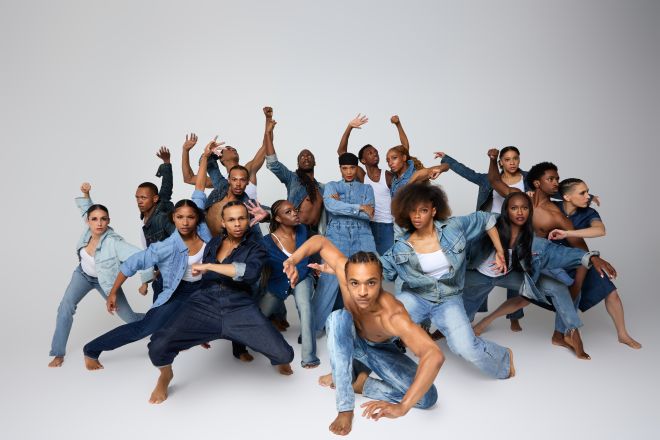
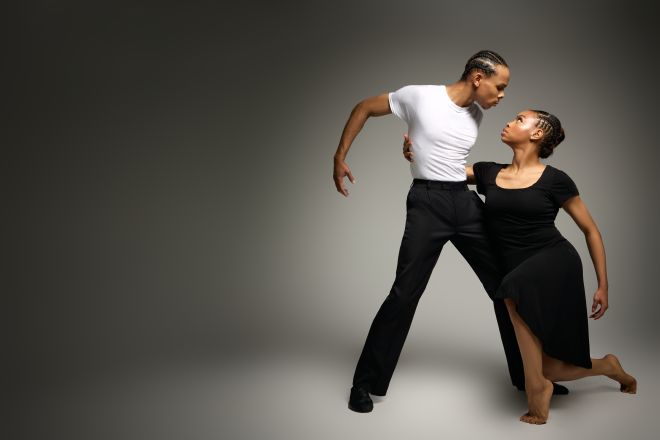
Some stories stretch across time, carried in bodies—hips, shoulders, hands, feet. In the case of Chicago’s Deeply Rooted Dance Theater, those stories pulse across the stage with an urgency that asks audiences to witness and feel.
As the company celebrates its 30th anniversary season, Deeply Rooted is doing what it has always done best: honoring the past while pushing forward, telling Black stories with clarity. The milestone season includes a recent collaboration with the Chicago Sinfonietta and a return to the historic Auditorium Theatre in May. Beyond the performances themselves, the anniversary marks a recommitment to community, cultural memory, and the idea that dance is language.
RELATED CONTENT: From Raphael Saadiq To Misty Copeland — Every Artist Who Helped Turn The ‘Sinners’ Oscars ‘Lied To You’ Performance Into A Cultural Moment
When History Moves
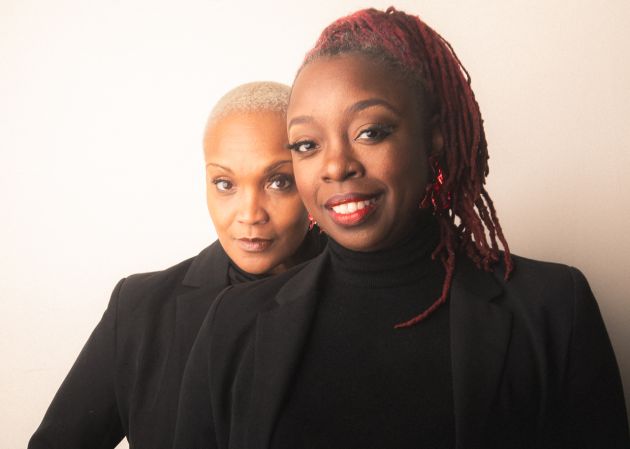
For artistic director Nicole Clarke-Springer, dance offers something that text alone cannot.
“Sometimes seeing is believing,” she told MadameNoire in a recent conversation. “If you can see yourself and see what’s going on in real time, it has a different impact than just reading about it.” It’s a distinction that feels especially urgent in a time when Black history is increasingly contested, condensed, or outright erased. On stage, however, there is no footnote to argue with, no paragraph to reinterpret. Dance, Clarke-Springer explained, engages audiences on multiple levels at once. It pairs movement with music, lighting, and emotion to create an experience that is “unforgettable…life-changing…affirming.”
Executive director Makeda Crayton expands on that idea, framing dance as a full sensory experience that embeds itself in memory. “When we are able to use multiple sensory organs at one time, it leaves a more indelible mark on us,” she said. She likens it to the way people remember a car accident—through sound, smell, and physical sensation. Dance, she suggests, operates in a similar way. It imprints. For Black audiences in particular, that imprint can be deeply personal.
Reclaiming the Body, Reclaiming the Self
In a society where Black women’s labor is desired in the same breath as policing our bodies, dance offers something radical: permission to return to self. Clarke-Springer points to the roots of that connection in West African dance traditions, where movement is not just expressive but restorative. “It awakens,” she said, noting the ways in which the body—especially the hips and core—holds both strength and vulnerability. The duality is important to call out, as softness is not always readily accessible. It has to be reclaimed.
Crayton, who transitioned from dancer to executive leadership, speaks candidly about the toll of a sedentary, high-demand lifestyle. Long hours at a desk, constant exposure to screens, and the weight of responsibility can disconnect people from their bodies entirely. “Being stagnant for this many hours in the day…is just not healthy,” she said. “There needs to be motion.” Beyond physical health, she also notes the need to create rituals that pour back into the self. “We have to start to learn how to prioritize our wellness,” Crayton said. “And one of the ways we could do that is making sure that we create space…to feed back into who we are in our spirit.”
There Is No “Too Late”
At Deeply Rooted, that invitation is not limited to professional dancers. Through programs like Mature H.O.T. Women (short for Holistic, Optimistic, and Triumphant) the company creates space for women who may have stepped away from dance or never fully explored it at all.
“These are women from all walks of life,” Clarke-Springer said. “They need a space where they’re not mom or a CEO or the dog catcher…they just need time to pour into themselves.” It’s a quiet but powerful counter-narrative to the cultural messaging that often sidelines women—especially Black women—as they age. Here, the body is something to be celebrated, explored, and trusted. That act becomes a form of resistance.
RELATED CONTENT: Revelations: How Krista Martins Brings The Joy & Rhythm Of Carnival To Fitness With Wukkout!
Joy As Protest
Deeply Rooted’s 30th anniversary theme—Love, Joy, and Resistance—is both conceptual and embodied. “I think just being joyful and being Black is protest,” Clarke-Springer said plainly.
In a society that often denies Black women the full range of our humanity, joy becomes a radical act. So does self-love. So does simply existing in fullness. Crayton takes that idea even further, grounding it in the stories the company chooses to tell. “We’re not on stage doing Swan Lake or Sleeping Beauty,” she said. “We’re telling stories from our people. We are here. We have been here. We have contributed greatly to society,” Crayton said.
They are doing so in a way that invites audiences in, rather than keeping them at a distance.At one performance set to the music of Quincy Jones, the audience sang, clapped, and participated. A reviewer described it as feeling like a family reunion. That’s the thing about Deeply Rooted: It creates community.
The Cost of Community
That commitment, however, comes with its own set of challenges.
Balancing accessibility with sustainability is a constant negotiation. Many of the people Deeply Rooted serves do not have disposable income, yet the costs of producing high-quality dance work continue to rise. “We try to make sure that our prices remain affordable,” Crayton said. “Sometimes that has been to our detriment.” To bridge that gap, the organization relies on grants, donations, and partnerships. Even those avenues come with barriers, particularly for smaller arts organizations.
Crayton is candid about the labor involved in securing funding. “Fifty-page applications…reporting requirements…it takes hours upon hours,” she said, describing a system that often places additional strain on already limited staff. It’s a cycle that can feel impossible to break: needing funding to grow, but lacking the resources to access it.
Still, Deeply Rooted persists, advocating for more equitable processes while continuing to do the work. Part of that work involves changing perceptions. “Sometimes wealthy individuals don’t value dance the way they value music,” Crayton noted. Once they experience it, the value becomes undeniable.
For those wondering how to support, the answer is both simple and layered. “Come see the art,” Crayton said. Exposure matters. Presence matters. Participation matters. Support doesn’t have to be grand to be meaningful. “There’s no donation that’s too small,” she added. “We take a dollar…because they all add up.” She also challenges audiences to rethink how they allocate their time and resources. “Maybe trade off on how many sports games you go see…go to two arts events this year.” It’s a small shift with potentially large impact—not just for organizations like Deeply Rooted, but for the cultural ecosystems they sustain.
Building the Future on Sacred Ground
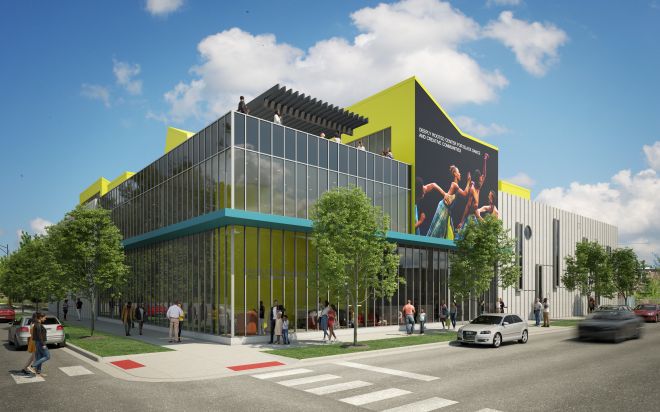
Perhaps the most significant marker of this anniversary season isn’t just what’s happening on stage, but what’s being built off of it. Deeply Rooted is preparing to break ground on the Deeply Rooted Center for Black Dance and Creative Communities, a multi-million dollar facility on Chicago’s South Side. The center will include studios, performance spaces, and community gathering areas. It will also serve as a home for other small dance organizations that lack permanent space.
“This is the first time we’ll have our own space,” Crayton said. The location itself is intentional. The center will be built near the former site of the Robert Taylor Homes, an area rich with history and complexity. “We’re trying to put something cultural…back into that neighborhood,” she explained. Announced plans for the space include: a rooftop garden, a black box theater, community events, classes, and opportunities for connection. A space where people can “use the vehicle of dance to become our best selves,” she said.
As Deeply Rooted Dance Theater steps into its next chapter, it’s clear this is a company grounded in history, sustained by community, and propelled by vision. Its work reminds us that dance is an integral part of culture, an archive, and a testimony. It is how we remember. It is how we resist. Most importantly, it is how we return to ourselves.
RELATED CONTENT: Feathers, Fire & Flawless Form — Misty Copeland’s Ate The Oscars 2026 Stage Down And Left No Crumbs