What Is Save America Act & Is It A Problem For Married Women?
What Is The Save America Act & Why Could It Be A Problem For Married Women?
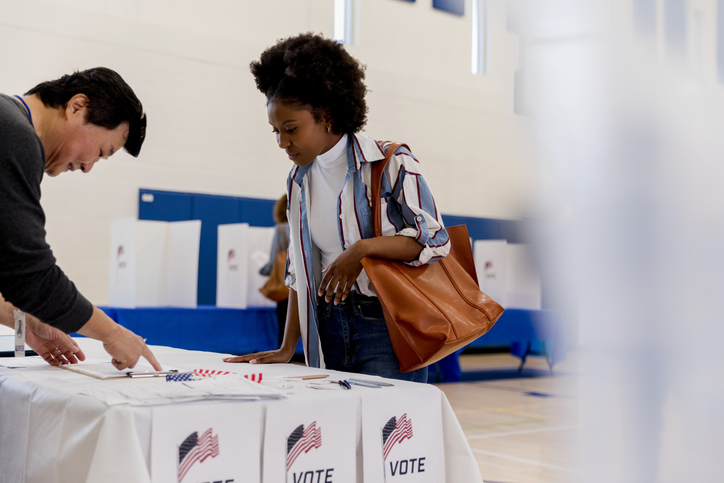
A recently passed bill in Congress, the SAVE America Act, could significantly reshape how Americans register to vote and cast their ballots. Supporters say it strengthens election security. Critics argue it risks disenfranchising millions of voters, particularly married women and LGBTQ+ Americans who have changed their names.
So what exactly is the SAVE America Act — and why has it sparked so much concern?
What is the SAVE America Act? How is it different from the SAVE Act?
The SAVE America Act, passed in February 2026, builds on and expands the earlier Safeguard American Voter Eligibility (SAVE) Act, which passed in 2025. Both measures are centered on preventing noncitizens from voting, something that is already illegal under federal law. However, the 2026 version imposes stricter documentation requirements and additional limitations on voter registration.
On Feb. 11, the House approved the SAVE America Act in a 218-213 vote that fell largely along party lines, USA Today noted. Texas Democrat Henry Cuellar was the only Democrat to vote in favor of the legislation. The bill now heads to the Senate for review, which is sure to face a tough battle.
Why should we be concerned?
The measure would introduce tighter rules around voter registration and ballot casting, including requirements that could create complications for married women or LGBTQ+ individuals whose current legal names do not match the names on their original documentation.

RELATED CONTENT: Critics Say Georgia’s Religious Freedom Act Enables ‘Discrimination’ Against The ‘Black, Brown And LGBTQ+ Community’
While voter ID laws generally receive bipartisan public support, critics argue that the provisions in this bill go well beyond standard ID requirements.
As Sean Morales-Doyle, director of the Voting Rights and Elections Program at the nonpartisan Brennan Center for Justice, told NPR in 2025, this is not your normal voter ID law.
“This is not a show-your-driver’s-license when you go to vote. This is a show-your-papers law.”
Under the SAVE America Act, most voters would no longer be able to register using only a driver’s license, since licenses typically do not confirm citizenship status, according to Campaign Legal Letter. Instead, individuals would need to present documents such as a passport or birth certificate to prove citizenship when registering.
Voting rights organizations warn that this requirement could disproportionately affect Americans who have changed their legal names due to marriage, cultural assimilation, or gender identity alignment. Birth certificates, one of the primary accepted documents, often do not reflect a person’s current legal name.
According to American Progress, more than 140 million American citizens do not possess a passport. Additionally, as many as 69 million women who have taken their spouse’s surname do not have a birth certificate that matches their legal name.
Even when legal pathways exist to reconcile documentation discrepancies, Morales-Doyle says the process can be complicated, expensive and time-consuming.
“That can be a lot of work. It could mean spending a lot of money on a passport. It could mean going and finding your birth certificate and proof that you are the person on that birth certificate, because you’ve changed your name,” he told NPR last year. “That can take time, and so you’re going to need to do it well in advance of the elections.”
The legislation would also eliminate common voter registration methods, such as online, mail-in, and in-person registration drives. Morales-Doyle warned that this could disproportionately affect rural communities.
“There are definitely people who live 10, 20, 50, 100 miles away from the closest election official: people who live in rural places, people who live on tribal lands,” Morales-Doyle added. “They’re going to have a big burden placed on their ability to get registered.”
Why Was the Bill Passed?
The push for stricter voter ID laws comes amid broader Republican efforts to tighten election regulations. According to The 19th News, the House vote occurred after the White House reopened investigations into an election office in Fulton County, Georgia — a focal point of President Donald Trump’s unfounded claims of election fraud in 2020.
Trump has also recently said he wants to “nationalize” voting. While he has not clearly defined what that would entail, critics speculate it could involve increased federal authority over state-run election systems, particularly in states where he lost to former President Joe Biden.
What would voter registration look like under the SAVE America Act?
According to The 19th News, if passed, the SAVE America Act would change the voting registration process entirely. It would require voters to present an eligible photo ID before voting, in addition to showing proof of citizenship at registration.
Mail-in voters would also be required to include a scanned copy of their identification, even in states that automatically mail ballots to eligible voters.
The bill mandates that states review voter rolls and remove noncitizens after submitting records to the Department of Homeland Security. While cases of noncitizens voting are extremely rare, critics point out that past voter roll purges at the state level have mistakenly removed eligible voters.
Reactions
The voter ID requirements would take effect immediately if signed into law, potentially affecting voters who have already submitted mail-in ballots for primaries and those hoping to register ahead of upcoming midterm elections.
“There’s absolutely no runway for this bill,” said Gréta Bedekovics, director of democracy policy at the left-leaning Center for American Progress. “Overnight, you would be changing the way that every single American registers to vote, and how millions of people actually vote at the ballot box, and elected officials would have to be doing all this education in real time.”
New Mexico Rep. Teresa Leger Fernandez, chair of the Democratic Women’s Caucus, also criticized the bill’s citizenship verification provisions.
“A real solution would eliminate the provision that requires women to go around and gather all these documents only to then affirm their own identity,” said Leger Fernandez during an interview with The 19th News. She added that as a Latina, she and others often have multiple documents with different legal names, which would add to confusion when registering: “This bill will make it harder, more expensive, for you to register and vote.”
Supporters of the bill, however, argue that concerns are being overstated. GOP Rep. Tim Burchett of Tennessee dismissed claims that the act would prevent married women from voting.
“It’s an easy change — there’s no problem with that at all,” Burchett told the 19th News. “That’s just like saying it’s Jim Crow. That’s an antiquated argument that nobody buys.”
As the SAVE America Act moves to the Senate, one thing is certain: this bill creates new hurdles for eligible voters.
RELATED CONTENT: Upholding John Lewis’ Legacy: 10 People Trying To Secure Voting Rights