Why A Wife’s “Homegirls Savings Account” Isn't Sneaky
If My Husband Can’t Access It, Good — Why Black Women Need Their Own Money [Op-Ed]

When a video recently went viral showing a husband casually explaining that his wife has a savings account with her homegirls—one he doesn’t have access to, details on, or authority over—the internet predictably had a lot to say. The question wasn’t just about money. It was about marriage, trust, independence, and whether womanhood still gets to exist outside of partnership.
My immediate reaction is that it’s smart as hell. Contrary to what we’ve been taught, our spouses are not the only people we do life with. Doing life—with anyone—costs money.
RELATED CONTENT: ‘Your Husband Lets You Go Out?’ — Why I Still Party, Dress Sexy And Push Back Against Toxic Marriage Expectations [Op-Ed]
Marriage Is a Partnership
The husband in the video didn’t seem threatened, angry, or emasculated. If anything, he sounded curious and mildly amazed. He wasn’t scrambling to figure out how this account impacted his household finances, because it didn’t.
Marriage does not automatically entitle a spouse to a play-by-play of every dollar that passes through your hands. Full transparency is necessary when money earmarked for the household is being rerouted elsewhere. That’s a conversation, but when funds are already designated as personal—money set aside for individual use, hobbies, or leisure—there’s no moral obligation to provide a ledger.
If I decide to invest my discretionary money with my friends instead of spending it on brunch, shoes, or a solo vacation, that’s still me making a choice with my money. If that investment grows into something bigger—group travel, emergency support, shared experiences—that doesn’t suddenly make it communal property within my marriage.
Let’s Be Clear About The Line Between Privacy And Deception

There are lines. Sitting on millions while your household is struggling is foul. Moving money earmarked for joint expenses into hidden accounts is a breach of trust. Dipping into your partner’s personal funds without a conversation is also out of bounds.
However, this account? This isn’t hush money. It’s not a rainy-day escape fund siphoned from the family budget. It’s closer to business money—pooled resources that multiple people are relying on for shared goals. Treating it like a slush fund “just in case” would be irresponsible not just to the marriage, but to the women involved.
That’s the part people seem to miss. This money doesn’t exist in a vacuum. Other women are counting on it. It’s not something you casually liquidate because your household hits a temporary snag. Short of a true emergency—medical, housing, survival-level crisis—it shouldn’t even be up for discussion.
Why Black Women Think About Money Differently
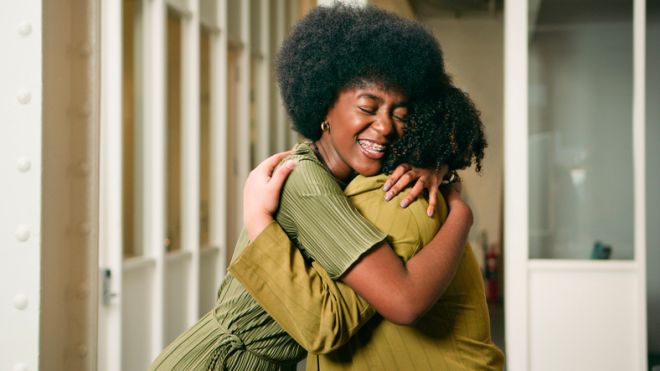
For Black women, financial autonomy isn’t some feminist theory experiment. It’s inherited wisdom. Most of us were raised by women who knew what it meant to be stuck. Stuck in marriages they couldn’t leave. Stuck in financial arrangements that didn’t serve them. Stuck waiting for permission, stability, or rescue that never came. Then came COVID, lockdowns, job losses, and relationships that cracked under pressure. Women realized that when you need to go, you need to be able to go. Having “a little something on the side” isn’t about plotting an exit. Instead it’s about not being trapped. Our elders didn’t fight for options so we could romanticize dependence.
As Candi Staton told us decades ago: Young hearts run free. The difference now is that we also know how to fund that freedom responsibly.
Independence Is Still A Dirty Word When Black Women Claim It
Black women are judged more harshly than almost anyone when we prioritize security inside relationships. Wanting financial stability? We’re demanding. Wanting nice experiences? We’re materialistic. Expecting dates that reflect our standards? We’re gold diggers.
Never mind that many women are already funding their own lifestyles. Never mind that “bare minimum” looks different when you’re already carrying bills, children, and responsibilities. If a woman runs up a brunch tab once a month, her baseline might not be a $12 coffee date—and that doesn’t make her shallow. Instead of opting out, some men choose to shame. Here’s the truth many don’t want to say out loud: Baby, she is the gold. Black women are no longer pretending otherwise.
RELATED CONTENT: Don’t Sleep On The Benefit Of Having Younger And Older Friendships
Marriage Doesn’t Cancel Community

A homegirls’ savings account is also cultural. Black women have always pooled resources. Susus, rotating savings, or rent parties. Showing up when someone else can’t was a community investment.
It’s also a solution to a problem many women know too well: friendships falling apart over money. How many Miami group trips have gone left because one person couldn’t afford it? How many memories were cut short because everyone wasn’t on equal footing? If five women contribute consistently, everyone eats. Everyone travels. Everyone shows up without shame. Even the friend who’s “broke right now” still gets the same experience because she invested earlier.
Is It A Double Standard? Sure.
If a man says, “If you don’t tell me everything, you don’t trust me,” I hear something else entirely. Trust doesn’t require ownership. If my friends confide in me—emotionally or financially—that trust doesn’t automatically extend to my partner. They didn’t choose him. They chose me. Unless that trust compromises my household, there’s nothing to negotiate.
Marriage doesn’t dissolve your other relationships. It doesn’t absorb every part of your identity. It doesn’t erase the fact that you existed before your vows.
If the roles were reversed, most of us would have questions. Yes, that’s a double standard, but it also reflects reality. Men—especially breadwinners—aren’t policed the same way when it comes to spending or saving. There’s an assumed authority there that women don’t automatically get. So while the standard isn’t equal, the context isn’t either. Until it is, Black women are allowed to move in ways that protect themselves and their communities.
This isn’t about hiding money from husbands, but expanding the definition of partnership. It’s about acknowledging that romantic relationships are important, but they are not the only relationships that sustain us.
Millennials were raised with rigid timelines like ring by spring and baby by 30, even as those practices quietly fell apart. What remains is a generation moving at different speeds, often leaving unmarried friends behind. If this practice ultimately means women are prioritizing friendship in a meaningful way, I am here for it.
Marriage does not require Black women to surrender financial autonomy, community investment, or the parts of themselves that existed before love showed up.
If that makes someone uncomfortable, the issue isn’t the account. It’s the idea that women are no longer asking for permission to be secure.
RELATED CONTENT: Squad Goals: 5 Friends Every Woman Deserves