How Tigerlily Foundation Helps Black Women Fight Breast Cancer
‘Health Is A Living Legacy’ — Tigerlily Foundation Is Rewriting The Breast Cancer Narrative For Black Women With Healing, Not Hustle

Black women have the highest death rate from breast cancer, and one organization is going beyond just advocacy and awareness; it is providing a safe space for women to learn, heal, and move forward in the fight against the disease.
Inspired by her own experience with breast cancer, Maimah Karmo launched the Tigerlily Foundation to shine a light on the disparities Black women face when it comes to outcomes from the illness, specifically underrepresentation in clinical trials. Moreover, the organization maintains a DNA that sets it apart from its counterparts while remaining true to the task at hand – combating breast cancer one huge step at a time.
“It’s our heart-centeredness,” Karmo reflected during an interview with Madamenoire, when asked about the uniqueness that Tigerlily brings forward that cannot be duplicated.

“Black women have, for so many years, had to be strong and had to carry so much, which I think contributed a lot to our comorbidities and our health, or lack thereof,” she continued. “What we bring is a sense of, look, what our name represents and what it stands for, soft strength, right? With the tiger and the lily. So we’re asking women to like, when you’re going through breast cancer, you don’t have to be strong. You can come to us as a safe, heart-centered space, and we will take care of you, support you, and help you build that resilience going forward. We allow women to come to us in a space of healing and transformation, and to kind of lay down the cape for a little bit.”
While others may push the narrative that fighting breast cancer makes you a warrior, Karmo says experiencing the significant change that comes as a woman who finds herself diagnosed with the ailment, or being the caretaker of someone fighting that battle, is no easy feat. One does not have to put on a mask to pretend that it is.

“It’s not okay to have to fight something that you didn’t ask for and to carry that, so we’re like, ‘Come here, we’ll hug you. Take a deep breath, and we’re going to hold you through this process.”
The programs tailored to support women at every step also carry titles that align with the organization’s overarching mission.
RELATED CONTENT: These 6 Black Women Led Organizations Are Working To Spread Breast Cancer Awareness
From the Angel program to Tigerlily’s policy center (Heal) and its navigation program (Empower Her), they go the extra mile to avoid medical jargon and language that can remind people of the isolation they often face after a diagnosis.

On Saturday, Dec. 6, the Bliss Collective Brunch, rooted in community, health, healing, and heart-centeredness, launched in New York. Karamo has plans to take it on a city-wide tour to ensure that women with ties to breast cancer will have a place fueled by the connection that can only come from being at an in-person event, and not just online groups or forums designed to foster the community needed when encountering the disease.
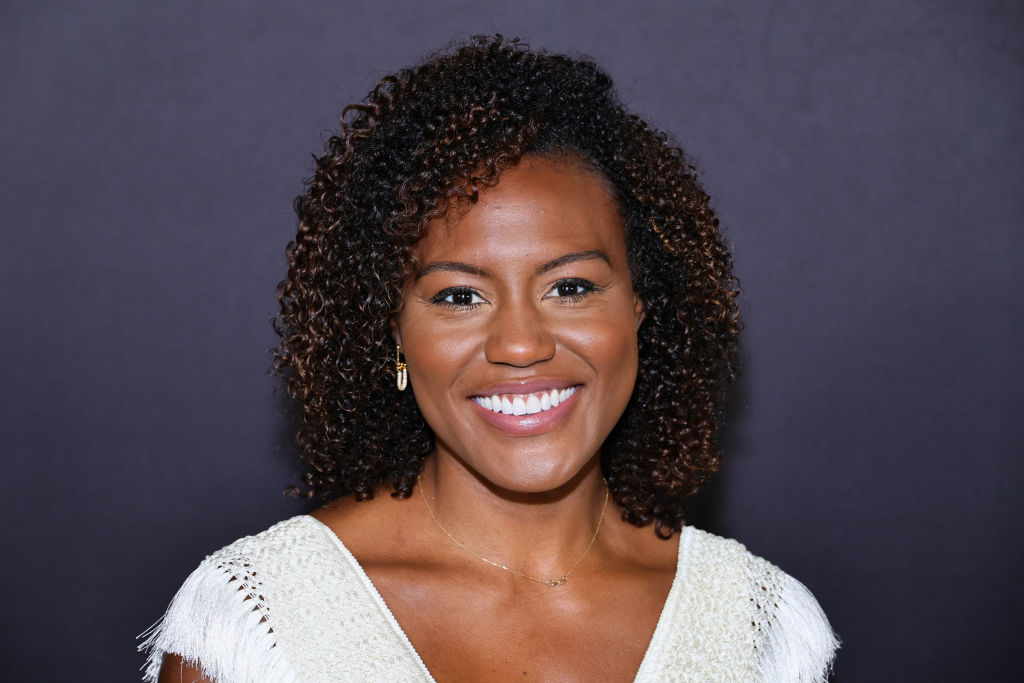
“When Maimah reached out to me, I think we had just received my mom’s diagnosis, maybe the day or two before, so I knew that I was supposed to be doing this,” actress and body-positive advocate known for her work in Starz’s Power Book II: Ghost and BET’s Don’t Touch My Hair, RaVal Davis told MN.
She hosted the Bliss Collective Brunch in New York City.

“I was like,’ That timing is not coincidental, I’m supposed to be supporting you on this,’” Davis continued, also taking a moment to thank Karmo during the call for tapping her to be a part of the event. “But also, speaking to my mother’s experience, one of the things that we talked about, literally, like, last night and the night and the day before was physical touch. That’s something that can happen at this brunch. It’s just a hug. Don’t you know whether the woman going through this is married? Does she have kids, or is she single, at home by herself, and she’s just like, I haven’t had a hug in such a long time. Cancer is something that is going on in your body. It’s a physical thing. It’s causing pain and all sorts of things in her body, and I just realized how much physical touch is very healing for her.”
Davis added, “She’ll be like, ‘Can you rub my back?’ And I’m like, ‘Is it hurting?’ and she’s like, ‘Oh, that feels great.’ Last night she asked me, ‘Will you sleep in bed with me?’ And I’m like, ‘Of course, mommy.’ It’s that component that you get in person at events like this, Bliss Collective Brunch, that you can’t get through ChatGPT, on a Zoom call, or over the phone. Just that, ‘I’m here for you. I don’t know what you’re going through, but we’re in this together. Here’s a hug. I love you.’ The physical touch, I think, is such a game changer.”
Speaking of ChatGPT, Karmo also said that artificial intelligence must be a driving force for change in the fight against breast cancer.

Source: Courtesy of Tigerlily
“We love AI. I love some ChatGPT. It can give me advice as my therapist, like, all the things, like what to do in a text, but it cannot replace the human connection, right?” said Karmo. “AI can, however, be beneficial towards getting people information really quickly that they need to have access to, but it can also misinform based on what you’re putting in, like, for example, garbage in, garbage out. The benefit of AI is that it’s advancing science and research. It’s advancing clinical trials, which means we’ll have better treatments at some point that will target Black women’s more aggressive cancers. I do think that one of the things that we’re building is a community of health, right?”
Davis noted that she uses ChatGPT to help her ask the right questions during her mother’s doctor visits, which Karmo echoed as a way that AI can serve as a resource when navigating the breast cancer journey.
“If you don’t ask, you don’t get told,” said Karmo. “Black women are talking about clinical trials, which we’re talking about on Saturday, or biomarker testing, or about certain kinds of treatment. There’s so much data out there that it can be overwhelming and a lot to absorb. If you say, ‘ChatGPT, give me a list of the top 10 breast cancer foundations in the country that I can rely on for data about this disease subtype, or about breast cancer in general.’ It’ll tell you who’s the most trusted, and we’re among those trusted people. And you can say, ‘I want information on my first doctor appointment about treatments that are available, or about trials, or about what tests are available, or what to ask for around side effects’. So it can give you, like, to RaVal’s point, bite-sized information to be able to ask, because, again, you know, there’s so much you may not be told that can impact your quality of life, your life span, and your survivorship, to be honest. So it’s essential to go into the appointments as informed as possible, until you figure out which breast cancer groups to trust. And when you come to us, we have a plethora of resources that you can pull from to even, like, what RaVal was asking, like, what to ask about different things. We have a whole toolkit, like 15 toolkits on different things to ask about that you can download to your phone that will be available at the brunch to people, people to like, to just, you know, scan and pull up and ask when they go to their appointments.”

The goal for Karmo is to help people understand the importance of health as part of their living legacy and to pass it on to generations of women to come.
“Having health is a living legacy, and living that legacy in the community for yourself, you help yourself, your family, and the community,” she concluded.
RELATED CONTENT: Why Black Women Face Higher Breast Cancer Mortality Risks & What’s Being Done