National Botox Day! 6 Unexpected Medical Benefits of Botox
Kandi Burruss, Porsha Willams & Simone Biles Use It For Glam—But Doctors Use Botox For These 6 Surprising Medical Fixes

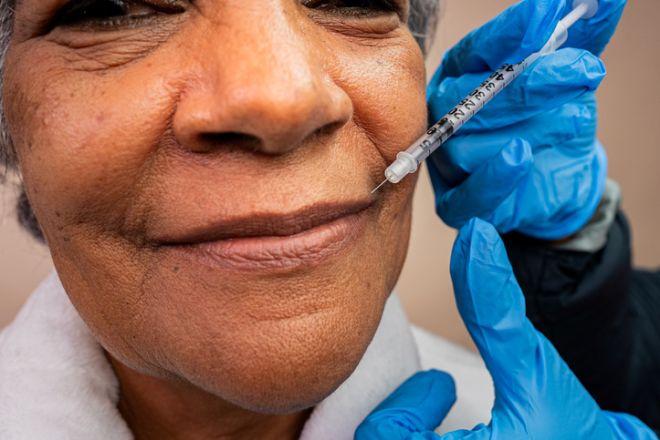
It’s National Botox Day (November 19)! Most people recognize Botox as a cosmetic treatment for wrinkles and fine lines in the face. Many have used it on their forehead, around their eyes, and on their frown lines to slow down signs of aging. Notable people like Kandi Burruss, Simone Biles and Porsha Williams have used Botox, with varying results.
However, Botox is used for more than just beautification. Medical professionals also use the injectables for more serious medical concerns.
The bacterium, clostridium botulinum, produces Botox. Infection with this can cause botulism, which makes it difficult to breathe and can result in paralysis. Upon further research, doctors found a safe way to use Botox to help relieve pain and other medical issues.
Here is a list of other disorders and conditions that Botox can treat.
RELATED CONTENT: Vanessa Williams Refuses To Use Fillers Or Botox At 61: ‘I Want To Look Like Myself’
1. Strabismus
Strabismus is a term for crossed eyes, which Botox can help with. After its 1989 approval, doctors began using Botox to treat strabismus. This is thanks to a doctor named Dr. Alan Scott, who discovered a diluted version of Botox that would safely help with eye impairment.
It’s injected into the muscle that causes the misalignment of a person’s eyes. Once injected, the muscles should ease up and align the eyes.
The effects last about 3 to 6 months before the eye muscles return to their original state.
2. Overactive Bladder

An overactive bladder is when there is a sudden and strong urge to urinate. This condition can cause patients to have to use the bathroom frequently due to their bladder muscles contracting uncontrollably.
But Botox has proven to be a solution for OAB. A urologist will inject the Botox into the bladder muscle to alleviate it, which gives patients more time to make it to the bathroom.
3. Hyperhidrosis

For anyone who suffers from hyperhidrosis, they know it can be super annoying and inconvenient. It is a disorder where a person excessively sweats with no relief from antiperspirants. Usually, the sweating occurs in the hands, armpits, chest, face and feet.
Botox blocks nerve signals that activate the sweat glands. It may take three to four days to see results from the injections, and results can last for up to six months.
According to the International Hyperhidrosis Society, people who receive Botox for this condition could experience a decrease in sweating by 85%.
4. Migraines
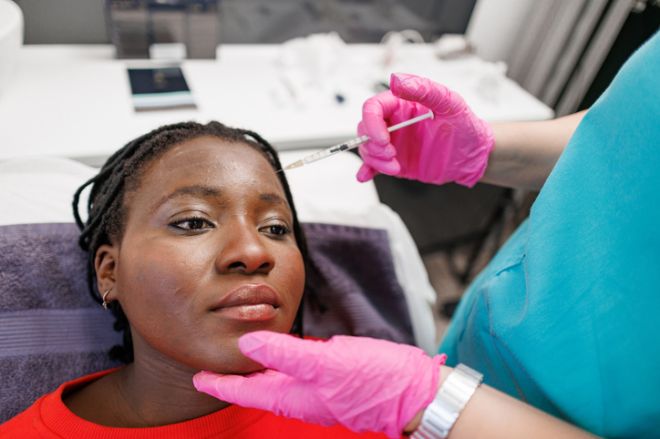
Patients suffering from chronic migraines can turn to Botox as a relief. Only people who have had a migraine for 15 days or more can use the injectables for treatment. Patients must also be 18 years of age or older.
Doctors make about 31 to 39 small injections of Botox around a patient’s face, neck, shoulders, and the back of the head. Once injected, it disrupts the transmission of pain signals from the brain to the nerves. The FDA approved using Botox as a treatment option for migraines back in 2010.
Results can take about four weeks.
5. Foot Pain

Some people suffer from chronic foot and ankle pain. Botox might be able to take care of that.
It can be used to treat plantar fasciitis, which is caused by inflammation in the thick tissue of one’s foot. This is one of the common causes of sharp and stabbing heel pain. People typically feel plantar fasciitis in the morning, and it can worsen the longer an individual is standing.
As for the process, once Botox is injected into the foot, it paralyzes the muscles that are causing tension in the foot, thus creating less pain.
6. Neck Spasms

Neck spasms are involuntary contractions of neck muscles and can cause pain or stiffness.
This can make it difficult to move one’s head and neck. Treatment typically includes applying heat or ice to the area, massaging it, and taking over-the-counter medicine. But Botox is another option. As with the previous conditions, once Botox is injected into the system, it signals the muscles to relax.
Cervical dystonia is a neurological movement disorder that can also be relieved by Botox. This disorder causes muscles to contract involuntarily, leading to uncontrollable twisting or tilting of the head. Botox softens those contractions.
RELATED CONTENT: Wanting To Maintain A Youthful Appearance, Kandi Burruss Shows Off Results Of First Go-Round With Botox