



All Articles Tagged "Will Packer"
Prod. Will Packer Comes Clean About ‘Think Like A Man’ Men’s Room Cameo
From EurWeb.com
Riding high as a box office success, “Think Like A Man,” the film adaptation of Steve Harvey’s “Act Like a Lady, Think Like a Man: What Men Really Think About Love, Relationships, Intimacy, and Commitment” is not short on ingredients for something worth talking about.
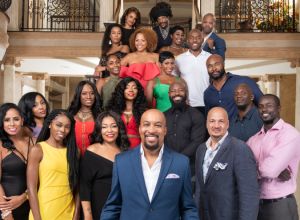
While having an all-star cast (Kevin Hart, Megan Good, Michael Ealy, Regina Hall, Terrence J, Taraji P. Henson, Romany Malco, Gabrielle Union, Jerry Ferrara, Jennifer Lewis and Gary Owen) is comforting, it’s equally fulfilling to have a not so hidden asset make himself known in a memorable way. Such is the case with Producer Will Packer, who also did duty in front of the camera by trading lines with Hart for a particular bathroom scene.
“I really literally did not have an actor for that scene,” Packer confessed to EURweb’s Lee Bailey. “And Kev didn’t know who was gonna be in the scene with (him) until literally right before we shot it. He was like ‘Wait a minute. Hold on. Let me get this straight. You’re taking a job from a working actor?’ He gave me a hard time. He gave me s*** is what he gave me. But it was fun. It was me getting a chance to just have fun.”
Packer’s appearance in the film marks his latest on camera foray. The Rainforest Films co-founder previously appeared in the 2000 romantic thriller “Trois.” While he enjoyed his screen time, don’t expect Packer to follow in the footsteps of Spike Lee with his onscreen face time equaling his time on the other side of the film camera.
“Spike does it on a big level. He’s a real character in his films,” said Packer of his onscreen face time. “I have on several of my films done a little sneak here and there. This one is probably the most … it’s the biggest cameo I’ve had since “Trois.”
For the complete story, visit EurWeb.com.
‘Think Like a Man’ Sequel Already Approved?
Steve Harvey’s “Think Like a Man” feature film, inspired by his similarly titled book, hasn’t even hit theaters yet and already a sequel has been approved, according to Rainforest Films’ Will Packer.
The movie producer tweeted that the president of Screen Gems was on Steve Harvey’s radio show yesterday morning and he announced that a sequel to the upcoming movie will happen.
Maybe the executive felt compelled to say something “big” for his radio cameo because it seems a little premature to announce a follow-up to a movie that hasn’t even been released yet. But then again, women went out in droves to buy the best-selling book, the team must expect people to do the same when the movie comes out this spring.
As long as there isn’t a silly cliffhanger at the end of the first movie, this could be good. What do you think?
Brande Victorian is a blogger and culture writer in New York City. Follower her on Twitter at @be_vic.
More on Madame Noire!
- 7 Underrated Hollywood Actors
- Checking Your Baggage: Sorting Through Your Issues Before Settling Down
- Sisters In Hiding: Not So Famous Sisters of Famous Celebs
- President Obama Can Handle it, But I Can’t
- 8 Signs The Guy You’re Messing With Is NOT a Grown A** Man
- Traits of Trifling Parents
- He Loves Me: Men Who Just Adore Their Wives
- New Documentary Gets ‘In Our Heads About Our Hair’
Tags:
book, film, Rainforest Films, Screen Gems, sequel, sony, steve harvey, think like a man, Will PackerBounce TV Aims to Move the Ball
(Huffington Post) — This week marks another historic milestone in black media, with the launch of Bounce TV, the nation’s first-ever, free broadcast television network marketed exclusively to African-American audiences. Founded by entertainment industry luminaries and businessmen Andrew Young, Martin Luther King III, Andrew “Bo” Young III, television executives Ryan Glover and Jonathan Katz and filmmakers Rob Hardy and Will Packer, the channel targets African Americans primarily between the ages of 25 and 54 with 24-hour programming that includes movies, live sporting events, documentaries and inspirational faith-based programs. ”It was one of those once-in-a-lifetime opportunities when we approached by Ambassador Andrew Young, Martin Luther King III and Ryan Glover. They had this idea and this concept that was past its germination stage,” said Packer, the network’s Chief Strategy and Marketing Officer. “They came to myself and Rob and said, ‘Listen, this is what we want to do. This has the potential to be historic. We want you guys to be apart of this launch, first African-American broadcast network. We want you to bring the same energy and perspective and the same marketing that you have brought to your projects that have been successful.’ And we said, ‘You know what, just the potential of a project like this, how could we say no? How could we not be apart of it?”
Bounce TV – Black Yes, BET No
(Black Enterprise) — Its name may also begin with a “B”– like “black”–but Bounce TV executive Will Packer warns viewers not to mistake his new network for BET. Bounce, he says, will be different. Sure, its target audience is also African American, but Bounce distinguishes itself from Black Entertainment Television, Centric and TV One by its potential reach alone. When it debuts this fall, the Atlanta-based channel, which estimates it will reach 50% of US households at launch (and will grow as it establishes distribution deals like the recent one inked with Raycom Media), will be the first free broadcast network of its kind–a relief for those who can’t afford cable. “We are working to make Bounce available to everyone,” says Packer, the network’s chief strategy and marketing officer, of the plans to broadcast programming on the digital signals of local television stations nationwide, which allows viewers free access to the content.
Producer Will Packer Discusses The Anatomy of A Film Project
“We’re looking for that sweet spot of commercial viability and critical acclaim,” Will Packer says of his and his partner Rob Hardy’s strategy for Rainforest Films, their production company. Working within Hollywood’s fickle studio system, their track record speaks for itself. There was Stomp the Yard, an unlikely success that grossed more than $65 million. Then there was This Christmas, which was made on a budget in the high teens and raked in$50 million. And Obsessed, which virtually tripled its low twenties budget. All projects helped prepare them for their biggest to date: the action flick Takers. The Atlanta Post spoke with Packer about what it takes to produce a thirty million dollar film.
Walk us through the production process for Takers.
It started about a year and half ago. This was a project that was brought to me by Screen Gems. So in terms of script development, not a lot had to be done. The lion share of what I had to tackle was casting, then physical and post production, and distribution. It was a very ambitious project.
We shot in LA. We had multiple film crews working at the same time. We would block off sections of downtown LA for production—one crew doing stunt and action sequences and another crew primarily doing dialogue and human interaction.
How long was shooting?
About 45-50 days.
What were you looking for in terms of casting?
My vision for the film was always a cool, slick, hip, heist film. I wanted guys who could deliver. And I wanted a good looking cast. Action is primarily a male-dominated genre when you talk about audience, so I thought if we put together a really good looking cast, women, who are not traditional action fans, would come on board as well.
How did you settle on the director John Luessenhop?
It’s about looking for the best storyteller. Scorsese has a different skill set from Rob Hardy, Spike Lee, and John. Some directors are great and can do a variety of genres. As a producer, you’re trying to put the right pieces together and that includes the director, cinematography, wardrobe, and everything else.
From a business standpoint, did you do anything differently with Takers than you’ve done with your previous films?
Every film is different in terms of the budget, casting, and marketing. This was our biggest budget and a new genre, so it required a lot of hands-on execution for me in a world where I didn’t have a ton of experience. But at the end of the day, managing the filmmaking process is still managing the filmmaking process. The mechanics of filmmaking don’t change that much from film to film.
You have a specific strategy for working within the Hollywood system. How did you apply that to Takers?
It’s about getting in the system, working within it, and progressing each step of the way. Takers represents that progression. You only get to do thirty million dollar films by first doing three, then fifteen, then twenty. But it’s not always about how big the budget is, but how you can deliver. This was our opportunity to show that we can handle and execute—on time and on budget—a film of this size.
What challenges did you face trying to do that?
There are always challenges. This project was no different. Because it was so ambitious, we continuously had to reevaluate what we were doing, why we were doing it and how. In filmmaking, things are always changing, and this was no different. For example, when we had to film our aerial shots throughout downtown LA, because of weather challenges and cast availability, we had to make schedule changes which dominoed and affected how we shot some of our action sequences. When you’re working with a large budget, you have to be that much more meticulous with your attention to details.
What’s your marketing strategy?
I wanted to ensure that our marketing emphasized the slickness of the film. We wanted to make sure we went after women, a nontraditional market for action. We also did grassroots outreach, which we do for our all films. I’m very hands on. We flew to about eight cities with the cast to get the word out.
Technology is altering the distribution model. What did you have to consider in terms of distribution?
In regards to commercial studio films, the model is still fairly traditional, although that’s going to change. Digital distribution is on the rise for mainstream films. But right now, you have to ship film prints around the country, at an exorbitant cost, in order for people to see the film. For Takers, it was about ensuring that we selected the right theaters and enough theaters so that the film is available to a huge audience nationwide.


