






All Articles Tagged "breastfeeding"
Breastfeeding Chronicles: Help My Baby Won’t Latch On! | Mommy In Chief
About This Episode
If you’re a Mother having problems getting your Baby to latch on when it comes to breastfeeding this bonus episode of Mommy In Chief is for you. We’ve invited back Doctor Lisette Lugo, to offer advice and resources for Moms who are experiecing complications when it comes to breastfeeding.
About Dr. Lissette Lugo
Lissette Lugo, MD, is an attending anesthesiologist and instructor, specializing in obstetric anesthesiology and women’s health. Having practiced anesthesiology in the NYC metro area since 2005, Dr. Lugo has carried her passion for improving women’s health around the world. In addition to her primary work in the City, she has provided medical services to underserved women and children while on mission to the Philippines, West Africa, Southern Africa, and South America. Connecting all of her medical experiences, Dr. Lugo believes in the power of a healing environment in serving the best healthcare experience possible.
Dr. Lugo is a graduate and active alumna of the Weill Cornell Medical College of Cornell University. She completed her Anesthesiology residency at New York Presbyterian Hospital – Cornell and an Obstetric Anesthesiology fellowship at the Brigham and Woman’s Hospital in Boston, Massachusetts.
To connect with Dr. Lugo visit her at everywomanwellness.com or follow her on facebook, twitter and pintrest at every woman nyc.
About Karyn Parsons
Karyn Parsons is best known as the character “Hilary Banks” on the long-running television show, “The Fresh Prince of Bel Air.” Today she is a wife and mother of two. Parsons is also the Founder and President of the Sweet Blackberry foundation after being inspired by the true tale of a determined slave and the remarkable lengths he travelled to find his freedom. While growing up, Parsons’ mother, a librarian in the Black Resource Center of a library in South Central Los Angeles, would share stories of African-American accomplishment with her daughter. A mother and activist, Karyn created Sweet Blackberry to use the power of stories to inspire youth. Follow her on Twitter @Karyn_Parsons.
Want More Mommy In Chief? Watch these episodes:
Season 3
- Episode 1: Mommy-To-Be: Pregnancy In 3 Stages
- Episode 2: The Truth About Breastfeeding
- Episode 3: Delivery Debate: Natural Birth Vs. C-Section
- Episode 4: The Perfect Mother’s Day Gift
- Episode 5: Actress Kym Whitley Talks New Baby & Food Allergies for Kids
- Episode 6: Keeping Your Child Entertained This Summer Without TV
- Episode 7: Ask a Black Father | Mommy in Chief Father’s Day Special
- Episode 8: Building Your Child’s Self Esteem
Season 2
- Episode 1: Are You A Good Enough Mother?
- Episode 2: New Motherhood and Balancing A Busy Work Life
- Episode 3: How to Decorate an Eco-Friendly Baby Nursery
- Episode 4: Foodie, Nicole Friday on Kids and Career
- Episode 5: Melissa Beck, From Hollywood to Stay At Home Mom
- Episode 6: Single Mom in The City
- Episode 7: Mommy Mogul and Marketing Wiz Monique Jackson at Home With Her Boys
- Episode 8: Beauty Maven Jodie Patterson Talks Four-Day Work Week for Moms
- Episode 9: Tonya Lewis Lee on Motherhood and the Importance of Women’s Health
Season 1
- Episode 1: Back 2 School
- Episode 2: Happy Halloween
- Episode 3: Socially Responsible Kids
- Episode 4: Money Talks
- Episode 5: Keeping Families Healthy
- Episode 6: Thanksgiving Madness
- Episode 7: Highlights and Best Moments
- Episode 8: Stylish Moms
- Episode 9: Best Apps for Moms
- Episode 10: Socialite Kids
- Episode 11: Hair Talk with AfroBella
- Episode 12: Happy New Year!
Tags:
babies, birth, bonding, breast pump, breastfeeding, healthy, Hilary, Karyn Parsons, milk, mom-to-be, mommy in chief, mothers, nipples, nutrients, pregnancy, Season 3, sucking, weight loss‘It’s Only Natural:’ Surgeon General Releases Myth-Busting Video About African American Women And Breastfeeding
There are tons of myths attached to breastfeeding and although the Center for Disease Control recently revealed that breastfeeding rates are on an upward climb, there are still many who remain in the dark on the subject. The CDC reported that 55% of African American mothers breastfeed, which is a 35% increase from the 1970′s.
“Despite these increases, many mothers who want to breastfeed are still not getting the support they need from hospitals, doctors, or employers. We must redouble our efforts to support mothers who want to breastfeed,” said Tom Freiden, CDC Director.
U.S. Surgeon General, Regina Benjamin had adopted the cause as well, expressing that spreading awareness among the African American community will increase the number of mothers who desire to breastfeed.
“By raising awareness, the success rate among mothers who want to breastfeed can be greatly improved through active support from their families, their friends and the community,” Benjamin said in a press release issued by the Department of Health and Human Services regarding the agency’s new breastfeeding initiatives.
The newly introduced initiative comes in the form of a multimedia, public education campaign titled It’s Only Natural. The first video to be release by the campaign, Uncovering Breastfeeding Misconceptions, does exactly that. The video depicts multiple women of color discussing common myths surrounding breastfeeding.
“There’s a myth that it will impact the shape and size of your breast, when in fact, that’s more due to nature, gravity, heredity and other things. Breastfeeding doesn’t really impact the shape and size of your breast,” said breastfeeding educator, Jamilah Ellis during the three minute video.
She went on to say that many women have revealed that their partner was not in support of breastfeeding.
“The one thing I heard a lot from some of the moms in the community is that their partner didn’t want them to breastfeed because they wanted the breast back and it kind of has to do with the over sexualization of the breast in American culture.”
Check out the educational video below. What are some of the myths you’ve heard about nursing?
The Truth About Breastfeeding | Mommy In Chief
About This Episode
We are back with a popular topic amongst moms – yes breastfeeding–and its benefits. We invited Doctor Lisette Lugo, founder and managing partner of Every Woman Wellness and obstetric anesthesiologist to clarify the breastfeeding role. Is it truly for every Mom?
About Dr. Lissette Lugo
Lissette Lugo, MD, is an attending anesthesiologist and instructor, specializing in obstetric anesthesiology and women’s health. Having practiced anesthesiology in the NYC metro area since 2005, Dr. Lugo has carried her passion for improving women’s health around the world. In addition to her primary work in the City, she has provided medical services to underserved women and children while on mission to the Philippines, West Africa, Southern Africa, and South America. Connecting all of her medical experiences, Dr. Lugo believes in the power of a healing environment in serving the best healthcare experience possible.
Dr. Lugo is a graduate and active alumna of the Weill Cornell Medical College of Cornell University. She completed her Anesthesiology residency at New York Presbyterian Hospital – Cornell and an Obstetric Anesthesiology fellowship at the Brigham and Woman’s Hospital in Boston, Massachusetts.
To connect with Dr. Lugo visit her at everywomanwellness.com or follow her on facebook, twitter and pintrest at every woman nyc.
About Karyn Parsons
Karyn Parsons is best known as the character “Hilary Banks” on the long-running television show, “The Fresh Prince of Bel Air.” Today she is a wife and mother of two. Parsons is also the Founder and President of the Sweet Blackberry foundation after being inspired by the true tale of a determined slave and the remarkable lengths he travelled to find his freedom. While growing up, Parsons’ mother, a librarian in the Black Resource Center of a library in South Central Los Angeles, would share stories of African-American accomplishment with her daughter. A mother and activist, Karyn created Sweet Blackberry to use the power of stories to inspire youth. Follow her on Twitter @Karyn_Parsons.
Want More Mommy In Chief? Watch these episodes:
Season 3
- Episode 1: Mommy-To-Be: Pregnancy In 3 Stages
- Episode 2: The Truth About Breastfeeding
- Episode 3: Delivery Debate: Natural Birth Vs. C-Section
- Episode 4: The Perfect Mother’s Day Gift
- Episode 5: Actress Kym Whitley Talks New Baby & Food Allergies for Kids
- Episode 6: Keeping Your Child Entertained This Summer Without TV
- Episode 7: Ask a Black Father | Mommy in Chief Father’s Day Special
- Episode 8: Building Your Child’s Self Esteem
Season 2
- Episode 1: Are You A Good Enough Mother?
- Episode 2: New Motherhood and Balancing A Busy Work Life
- Episode 3: How to Decorate an Eco-Friendly Baby Nursery
- Episode 4: Foodie, Nicole Friday on Kids and Career
- Episode 5: Melissa Beck, From Hollywood to Stay At Home Mom
- Episode 6: Single Mom in The City
- Episode 7: Mommy Mogul and Marketing Wiz Monique Jackson at Home With Her Boys
- Episode 8: Beauty Maven Jodie Patterson Talks Four-Day Work Week for Moms
- Episode 9: Tonya Lewis Lee on Motherhood and the Importance of Women’s Health
Season 1
- Episode 1: Back 2 School
- Episode 2: Happy Halloween
- Episode 3: Socially Responsible Kids
- Episode 4: Money Talks
- Episode 5: Keeping Families Healthy
- Episode 6: Thanksgiving Madness
- Episode 7: Highlights and Best Moments
- Episode 8: Stylish Moms
- Episode 9: Best Apps for Moms
- Episode 10: Socialite Kids
- Episode 11: Hair Talk with AfroBella
- Episode 12: Happy New Year!
Tags:
babies, birth, bonding, breast pump, breastfeeding, healthy, Hilary, Karyn Parsons, milk, mom-to-be, mommy in chief, mothers, nipples, nutrients, pregnancy, Season 3, sucking, weight lossDag On Shame: Ex-NBA Player Accused Of Slapping Mother Of His Child While She Breastfed Their Son
Unfortunately domestic abuse among celebrity couples has become a far to common news story these days, but there’s a special type of emotion that comes along with learning that violence was carried out in front of children– especially while someone was in the midst of caring for a child.
That appears to be the case with Javaris Crittenton, a former NBA player who has been accused of slapping the mother of his child in the face while she was breastfeeding their 1-day-old son. According to TMZ:
Crittenton has temporarily been ordered to stay at least 100 yards away from Tyress Daniels and their newborn son … after she filed court docs outlining a pattern of domestic violence.
In the docs, filed in L.A. County Superior Court, Daniels claims JC attacked her on three separate occasions. The first incident allegedly took place when she was pregnant and he roughed her up in a hotel room.
According to Daniels, the 2nd incident occurred at a hospital on Nov. 1 — less than 24 hours after she gave birth to their son.
Daniels claims, “I was breastfeeding the baby and we got into an argument over what the baby would wear for pictures. Javaris hit me in the face while I was breastfeeding because he said I had a smart mouth.”
Daniels claims Javaris tried to grab the baby and leave … but hospital security rushed in and stopped him. He was eventually kicked out of the room.
According to the docs, Daniels claims JC got rough with her a 3rd time on Nov. 26 … scratching her face and busting her lip. She also claims Javaris later sent her a text message saying she would end up like her “dead mother” and he will have the child.
After Daniels filed the docs, a judge awarded temporary custody of the kid to Daniels — and set a hearing for next month … when the judge will decide if the restraining order will become more permanent.
What’s even more disturbing than having a child with an abusive man is that Javaris may have actually committed an even more serious crime. TMZ also notes that the 24-year-old former Washington Wizards player is also facing a murder charge for the shooting death of a 22-year-old woman in 2011. Though he has denied any wrongdoing, that type of background certainly makes Tyress’s claims that he threatened to kill her sound much more malleable. Let’s hope that restraining order sticks — for good.
Does Facebook Have A Problem With Women?

Source: drmomma.org
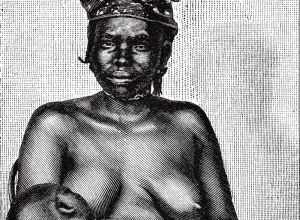
A picture of a nude captured African woman being trophied around by a white man has been deemed too explicit for Facebook.
NO one knows for sure the identity of the people in the photo, the origins of the photo or if it is even real. However it has spread through the newsfeeds of many black users of the social networking site for the last week – that was until Facebook abruptly took it down. I first saw the photo earlier this week when fellow Facebook friend, local attorney and activist Michael Coard shared the photo from one of his friends. The image is both striking and haunting, offering up all sorts of commentary about the objectification of black women, our bodies both past and present. And according to Philadelphia Magazine, which first picked up the story, before the image was removed the photo generated dozens of comments and shares.
The author of the Philly Magazine piece contacted Facebook, which responded back to the request by saying, “The company does not “make any exemptions for nudity due to an image’s documentary context.” The statement went on to explain Facebook’s official terms.
“You will not post content that: is hateful, threatening, or pornographic; incites violence; or contains nudity or graphic or gratuitous violence.” But Facebook’s own Community Standards page makes it clear that there are, in fact, some exceptions to its nudity rule, such as a photo of “a sculpture like Michelangelo’s David or family photos of a child breastfeeding.”
Coard believes that Facebook’s Community Standards policies might be a bit racially insensitive and verging on censorship. However, in the same week that Facebook went public, the company banned the photos of one grieving mother’s deceased infant son, who was born with a rare disorder, Anencephaly, which prevents the brain from developing. Likewise, the site social networking site banned several photographs of a woman showing the scars from her triumphant defeat of breast cancer for being ‘pornography’. And most recently, about 60 protestors gathered at Facebook headquarters in Menlo Park, Calif. and staged a nurse-in to rally against the widespread censorship of photos showing mother’s nursing.
So while the removal of the picture of the nude African woman might have some racial components to it, I think what is much more prevalent is how easily Facebook can deem any part of the female form (including childbirth, which is usually associated with womanhood) pornographic, regardless of the context. The same site, which allowed “pro-rape” joke groups to remain active for several months (and only be removed after intense public pressure), now has a no-tolerance policy to breastfeeding moms and historical images of nude African women as captives. All of this makes it appear that Facebook not only hasn’t figured out how to differentiate between pornographic and healthy exploration of the female form but how inadequate it has been in taking their own rules regarding violent statements and possible criminal behavior against women seriously.
For a social networking site built on the concept that it’s users live to be an open book for the world to view and share alike, Facebook certainly appears repressive when it comes to certain aspects of a person’s life, particularly those involving the fairer sex. So what do you all think? Is Facebook Community Standards policy justified in the removal of pictures they deem offensive such as women breastfeeding or nude African female captives? Or does the social networking site have issues with women?
Too Funny or Too Much? American Pie Star and Wife Mock TIME’s Breastfeeding Cover

American Pie star Jason Biggs has complained in past interviews about being too associated with his juvenile and innocent character on the film that made him a mainstream star, but his most recent antic (posted on his Twitter account for the world to see) is sure to strengthen those associations which he so loathes.
The Broadway actor and his wife Jenny Mollen mocked the controversial Time cover of a mother breastfeeding her soon-to-be four year old son. It’s a hilarious take on a very contentious subject. What do you think, did they take it too far? Or are you getting a great laugh out of this?

More on Madame Noire!
- Wrap It Up: 7 Things In Entertainment We’re Tired As Hell of Seeing
- When The Real World Gets TOO Real: How Corporate America Almost Damaged My Self-Esteem
- Don’t Ignore the Crazy, Don’t Rationalize the Brokenness: A Cautionary Dating Tale
- Ask a Very Smart Brotha Live: Signing Papers & Dating Younger Men
- Real and Relaxed? My Journey In Relapsing Back to the Creamy Crack
- Bet You Didn’t Know: Secrets Behind the Making of “The Color Purple”
- Girl, Stop Trippin’: 6 Things He Just Doesn’t Care About
Why Don’t Black Women Want to Breastfeed?

WomenandLife.org
When you teach sex ed and parenting skills you’ll find yourself in the middle of all kinds of controversial conversations ignited by people’s personal values and fueled by judgment. A few weeks ago I was sent to market a parenting program to patients anxiously awaiting their pre-natal appointments in a clinic located in a low-income neighborhood of Philadelphia. This clinic was frequented by a population of African-Americans, women from the Caribbean islands and women of African descent. In an effort to entertain and educate a room full of impatient, pregnant woman, the nurse practitioner took it upon herself to highlight different pregnancy and childbirth discussions each week. Today she took a funny but informative look at breastfeeding.
“I just can’t imagine breastfeeding my child with the same organs I use to satisfy my man,” remarked a young woman who appeared completely disgusted. “Instead of having one crying and hungry mouth, I’ll have two. I’ll pass,” commented another young mother. I found myself questioning my own feelings about breastfeeding, which before that day I had inconclusively assumed was not for me. My mom was just finishing up school and starting her career when she had me so she didn’t breastfeed me. And besides my annoying allergy-induced asthma and a shellfish allergy, I had turned out OK.

WhatToExpect.Com
Still the predominant trend in the waiting room that day was most of the women’s inability to overcome the sexual barriers that they had placed on their breasts. Most of them couldn’t see past their breast as sources of sexual amusement for their men and pleasure for themselves, and as a primary feeding source for their newborn children. The only exception was one girl who was probably all of 17 years-old who came in the center late that afternoon with her mom and little sister in tow. She stayed quiet for most of the conversation as she helped her sister pick out stickers for the baby book they were creating for the tenant in her perfectly bubbled belly. She softly and confidently commented, “I don’t see what woman wouldn’t want to breastfeed her child. In my native country of Sierra Leone, women don’t fuss with formulas and all of that mess. I crack up when my friends ask me if I’m getting an epidural. In my country women have babies naturally every day.” Her mother just smiled and nodded with pride.
The young girl’s confidence and nonchalance made me feel weak honestly. All of us were sitting around giggling about birth, breasts and sexually satisfying men and this girl who was younger than many of us in the room couldn’t fathom any other way to experience pregnancy and child-birth than the way nature intended.
Before I get accused of singling my sistas out, keep in mind that women lie, men lie but numbers don’t. A survey conducted by the CDC in 2005 took a look at the rates of breastfeeding according to age and race. Although 59% of black mothers reported they were breastfeeding, Asian-American mothers were most likely to breastfeed, followed by Latina/Hispanic mothers at 79%, 75% of white mothers and 67% of Native American mothers. Before we debate about the challenging schedule of a busy career woman, the study also revealed that 63% of women with less than a high school diploma breast-fed as compared to 84% of college graduates. Only half of young mothers under the age of 20 breastfed, but 68% of mothers between the ages of 20 and 29 breastfed. 77% of older mothers over the age of 30 were the ones most likely to breastfeed.
How Old is Too Old? Mayim Bialik (aka Blossom) Still Breastfeeds her 3-Year-Old Son

Being that I’m not a parent, I try to reserve judgment with the way people choose to raise their children. Notice I said try. Being that my mom and aunt own a daycare, I’ve seen my fair share of poor parenting, and by now it’s easy to recognize the signs of a parent who has their priorities out of whack, a parent who’s too lazy to take care of their own child or a parent who’s enabling and essentially spoiling their child rotten.
But I’m not quite sure where to put Ms. Bialik.
You may recognize her from the hit ’90′s television show, “Blossom.” Well she’s all grown up now. With children of her own. And the child actor, turned doctor (she has a PhD in neuroscience from UCLA), turned mother and now author believes in what she calls “attachment parenting.”
And that word attachment is used literally. The goal of the technique is to keep your child as physically close to you as possible. NewsOk.com reported that the technique, which was made famous by Dr. William Sears, includes natural birth, breast-feeding, sleeping with your children, wearing your babies in slings and gentle forms of potty training and discipline.
The emphasis on breastfeeding is why Bialik still breastfeeds her three and half year old son, Fred. Which is a little unusual, to say the least. But that’s not the only tenant of she and her husband’s parenting style. The couple sleeps with their two sons on the floor of their one-bedroom home and don’t believe in our country’s consumer culture when it comes to rearing children.
Mayim has written a book about attachment parenting called, ”Beyond The Sling: A Real-Life Guide to Raising Confident, Loving Children The Attachment Parenting Way.” Though some might deem her unusual methods to be inappropriate, she’s only doing what she thinks is best for her children. Which is what she told NewsOk.com. “Most of our life is centered around trying to be the best parents we want to be,” she said.
What do you think of Mayim and her attachment parenting style?
If you want to learn more about it, read the full story at NewsOk.com.
More on Madame Noire!
- Women Who Get/Got Too Into Their Men
- The New Dating Norms: 6 Big Changes In The Dating Game
- You’re Just Not That Into It: Signs That Your Job Isn’t For You
- Madames Who Acted Like Ladies, But Thought Like Men
- Kandi Says Beef With Marlo Almost Turned RHOA Reunion Into A Different Kind Of Show
- Growing Up Fast: Toya and Lil Wayne’s Daughter Reginae Gets Dolled Up For Photo Shoot
- RHOA Salaries Exposed: They’re All Making Bank!
- Cartoon Has a Message for Black Women
WTH: Woman Breaks Into Stranger’s Home, Tries to Breastfeed Her Baby
In weird crime news, a South Dakota woman is currently facing criminal charges for breaking into a mother’s home and trying to breastfeed her baby.
Around 5 am Sunday, a mother called 911 to report that a women had entered her home and tried to nurse her 2-month-old daughter. Luckily she was able to take her child away from the woman but then she pulled another bizarre move when she crawled into the mother’s bed and laid there until police came and arrested her. When cops arrived on the scene they took the 24-year-old woman into custody and she was later charged with the misdemeanor crime of unlawful occupancy.
My first thought when I read this story was that the woman was probably mentally ill, but police suspect alcohol may have been involved. Fortunately, I’ve never witnessed anyone that drunk.
Brande Victorian is a blogger and culture writer in New York City. Follower her on Twitter at @be_vic.
More on Madame Noire!
- 7 Ways He Wants You To Be Better Than His Last Girlfriend
- The Simmons Family (Including Ex-Wife Valerie Vaughn) Pose For Ebony’s Mother’s Day Issue
- “Ask A Black Man” Episode 2: The Dating Episode
- Sheree’s $750K Salary Demand Likely Got Her Cut
- Stripper Vanity Wonder Writes Book On Undercover Butt Shots Culture
- Columnist Fired For Article On What White Parents Should Tell Kids About Blacks
- Am I Raising a Spoiled Brat?
- Beyonce, Jay-Z & Blue Ivy Head to St. Barts
Dr. Michal Young Wants You to Breastfeed
Breastfeeding in America seems to be a dying art compared to other nations and expert recommendations. But when it comes to black women, our numbers are even lower than the national average.
According to a recent study from the Center for Disease Control, 54 percent of black women breastfeed their children. It doesn’t sound so bad; but number are significantly higher for women of other races. Around 80 percent for Asians and Hispanics and 74 percent for whites.
Health experts have been touting the benefits of breastfeeding, like increased nutrient and protection against diseases for years but for several reasons, black mothers haven’t heeded the call.
Dr. Michal Young believes this is because
Dr. Michal Young M.D., FAAP is an associate professor and interim chairman of the Department of Pediatrics and Child Health at Howard University’s College of Medicine.
Dr. Young is also the director of the B.L.E.S.S. (Breastfeeding Lactation Education Support Services) Initiative. The goal of this program is to provide education, support and resources for mothers who are currently or are considering breastfeeding their children.
Over at BlackAmericaWeb.com, Dr. Young answers some of the more perplexing questions about the whole process.
Why do so few black women breastfeed?
Many need more information about breastfeeding. Too many think formula and breastmilk are equal and do not realize that breastfeeding decreases risk for SIDS, respiratory infections and ear infections. They also need more support when they return to work.
I breastfed my first child, and now my breasts look like prunes. How can I prevent further damage when I breastfeed my next child?
Pregnancy is what changes the breasts usually, not breastfeeding. Sometimes the breast will involute after pregnancy, but it is uncommon. One thing for sure: They will enlarge with the next pregnancy.
I am feeling pressured to stop nursing. Is there a recommended age that a baby should use the bottle exclusively?
If the baby is over six months old, take him/her to a cup. You can put your milk in the cup. Babies do not have to go to a bottle at all. Don’t give in to the pressure! Breastfeed until you and/or the baby are ready to wean.
Dr. Young answers a host of other questions, check out the rest of them at BlackAmericaWeb.com.
Did you breastfeed your child? What were some of the benefits you noticed?


