A new report from the Centers for Disease Control and Prevention (CDC), released on Jan. 27, is shedding light on a heartbreaking reality: Black children and adults continue to drown at much higher rates than their white peers.
According to the report, Black people under the age of 30 are 1.5 times more likely to die from drowning than white people. The biggest gap is among children. Black children between the ages of 5 and 9 are 2.6 times more likely to drown than white children, while Black children ages 10 to 14 drown at rates that are 3.6 times higher.
These numbers aren’t just statistics. They tell the story of generations of families who were denied access to pools, swimming lessons, and water safety because of segregation and discrimination.
Black Drowning Rates: A History That Still Has an Impact Today
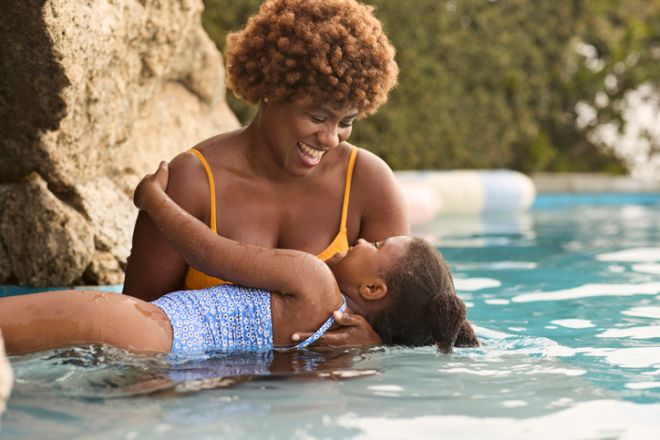
Source: Brastock Images / Getty
For many Black families, the relationship with swimming didn’t start with fear; it started with exclusion.
For decades, public pools and beaches across the country were segregated. Black families were often banned from using them or were forced to use separate facilities that were poorly maintained. Without access to safe places to swim or affordable lessons, many Black children simply never learned.
As writer Victoria Wolcott notes in her 2019 piece for The Conversation, “White stereotypes of Blacks as diseased and sexually threatening served as the foundation for this segregation. City leaders justifying segregation also pointed to fears of fights breaking out if whites and blacks mingled. Racial separation for them equaled racial peace.”
Over time, that became a cycle. Parents who never learned how to swim often couldn’t teach their own children, leaving generation after generation without basic water safety skills.
“It is because of discrimination and segregation that swimming never became a part of African-American recreational culture,” Contested Waters author Jeff Wiltse told the Dallas News.
Even after segregation officially ended, the barriers didn’t disappear. Swim lessons became expensive, many community pools closed, and private clubs remained out of reach for many families because of high costs and ongoing discrimination.
When Parents Never Had the Chance to Learn
The effects of that history are still showing up today.
A 2022 Northwestern Medicine survey in Chicago found that more than 26% of Black parents said they never learned how to swim. The study also found that 46% of Black parents had never enrolled their children in swimming lessons. By comparison, 72% of white parents said they had signed their children up for swim classes.
The lack of swimming lessons can have serious consequences, leading to fatal drownings each year. The latest CDC data is an urgent warning: our children need swimming lessons because they can save their lives.
“To improve swimming abilities in Black and Latine communities, we need to address swim comfort and skills for both parents and their children,” Michelle Macy, one of the authors behind the Northwestern study, said. “Expanding access to pools and affordable, culturally tailored water-safety programs are critically important strategies to help eliminate racial disparities in child drownings.”
Organizations Are Working to Change the Numbers
While the statistics are alarming, organizations around the country are working to make swimming lessons more accessible. Outdoor Afro, a nonprofit that helps reconnect Black communities with nature, created its Making Waves program to help more Black children, teens, and adults learn how to swim.
The program offers swimming scholarships, or “swimmerships,” to help cover the cost of beginner swim lessons. Outdoor Afro has also partnered with organizations like Black People Will Swim in New York and Foss Swim School in Minnesota to provide up to $200 per person or $400 per family for lessons.
On June 3, the organization shared a video on Instagram asking more swimming instructors to join its mission. The post also highlighted another troubling statistic: Black children are far more likely to drown in swimming pools than White children, showing just how important swimming education can be.
“Swimming can save lives,” they penned. “That’s why Outdoor Afro’s Making Waves initiative is working to expand access to swim education and water safety for Black children and families.”
Representation matters, too. Black children and adults need to see inspiring images of themselves in the water, which can boost confidence and determination to practice swimming.
In April 2025, Black Memphis native and scuba diver Corhonda “Hooda Brown” Dawson became a pillar for the community after she made history by earning a Guinness World Records title for completing dives on all seven continents in just 11 days, 19 hours, and 23 minutes, an extraordinary feat achieved in record-breaking time. In a February interview with FOX 13, Dawson said she hoped her journey would inspire the next generation to learn how to swim and pursue opportunities they once thought were out of reach.
“It’s really, really important for me to make this a transferable kind of thing,” Dawson shared. “I want to show every little girl or every little boy it doesn’t matter what your environment says you can do or can’t do. There are no oceans out there, not even anywhere close to Memphis, right? You can still do and still make history.”
The hope is that by making swim lessons more affordable and accessible, more families will have the opportunity to learn life-saving skills, helping break a cycle that has lasted for generations.