Why Porsha Williams' Bisexuality Makes People So Uncomfortable
Porsha Williams Isn’t the Story—Our Obsession With Policing Black Women’s Sexual Fluidity Is [Op-Ed]
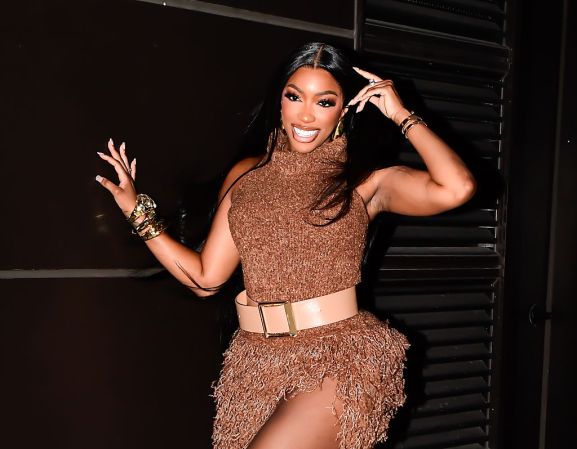
When Porsha Williams, who has spent most of her public life dating men in full view of reality TV cameras, spoke openly about dating a woman, I knew exactly what was coming next. I’ve seen this moment play out too many times to pretend it would go differently. A Black woman names desire that doesn’t center men, and suddenly everybody feels licensed to interrogate her life, judge her choices, and offer unsolicited advice.
Folks are asking if this connection is real. Is Porsha committing sins against God? Is her choice to date a woman rooted in past hurt and trauma? Or is this just another Real Housewives of Atlanta storyline meant to stir controversy and drive up clicks and views? Of course, everyone has an opinion about relationships and lives that aren’t theirs, which feels right on brand for the times we’re living in.
RELATED CONTENT: ‘RHOA’ Star Porsha Williams Confesses She’s Dating A Woman—Meet Her Stunning New Girlfriend Sway
What makes this moment even more telling is that this conversation didn’t start with Porsha dating a woman publicly or with the current wave of commentary flooding timelines and group chats. It started years ago, quietly and awkwardly, on RHOA, when Kandi Burruss alluded to Porsha’s sexual fluidity during a moment of tension between the two. At the time, Porsha didn’t fess up to being sexually fluid or experimental, and many people read that silence as denial.
But for those of us who understand the cost of telling the truth about who we love and desire, it looked like self-preservation. Porsha already knew then what many of us have learned the hard way: once you say your sexuality out loud, you don’t get to simply move forward with the clarity you’ve gained about your identity and live your life. Instead, you get questioned, psychoanalyzed, prayed over, and talked about like you’ve somehow lost your way.
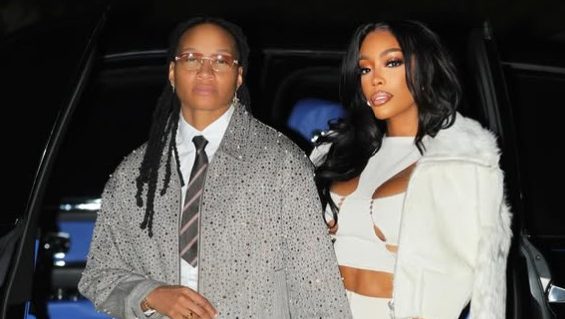
Now that Patrice “Sway” McKinney and Porsha are publicly dating, the volume has only gone up. Folks aren’t asking how Porsha feels or whether she’s happy (and by the way, sis looks very, very happy). What they’re fixated on is whether she’s “really” bisexual, if the relationship is serious, or if she’ll eventually go back to men. Because, apparently, a woman’s attraction to other women only counts when it comes with permanence and a promise to never change one’s mind. Bisexuality, after all, is something that has to be justified instead of simply being experienced. What’s being exposed in this pop culture moment has little to do with “confusion” around Porsha’s sexuality and everything to do with society’s discomfort with Black women refusing to explain themselves, including who they love and how they love, on demand.
Listen, bisexual women have always been treated like a problem to be solved. We’re seen as greedy and indecisive. We’re hypersexual “freaks” who are incapable of monogamy and deep romantic connection. Straight men turn our bisexuality into spectacle and fetishization, something to joke about or exploit. Even some lesbians talk about bisexual women like we’re an emotional hazard—women who will inevitably run back to men once we’ve been “healed” by sapphic love and care. Then there are the religious voices that are quick to frame us as cautionary tales, examples of what happens when women step outside the lines and choose something beyond heteronormativity. In all of this, bisexual women are rarely treated like whole human beings who want to experience love and pleasure just like everyone else.
This is bisexual erasure, y’all, and it thrives in Black communities shaped by respectability politics, religion, and a deep attachment to Black traditionalism. We’re taught that in order for Black women to be respected, we have to look a certain way, love a certain way, and build lives that feel safe and familiar to everyone else. Queerness already pushes against these narrow standards of womanhood. Bisexuality pushes even harder because it refuses to give people the comfort of certainty. And instead of sitting with that discomfort, folks rush to explain us away. Advocacy organizations like GLAAD have long pointed out that bisexual people experience higher rates of stigma and invalidation than both straight and gay or lesbian people, largely because our identities are constantly questioned, doubted, or reframed to make others feel better about the binary ways they insist on seeing the world.
RELATED CONTENT: ‘This Mine’—’RHOA’ Star Porsha Williams Reveals She Met Girlfriend Sway 8 Years Ago And Spun The Block
I’m writing this as a Black queer woman who has loved men and women, so the public response to Porsha’s new relationship isn’t shocking at all to me. When people say she’ll eventually “go back to men,” what they’re really saying is that loving women is never enough on its own and that attraction to women is only a pit stop. This thinking and framing doesn’t just erase bisexuality, it also disrespects queer women by treating women-loving-women relationships like consolation prizes instead of real, meaningful connections.
What people seem unwilling to accept is that sexuality doesn’t move on a straight timeline. Many women come into a deeper understanding of the full spectrum of their sexuality later in life, sometimes after marriages or long relationships with men, and that doesn’t make their bisexuality inauthentic. It makes it honest.
There’s also a hard conversation to be had within queer communities. Some lesbians have been hurt by bisexual partners who they feel led them on and later abandoned them. Of course, that experience deserves care, not dismissal. But when that hurt is turned into a rule that casts all bisexual women as untrustworthy, it simply recreates the same harm we claim to be resisting when it comes from straight folks.
It asks bisexual women to carry the weight of individual experiences as collective punishment, flattening nuance and denying the reality that people enter, leave, and learn from relationships for many reasons. In the process, it narrows the room instead of expanding it and reinforces the idea that queer love only counts if it looks a certain way, often one that mirrors hetero relationships rather than challenging their limits.
I keep thinking about that earlier moment on RHOA, when Kandi said what Porsha wasn’t ready to say for herself, and how much calculation it takes to quietly hold your truth or questioning when you already know how unforgiving the world can be. Black women are always weighing risk, you know? We know what happens when we don’t perform respectability. We know how quickly our self-discovery becomes spectacle and how easily our joy and liberation become punishment. I keep hoping that we, as a collective community, have grown past this point, but moments like this remind me that we haven’t.
In the end, this moment doesn’t require a verdict on Porsha’s romantic life. What it requires is honesty from the rest of us. The real story isn’t who she’s dating, but why Black women’s complexity, sexual or otherwise, still feels so threatening to so many. If we’re serious about caring for all Black women, about faith that leads with love, and about building communities where there’s room for our fullness, then we have to stop treating Black women’s lives like public debates and start treating them like what they are. Human. Evolving. And, more often than not, none of our business.
Josie Pickens is a Black queer writer, cultural critic, and community organizer whose work explores love, power, and the interior lives of Black women. Follow Josie on Instagram and Threads at @jonubian.
RELATED CONTENT: ‘I Really Didn’t Think Anything Of It’: Porsha Williams Was Surprised By Reactions To Photo Featuring Simon Guobadia And Dennis McKinley