The Truth About How To Protect Your Skin While Laser Tightening
Black Don’t Crack—But It Can Lift: What to Know About Safe Laser Treatments For Melanated Skin

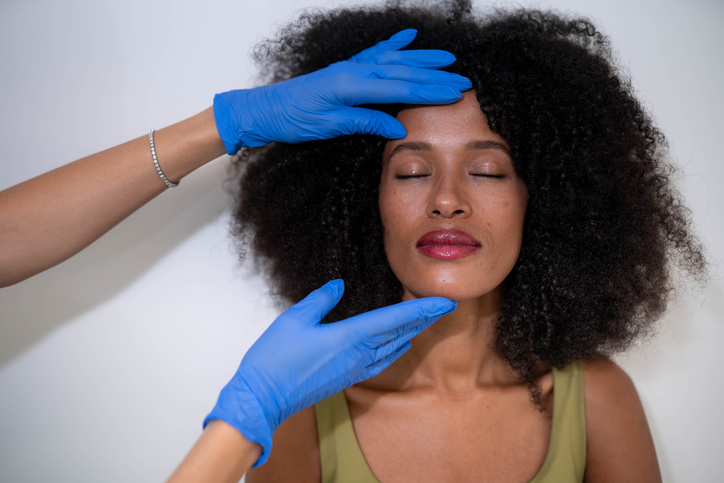
The popular idiom “Black don’t crack” celebrates the slower aging process that melanin often brings. However, as decades pass, even the most stunning and wrinkle-free ebony or onyx skin may droop and sag. For Black women who don’t need a more invasive facelift, laser tightening may be the right choice with some precautions.
Lasers on Black skin have been controversial due to discoloration and scarring risks. However, with advances in cooling techniques and Nd:YAG lasers, Black women can enjoy safe facial rejuvenation.
Gain more insight about how Black women can protect their skin tone while undergoing safe laser enhancement.
RELATED CONTENT: Why Skincare Still Fails Black Women — And How To Fix It
What Is Laser Tightening?
This minimally invasive procedure uses a laser to constrict collagen as it heats the skin. The process encourages more collagen and elastin to develop, which creates a tighter look. According to Healthline, the procedure only takes 30 to 90 minutes with no downtime, but you may need a few sessions for the best results.
Don’t confuse this procedure with laser resurfacing. Resurfacing uses ablative lasers (a no-no for Black skin) to remove outer skin layers and trigger regeneration. The result is overstimulated melanin that may lead to hyperpigmentation.

Nd:YAG (1064nm)
This option appears to be the superstar of lasers for darker skin tones. A 2024 PubMed study concluded that Nd:YAG even helped treat benign hypermelanosis in patients of various skin tones that included dark skin.
Moxi
Water is the target of this laser’s aim. Where does it find water? In the skin’s cells, where the hydroheating triggers repair.
Pico Lasers
Instead of relying on heat, this tool uses pulses to tighten the skin by creating microinjuries that break up pigment. The lack of heat reduces pigmentation and burn risk.
Fraxel Dual
Dr. Bobby Buka recommends the Fraxel Dual Laser for Black skin tones for its adjustable settings. As long as the operator keeps the setting low, it’s safe enough to help African American women with acne scarring.
Radiofrequency (RF)
This option isn’t an actual laser. However, it uses energy to penetrate deeply and stimulate more collagen. This is the type of laser found at premier spas like The Glo Skin Tight Laser Club.
Cooling Devices
Cooling devices can help protect darker skin during laser treatment. Your skin professional may use contact or contactless options ranging from gels and creams to short blasts of colder air on treated areas.
A PubMed study from 2000 focused on cold air therapy after laser treatment. The results showed better epidermal protection, which permitted an up to 30% higher energy setting on the laser. It also reduced post-treatment side effects.
Frequently Asked Questions: Safe Laser Tightening On Black Skin
What Is the Best Laser for Black Skin?
The Nd:YAG (1064nm) continues to get high marks for skin tightening. It’s also a good choice for hair removal on dark skin since the laser doesn’t touch your epidermal melanin.
What Is The Fastest Way To Heal Skin After Laser Treatment?
Be super cautious of sun exposure and stay as hydrated as possible. If you experience any swelling, a cold compress can help.
How Long Does Laser Skin Tightening Last?
Your overall results depend on how well you care for your skin. According to the Laser & Skin Surgery Center of New York, results can last up to three years. You may start to see some results after the first visit.

Get Tighter Skin Without Discoloration
There are many benefits to having melanated skin, such as delaying obvious signs of aging with proper care. However, melanin also makes Black women more susceptible to hyperpigmentation and potential scarring, like keloids after injury, or improper treatment, such as poor lasers.
Thanks to advanced technology, you can slow down signs of aging, such as sagging or drooping, without getting more invasive and expensive treatments requiring anesthesia or more downtime. You can enhance your look while protecting the tone and smoothness of your skin for years to come.
Hopefully, this article provides more insight into how to protect the beauty of your brown or Black skin tone during and after dermatology treatment. To learn more, check out other beauty-related articles on our website.
RELATED CONTENT: TikTok’s New Must-Have Beauty Product Is A Staple In Caribbean Households, But Is It Safe For Your Skin?