I Almost Let the Internet Ruin A Good Relationship [Op-Ed]
If Your Relationship Needs Internet Approval, It’s Already In Trouble [Op-Ed]
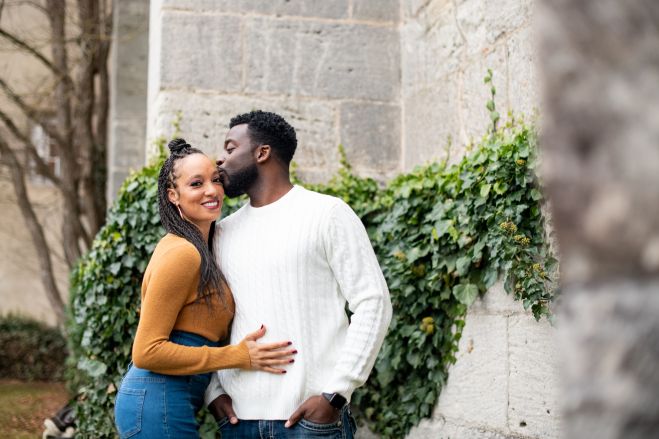
Love feels a lot louder than it used to. Every misstep, inside joke, anniversary dinner, half-baked podcast opinion about who deserves what gets uploaded, dissected, memed, and sent back to us as advice. Social media has done a lot of good for how we talk about relationships. It gave people language for abuse and manipulation. It helped name gaslighting, breadcrumbing, emotional labor, love bombing, and all the subtle ways harm can hide inside romance. It gave some of us the clarity we needed to leave sooner. It also expanded our sense of what is even possible—more freedom, vocabulary, examples, and transparency. And for that, I’m grateful.
I’ve also watched people burn down something real with a compatible person because the internet convinced them that a good relationship must look a certain way. They gave up without trying because a podcast clip declared that if your partner doesn’t do X, Y, and Z by a certain age, then you are “settling.” There is a creeping belief that if love doesn’t move the algorithm, it must be a mistake.
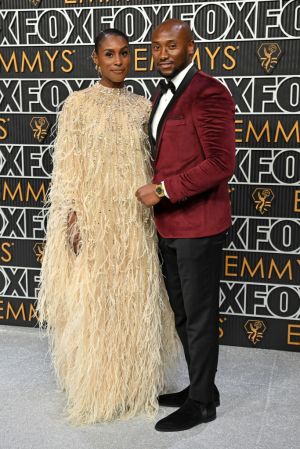
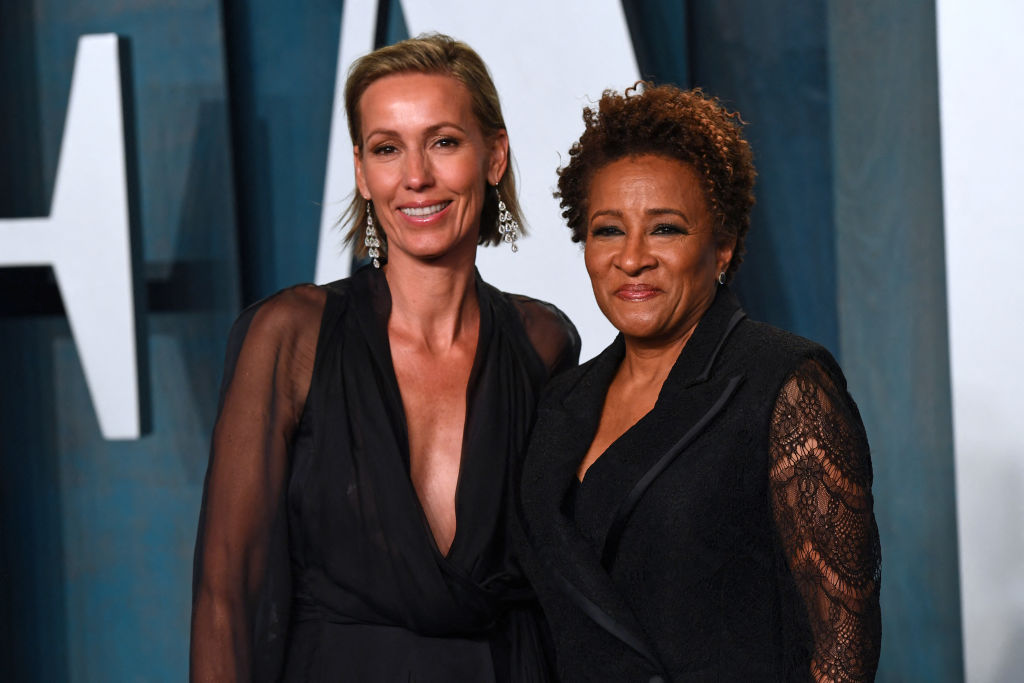
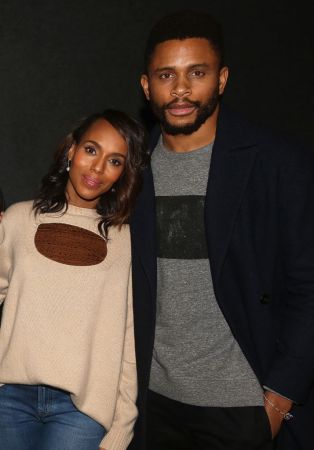
bell hooks once wrote, “Love is an action, never simply a feeling.” That line lives in my head rent-free. Love is practice. Love is discipline. Love is showing up, recalibrating, telling the truth, and choosing. It is not a branding exercise for our personal narratives. Yet, we now live in a time where relationships are not only lived, they are curated. This year, I’m taking a page out of Kerry Washington and Issa Rae‘s books. My relationship is not up for public consumption.
RELATED CONTENT: Hollywood Heartbreaks: 2025’s Most Shocking Celebrity Splits
When I look at my healthier relationships, they bloomed in privacy. In my last relationship, I didn’t talk about much publicly beyond the surface. People knew I was with him. They didn’t know much else. That was my greatest attempt at stewardship. We made choices based on what made sense for us, not what would garner applause. It was peaceful. The work was internal and we didn’t need an audience.
I still carry that same approach with the man I’m currently seeing. We talk honestly about what we want, what matters to us, and how we plan to build it. There is no pretending and no posturing. If something requires time, we give it time. If something needs conversation, we have the conversation. What we don’t do is measure what we’re building together against a rotating list of internet expectations and call that a standard. We choose what works for us, not what trends well.
Meanwhile, the outside world has a lot of opinions about what grown people should look like on paper before they’re allowed to experience love. There is always a think piece telling you what someone “should already have,” what timeline you must follow, or what milestones validate a relationship. The loudest voices are usually the ones that never have to live inside the choices they’re critiquing.
Even with the best intentions, life still happens. No generation knows this better than millennials. We grew up being told that if we checked off the boxes we would be fine. Then the economy, politics, tragedy, and rapidly changing societal norms laughed in our faces. Industries disappeared, student loans ballooned, and basic housing turned into a luxury. Somehow, love is still expected to unfold like a Disney fairytale.
RELATED CONTENT: Sis, Don’t Fall For The Okie Doke! Auntie Gives Advice On 7 Ways To Avoid Hobo-Sexual Men
Researchers have been studying this tension for years now. Studies on social media and relationships show a consistent pattern: the more we compare our relationships to the curated versions we see online, the less satisfied we tend to feel. One study found that nearly a third of young adults in relationships reported feeling jealous or insecure because of something that happened on social media, highlighting how public interactions can trigger doubt even in otherwise stable relationships.
That jealousy often fuels an unhealthy cycle of partner surveillance, where people begin checking posts, likes, and digital behavior in ways that eventually erode trust and satisfaction over time. Researchers also note that constant exposure to other couples’ “highlight reels” creates distorted expectations. When we repeatedly compare our real lives to filtered snapshots, our own relationships can start to feel inadequate by contrast, even when nothing is actually wrong. None of this means social media is the villain. It simply means that a neutral tool can quietly reshape how we feel about the people we love if we’re not mindful of how deeply we let it into our emotional lives.
That’s just the romantic side of things. We’re also sabotaging friendships with spiritual-sounding conspiracy theories, e.g., “You watch my stories but never engage. You’re a monitoring spirit.”
Beloved, I’m going to hold your hands as I say this. I will bring you homemade chicken noodle soup when you’re sick. I will send you money for lunch just because. I will sit on your couch in silence and binge Insecure for the millionth time. But sometimes your content simply doesn’t resonate because I’m not your target audience. Sometimes my public-facing job calls for a bit of privacy, leaving me unable to cosign stances on a particular topic. Sometimes I’m just watching IG stories on autopilot while cooking. Social media has flattened connections into metrics. If you don’t publicly validate, you don’t care. If you don’t repost, you’re fake. If you don’t perform the friendship, the friendship doesn’t count.
Television writer, producer, and actress Franchesca Ramsey recently raised this point on social media.
We have also become hyper-vigilant about red flags. Everything is now a warning sign. Awkward silence on a first date? Red flag. Nervous rambling? Red flag. A joke that landed sideways because someone was anxious? Red flag. We are losing tolerance for ordinary human quirks. People get clumsy when they care. They stumble. They show you imperfect drafts of themselves. Real connection is messy, developmental, and requires nuance. Yet we treat dating like customer service. One inconvenience and the rating drops.
It doesn’t help that social media encourages us to outsource discernment to the group chat. I’ve heard versions of this so many times: “I loved the date until I told my friends about it.” “I thought it was sweet until they called it bare minimum.” “He dresses a little earthy. They said it gives sloppy.” Why are we allowing people who are not attracted to our potential partner define what attraction is supposed to look like for you? If you like a man who dresses like he shops exclusively in Andre 3000’s closet, enjoy your man. They do not have to date him. You do!
RELATED CONTENT: 6 Things To Say To Your Bae To Make Your Relationship Last
bell hooks also said, “When we face pain in relationships, our first response is often to sever bonds rather than to maintain commitment.” That line lands differently in today’s dating climate. The moment something feels hard, an entire digital choir starts singing “leave.”
I am not talking about abusive or exploitative situations. I am talking about the ordinary discomfort that comes with loving a real human being. The part where communication gets tangled. The part where you realize your partner cannot read your mind. The intersection where compromise has to come into play. Healthy relationships are not built on perfection but are sustained by people who negotiate reality together.
I wish we would make relationships esoteric again. I wish we would protect the parts of our lives that need incubation. I wish we would remember that the most meaningful moments do not always perform well for an audience. Deep laughter. Ugly cries. Long, honest conversations about the future. There is also something deeply freeing about opting out of performance. When I take the pressure of optics off my relationships, I am able to be present. I don’t have to evaluate every experience for its shareability. I don’t have to explain my choices to invisible critics. I don’t have to crowdsource my values. I can be a human being learning my person in real-time instead of a brand managing perception.
That is the model I’d love to see us adopt in 2026. Transparency with the people who matter, not thousands of spectators who will forget your situation next week. Honest conversation instead of subtweet therapy. Finally, I’d love to see a commitment to the truth that empathy is not a threat to self-respect. You can require reciprocity and still allow space for someone else’s growth.
Love is not supposed to be a public relations project. It is an intimate experiment in truth-telling. hooks wrote, “To love well is the task in all meaningful relationships, not just romantic bonds.” Loving well requires that we step back from the noise and pay attention to what we are building. It asks us to talk about hard things, do uncomfortable self-reflection, and admit that none of us are as healed, as evolved, or as emotionally bulletproof as we pretend to be online. We can choose a softer route and decide that our relationships do not belong to the internet. We can learn from the language and tools social media gave us without letting it run our hearts.
The world is hard enough. We all deserve relationships that breathe—and to build them without commentary. In 2026, let’s love like nobody is watching, because most of the people who are watching don’t actually care beyond the scroll.
RELATED CONTENT: Why Men Who Cry Might Actually Be The Best Lovers