Why Does Black History Month Make People Uncomfortable?
Triggered By Black History? Why Black History Month Is Making People Uncomfortable… Again
Black History Month often sparks discomfort, and that reaction says more about people’s relationship with history than it does about the month itself. As we celebrate Black History Month 2026, familiar questions often arise: What is Black History Month? Why do we celebrate Black History Month? Isn’t history meant to be shared by everyone? While these questions are often framed as neutral, they reveal how incomplete many people’s understanding of history still is, and in doing so, highlight exactly why this month-long celebration remains so important.
The narratives and stories of Black people matter, and teaching them is essential, especially in today’s world, where civil rights and personal liberties are no longer only a “Black issue,” but a global concern unfolding in real time.
Why Do We Celebrate Black History Month?
Black History Month was created to recognize and uplift the experiences, contributions, and resilience of Black people whose stories were long excluded from mainstream education. Established in 1926 by historian Carter G. Woodson and expanded nationally in 1976, the observance exists because Black history was not treated as essential history. It was overlooked, minimized, or erased altogether.
Born while the United States was firmly in the Jim Crow era, Woodson created the month as a challenge to the segregationist laws codified across nearly every aspect of life at the time. Public education was legally segregated under the doctrine of “separate but equal,” established by the Supreme Court’s 1896 decision, Plessy v. Ferguson. In reality, Black schools were underfunded, overcrowded, and tightly controlled by white school boards and state governments. Curricula in both white and Black schools were designed to reinforce white supremacy, not challenge it.
Black History Month serves as a corrective to that imbalance.
Why Does Black History Month Make People Uncomfortable?
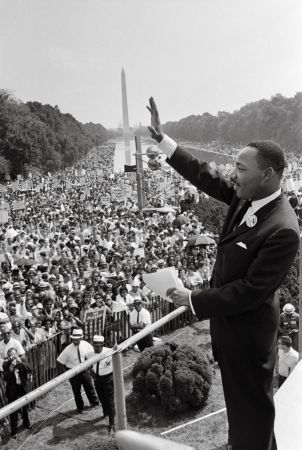
Discomfort surrounding this month often arises because it challenges the idea that history has been neutral or evenly told. Many people were taught a version of history that centered white experiences as universal while presenting Black history and the achievements of Black people as secondary or optional. When Black History Month highlights slavery, segregation, systemic racism, and the cultural, political, and intellectual achievements of Black communities, some interpret that truth-telling as blame or exaggeration. In reality, the goal is education and understanding, not guilt or self-congratulation.
Another reason Black history makes some people uncomfortable is that it forces honest conversations about power, inequality, and legacy. Acknowledging that historical systems benefited some groups while actively harming others can feel threatening, particularly to those who have never been required to question their place within those systems. This discomfort often leads to dismissive reactions or claims that “the past doesn’t matter,” even though its consequences are clearly visible in the present. Those dismissive statements ignore the reality that white perspectives dominate textbooks, media, monuments, and national narratives, drowning out our narratives. It feels unusual only because Black history has historically been treated as an add-on rather than a foundational part of the story.
The history and lived experiences of Black people offer insights and guidance the world can learn from today.
Despite the discomfort it may cause, Black History Month serves essential purposes. Black history is not separate from national history; it is deeply intertwined with the building of economies, cultures, political systems, and social movements. Without the contributions and sacrifices of Black people, the history of many nations would be incomplete and inaccurate. We are also living in a moment when Black history is actively being censored in schools and educational institutions, when DEI initiatives are under attack, and when historical erasure is increasingly becoming policy rather than coincidence.

In 2025, President Donald Trump signed the executive order titled Ending Radical Indoctrination in K–12 Schooling, aimed at removing what it describes as “specific ideologies” from public education and promoting so-called “patriotic education.” In practice, this order restricts how Black history—particularly the history of slavery and systemic racism—can be discussed in classrooms. By reframing conversations about equity and racism as “divisive” or “discriminatory,” it creates a chilling effect on honest teaching. The fact that truth itself is increasingly treated as a threat should concern everyone, regardless of background.
While Black history should be taught and celebrated year-round, this month-long celebration remains a critical space to ensure these stories are preserved and shared truthfully. It serves as a lens through which we can understand what is happening today, as threats to freedom and civil rights extend beyond Black communities and impact people across race, gender, sexuality, and immigration status. In recent years, executive actions and legislative proposals targeting diversity initiatives, LGBTQ+ rights, reproductive freedom, and immigration have affected communities of all backgrounds, highlighting how interconnected all of our struggles truly are.
Here’s Why Celebrating Black History Month 2026 Is So Important
Celebrating Black History Month is powerful because it helps address the consequences of historical erasure and provides tools to navigate the challenges we face today. When people are not taught the full context of the past, it becomes easier to deny present-day inequalities or misunderstand their origins. Black History Month offers the historical grounding needed to engage with current realities thoughtfully rather than defensively.
Representation is another reason the celebration matters. Seeing Black leaders, innovators, artists, and thinkers throughout history affirms that Black excellence is not new or rare; it has always existed, even when it was deliberately ignored. This visibility is especially powerful for younger generations, shaping how they understand their own potential and place in the world.
Ultimately, the discomfort surrounding this special time of year should never be a reason to dismiss it. Discomfort often signals growth, reflection, and the challenging of long-held assumptions. Black History Month 2026 is not about exclusion; it is about inclusion, accuracy, and truth. We need that now more than ever.
RELATED CONTENT: Here’s What’s New & Black On Netflix This February