Rochelle Jordan On Building A New Blueprint For Black Indy Artists
Rochelle Jordan, The London-Bred Alt-R&B Futurist Redefining Black Pop, Breaks Down Her Boldest Era Yet
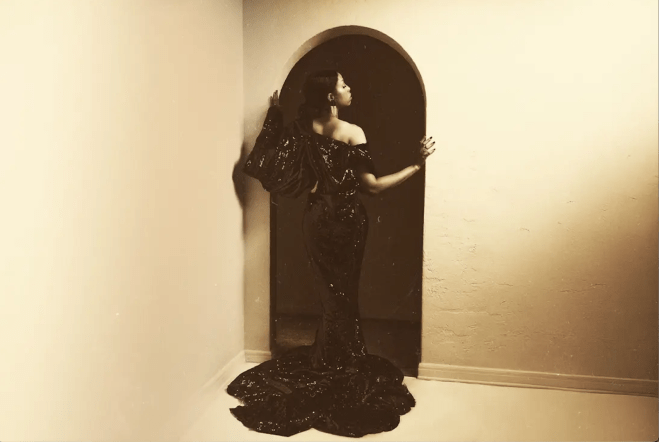
Rochelle Jordan has always made music on her own terms. The London-bred artist, now three albums deep, returned in September with Through the Wall, a project led by the shape-shifting singles “Doing It Too,” “Crave,” and “Sweet Sensation.” Each track blends elements of house, pop, and R&B into a sonic universe distinctly her own.
Since first emerging in the early 2010s with her mixtapes ROJO (2011) and Pressure (2012), followed by her albums 1021 (2014) and Play With the Changes (2021), Jordan has slowly built a blueprint for what independence can look like in today’s music landscape. Without the backing or access often afforded to major-label artists, she’s carved out a space rooted in purpose, intention, and boundary-pushing experimentation. Her breakout second album, Play With the Changes, cemented her place as one of R&B’s most forward-thinking creators, bolstered by her relationship with Kaytranada, whom she says “is his very own genre.”
Now, at 36, Jordan steps even more confidently into her identity on Through the Wall. In a recent conversation with Okayplayer published last month, she opened up about her evolution, the inspirations behind the new album, and the realities of navigating the industry as a Black independent artist.
On Her Musical Evolution
RELATED CONTENT: Tems: The Nigerian Star Redefining Global R&B
Describing the vivid world of her music, Rochelle Jordan says that life itself has been the canvas from which she draws her deepest inspiration.
“Life shapes everything. I look back, and I wouldn’t have changed a thing. Being independent — having little to no resources — and having to step up to the plate to create, literally building your house from scratch, brick by brick… It’s a lot of anxiety, imposter syndrome, and struggle. But through that, I was really able to find myself. It builds character and makes you strong enough to see your vision through.”
On Creating Through the Wall
Jordan’s journey has been defined by resilience, an artist shaped as much by constraint as by creativity. That DIY ethos has become central to her sound and identity. On Through the Wall, experimentation shines bright as elements of funk, soul, dance, pop, and R&B blend together harmoniously throughout the album. Jordan shared that the project is deeply inspired by the music that soundtracked her childhood. The result is a body of work that’s both nostalgic and exploratory.
“Creating this project was really about owning back to the past and my childhood and what made me even want to do music in the first place. I’ve been independent for a long time, and it’s been an interesting journey,” she shared. “I’ve had a producer that has executive produced me since the very beginning — KLSH —, and we’ve always pushed ourselves to evolve, to stay daring, to blend the genres, and to make sure we’re touching on all points of soul. I never want to be predictable. For Through the Wall, it was about moving forward but not being so predictable—pushing toward greatness, like the artists who inspired me: Chaka Khan, [Aaliyah], Anita Baker.”
Working With Her Longtime Collaborator Kaytranada
While the album is primarily produced by her longtime musical partner KLSH, Jordan tapped Kaytranada once again for “The Boy,” a funky house track driven by the producer’s swung rhythms and his rich, groovy fusion of R&B, hip-hop, funk, and house. Their shared influences and mutual respect for genre-pushing reignited the magic they created nearly two years ago when Kaytranada enlisted Jordan for vocals on his track “Lover/Friend.”
“He’s incredible. We share the same influences and love for soulful dance music. When he heard Play With the Changes, he was like, ‘We’ve got to work together,’ and we made “Lover/Friend.” He’s become family,” she told Okayplayer. “Honestly, Kaytranada is his own genre — you hear a beat, and you know. He’s a master at what he does, and I’m grateful to have that energy woven into my story.”
Navigating the Industry as a Black Woman
Carving out your own lane in the music industry doesn’t come without its challenges. Reflecting on her journey, Rochelle Jordan shared that while being an independent Black artist has given her full creative control, it also comes with the difficulty of getting people to understand that Black music exists in many forms and deserves to be recognized as such.
“People are still learning that Black music is pop music. You see giants like Beyoncé and Rihanna constantly trying to break that mentality. I stay confident in my voice. I know my music is pop, centered in R&B, with dance and electronic elements. If you have an ear — and taste — you’ll recognize that. It’s a fight, but it’s a good one,” she added.
RELATED CONTENT: Black Country Music History: 7 Artists You Need To Know