Christian Robinson On Faith, Craft, and Purpose
There Are No Small Roles: Christian Robinson On Faith, Craft, and Purpose
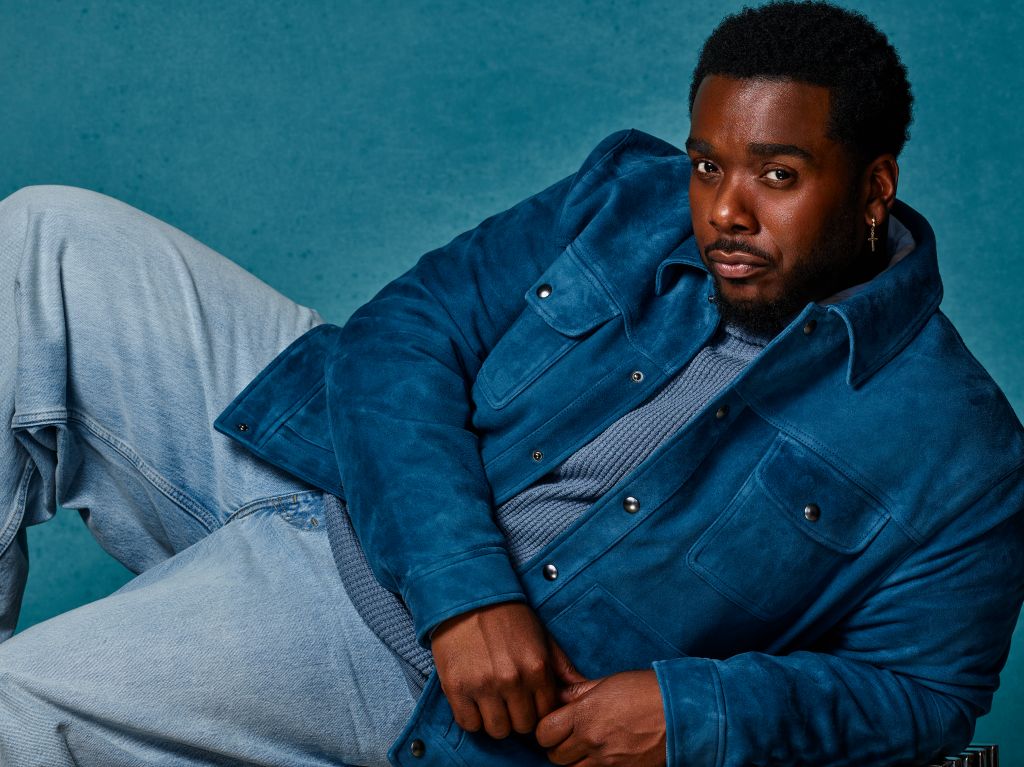
Christian Robinson isn’t interested in shortcuts. Not in his career, not in his craft, and not in how stories about Black life are told. While his face is becoming increasingly familiar through roles in projects like Sinners and BMF, Robinson approaches acting with the patience of someone who understands that longevity—not virality—is the real goal. His journey hasn’t been about chasing the spotlight, but about trusting the process, honoring purpose, and showing up prepared when opportunity finally knocks.
For Robinson, purpose isn’t abstract. It’s rooted in responsibility—to his craft, to the communities reflected in his work, and to the people watching his journey unfold. Whether he’s choosing roles, preparing for a scene, or creating access for young people interested in the entertainment industry, Robinson moves with intention, guided by a belief that storytelling should do more than entertain—it should mean something.
Finding His Stage

Long before purpose became a guiding principle in his career, Robinson’s relationship with performance began in a much quieter way—on stage, as a young man stepping into plays simply because he was asked. “I was 21 years old, sitting in church,” Robinson says. “And a wonderful woman named Miss Thao asked me to be in a play. I had no desire to be an actor at that age. It wasn’t something I aspired to do.”
At first, he resisted. Repeatedly. “Every time she saw me, she would ask me,” he recalls. “And I kept saying no. Looking back now, I always say she must’ve had an angel whispering in her ear because she was so persistent.” When he finally agreed, something shifted. “I did it—and I fell in love,” Robinson says. “It felt like I was exactly where I was supposed to be.” Those early stage plays planted a seed. Acting became less about attention and more about expression—a way to explore humanity, emotion, and story. That foundation would later become essential, especially when Robinson found himself at a crossroads that tested both his faith and his resolve.
Trusting The Process
While living in New York City, Robinson was offered a stable city job—one many would consider a blessing, especially in a city where survival alone can feel like an accomplishment. Turning it down wasn’t easy. But for Robinson, comfort and calling weren’t the same thing. “I took the sanitation test when I was 17,” he explains. “They didn’t call me until I was 23—right when I was apartment hunting in Atlanta.”
The decision forced him to choose between security and faith. “I promise you, in that moment, I heard God say, ‘Are you going to trust Me?’” Robinson says. “My family thought I was crazy. But I said, ‘Y’all didn’t hear what I heard.’” That decision ultimately led him to Atlanta, a move rooted in belief rather than guarantees. It was a leap that required patience, humility, and an understanding that progress doesn’t always look like momentum.
“You don’t always see the growth right away,” Robinson says. “But if you stay consistent, if you keep doing the work, things start aligning. That mindset is perhaps best captured in a quote Robinson lives by: There are no small roles, only small actors. “For me, that keeps me grounded,” he says. “If you look at Sinners, I’m not in the majority of the film. But the scene I’m in is one of the most pivotal moments in the movie.” In that scene—banging on a door, pleading to be let in—Robinson delivered one of the film’s most talked-about moments. “One of the lines I said became the viral phrase of the movie,” he says. “And that’s just from pouring everything you have into your moment.”
Acting With Intention
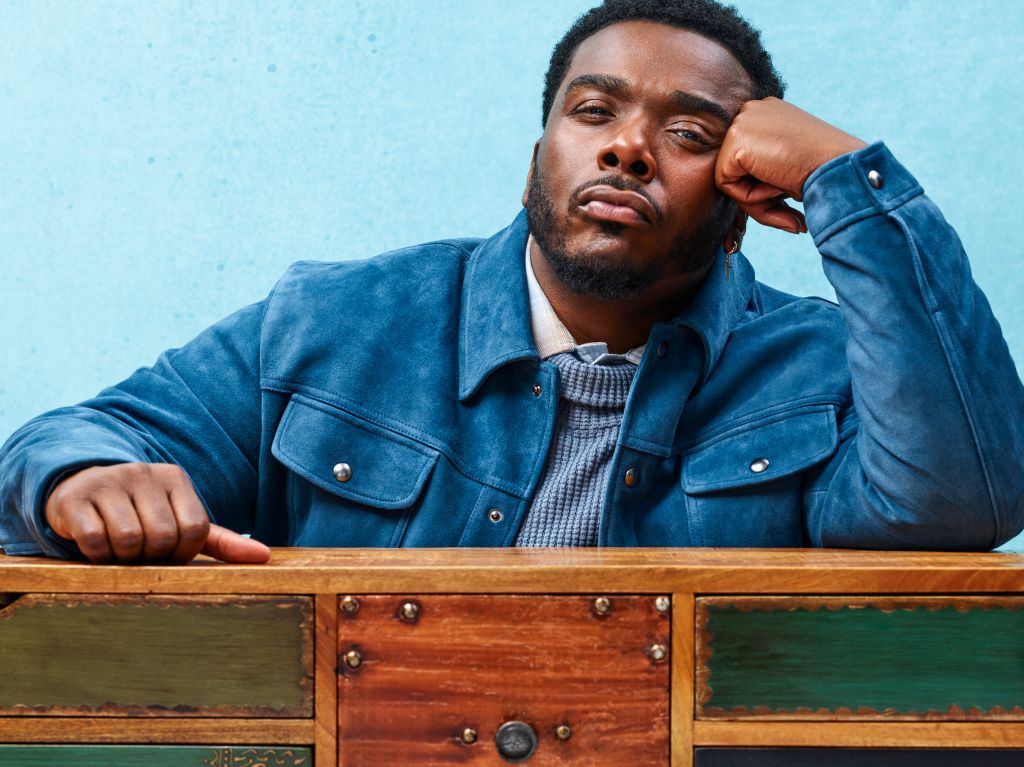
That philosophy has guided him through an industry where external validation can easily overshadow the internal work. Somewhere along the way, Robinson realized acting wasn’t about collecting credits anymore—it was about intention. “At a certain point, it stopped being about just getting roles,” he says. “It became about asking, ‘What am I contributing? What am I saying with this work?’”
That question becomes even more critical when portraying characters connected to real communities and lived experiences, as seen in projects like BMF. Robinson approaches those roles with a deep sense of responsibility. “These stories don’t exist in a vacuum,” he says. “They’re tied to real people, real neighborhoods, real histories. I take that seriously.”
For Robinson, preparation goes far beyond memorizing lines. It means understanding the emotional, cultural, and historical context behind a character. “There’s pressure, sure,” he says. “But pressure is a privilege. Pressure means you have an opportunity.” That perspective extends to the broader question many Black actors grapple with—the responsibility of how culture is portrayed on screen. “I don’t think the responsibility is unfair,” Robinson says. “If you have a platform, you have a duty to be intentional with it. I’m responsible for what I put into the world.”
That same sense of responsibility extends beyond the screen and into the way Robinson thinks about access, mentorship, and what it means to create pathways for others.

Giving Back & Keeping The Culture
That sense of responsibility ultimately led him to create PATHS for us, a philanthropic initiative designed to expose young people to opportunities within the entertainment industry. “My purpose is to be the person I needed when I was growing up,” Robinson says. “I didn’t always have access. I didn’t always have guidance.”
Through mentorship, education, and exposure, PATHS for us aims to demystify an industry that often feels closed off—especially to young people of color. “My favorite thing about success,” Robinson adds, “is that it leaves clues. There are breadcrumbs.” When asked what “keeping the culture” means to him at this stage of his career, Robinson doesn’t hesitate. “It’s about integrity,” he says. “Honoring where I come from, while being intentional about where I’m going. Making sure my work reflects my values.”
That clarity shows up in how he moves—quietly confident, deeply rooted, and focused on growth rather than hype. “I’m not in a rush,” Robinson says. “Once you climb one mountain, you see more mountains. I’m building something that lasts.” As his career continues to unfold, Christian Robinson stands as a reminder that purpose-driven paths may take longer—but they often lead exactly where you’re meant to be. In an industry obsessed with speed, he’s choosing substance. And in doing so, he’s proving that there are, indeed, no small roles—only meaningful ones.