How Black Women Are Finding New Power In The Past
From ‘Witchcraft’ To Wisdom: How Black Women Are Embracing Ancestral Spirituality Miscast As ‘Demonic’
Many of us grew up in pews where faith was rigid, not fluid. We were taught that God lived in the sky, the devil lurked everywhere else, and anything that hinted at “the unknown” was dangerous. For some of us, that meant not being allowed to watch Harry Potter or read books with “magic” in them, because the slightest brush with the occult was believed to open the door to demons.
Those lessons carried into how we consumed culture, too. Black characters who tapped into spirit, nature, or magic were usually cast as villains—witch doctors, voodoo queens, or shadowy figures lurking in the background. Our survival technologies were never the hero’s tools; they were the enemy’s. The unknown, we were told, was demonic.
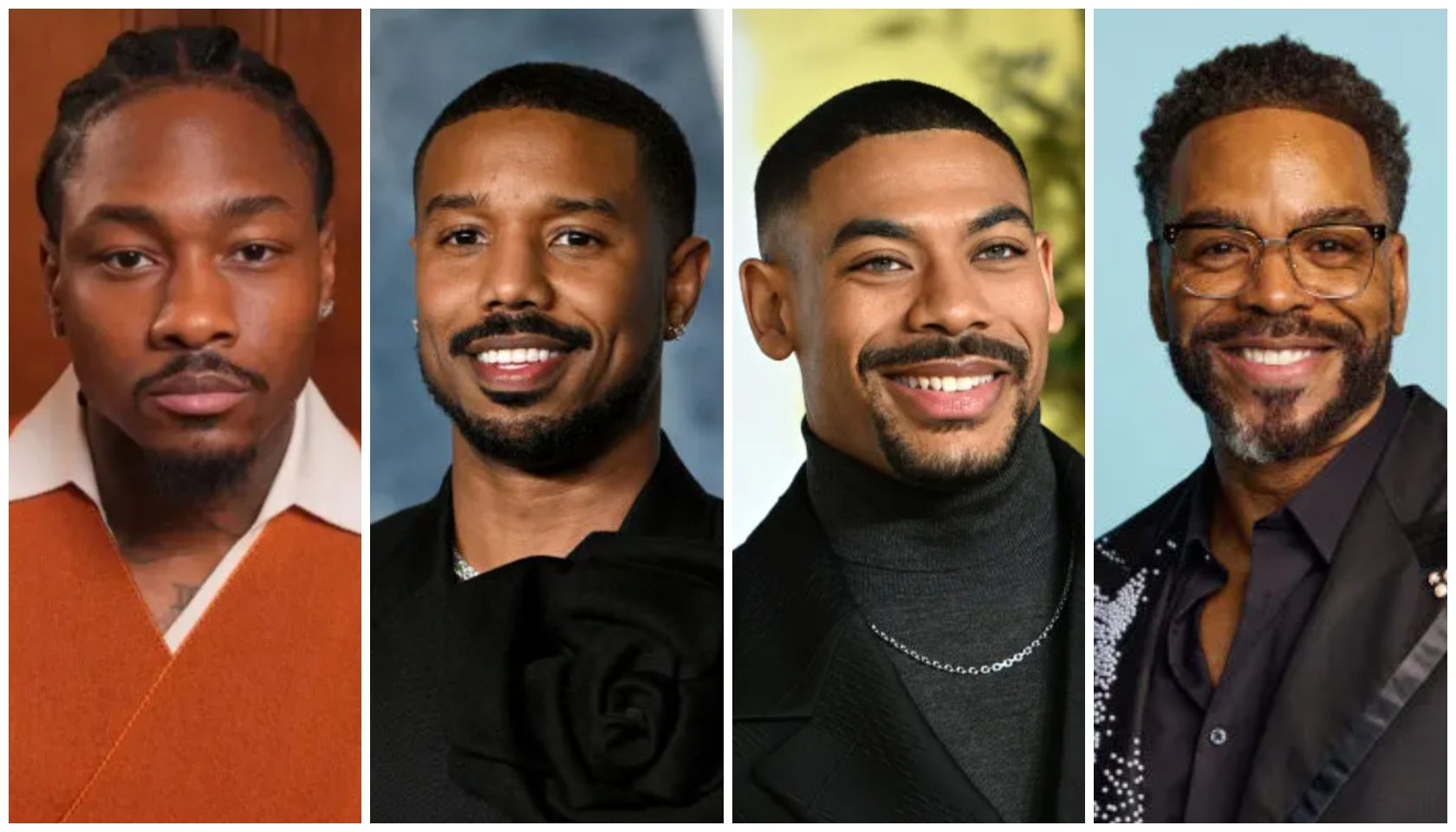
That script hasn’t changed much. A resurfaced clip of actor Michael B. Jordan mentioning that he got his middle name from a babalawo—a Yoruba priest trained in the Ifá divination system, not something he himself claims to be—sparked online comments of people “canceling” him for being “demonic.” The mere mention of ancestors has people calling Beyoncé a witch. Even affirming the presence of spiritual gifts gets twisted: Tabitha Brown, whose faith and joy are rooted in Christianity, has been labeled the same.
For Black millennial women raised in that world, curiosity about ancestral practices often comes with fear. Yet something is shifting.
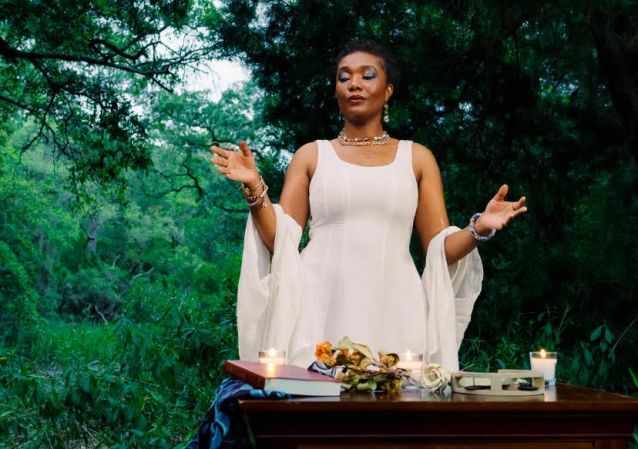
Recent storytelling has cracked the door. The 2025 film Sinners didn’t flatten Hoodoo into horror; its representation centered on a practitioner, Annie, as the story’s moral compass. That shift matters, but walking through the door takes guides who live this work. Enter cultural worker and fifth-generation Gullah Geechee diviner Sara Makeba Daise, whose forthcoming book Sankofa Shadow Work: Diaries of a Diasporic Diviner offers a way to name what so many of us already feel in our bones.
In mainstream memory, many first met Daise as a child on Gullah Gullah Island, the beloved 1990s Nick Jr. series. She starred alongside her parents, Ron and Natalie Daise, and her brother, actor Simeon Daise. While the show introduced a generation to Gullah culture through music and storytelling, Sara’s adult work builds on that foundation in deeper ways—connecting pop culture’s bright snapshots to the lived realities of ancestry, ritual, and reclamation. Daise recently shared insights with MadameNoire ahead of her book’s Oct. 24 release.
October is both Gullah Geechee Heritage Month and Hoodoo Heritage Month. The Gullah Geechee people are descendants of enslaved Africans who lived along the coasts of South Carolina, Georgia, Florida, and North Carolina. Known for preserving more African traditions than almost any other African American community, the Gullah Geechee retained language, foodways, and spiritual practices across centuries of oppression. Hoodoo—also called root work or conjure—emerged within that same landscape of survival. It is a set of African American spiritual practices rooted in African cosmologies, Indigenous knowledge, and the necessity of living under slavery and Jim Crow. It is a closed practice, meaning it is specific to the African American experience and not open for outsiders to appropriate. The overlap of these two heritage months is no coincidence. Hoodoo and Gullah Geechee traditions are inseparable.
Pop culture has been dropping breadcrumbs toward this return for years. Beyoncé’s Lemonade sent many viewers searching for the 1991 film Daughters of the Dust, Julie Dash’s portrait of Gullah women preserving memory on the Sea Islands. Tina Knowles’ new memoir, Matriarch, affirms the power of mothers and grandmothers as keepers of story and spirit. Even network dramas like Will Trent nod to conjure, putting what was once whispered in family kitchens on primetime screens. The signals are everywhere. The question is what we do with them.

RELATED CONTENT: Hoodoo Heritage Month: Conjuring, Culture, And Community
Seeing Ourselves On Screen
For Daise, Sinners was an important moment. “I loved the representation of Annie in particular. I want to live in a little cabin in the woods by myself with all my magical things, so I just thought that being depicted positively was…a positive experience for me.”
She added, “In [a] panel that I attended…the significance of Hoodoo not being the horror in the horror film…I appreciated that very clear distinction that this is, this is the power, this is what is protecting us all, these ancestral practices and technologies.”
There was also the dance sequence, a display of ancestral and living timelines converging onscreen. “It was a manifestation of a knowing—that nonlinearity, that we’re all existing at once.”
Representation matters, but Daise is clear: film is an entry point, not the work itself. “[The 2017 American animated fantasy] Coco was incredible and I think a great possibility model for what kind of stories are possible, and I do think the door is being opened, not only for us to tell our stories, but to reimagine where and how.”
Sankofa
The title of Daise’s book arrived the way much of this work does—nonlinear, sideways, almost whispered. “I had actually written a piece about Sankofa shadow work, maybe 2021… I was just trying to articulate what it was that I was doing and create this definition around this very nonlinear dimension hopping, generational understanding, and connections that I was making.”
At a 2024 fellowship, it clicked: “Oh sh–, I, I have a thing called Sankofa Shadow Work and that’s the name of the book that I’ve been working on.”
Sankofa is a word from the Akan language of Ghana. It translates to “go back and get it” and is often represented by a bird looking backward while carrying an egg in its mouth. It’s a reminder that in order to move forward, we must return to the wisdom, memory, and lessons of the past. Within Black diasporic traditions, Sankofa is both philosophy and survival. It’s how generations preserved knowledge in plain sight, how spiritual practices traveled across oceans, and how many of us today are finding our way back to what was once called forbidden.

Daise’s use of the word signals a call. It frames her book as part of a larger awakening, an invitation to remember and reclaim.
Everyday Signs We’ve Missed
If you’re newly curious, you don’t need a step-by-step manual. What you need is a different lens. Daise emphasized that memory is already hiding in plain sight.
“Naturopathic remedies, medicine, ways that family members or folks or elders have treated illness…we might look down upon them and associate it with poverty as opposed to being like ancestral wisdom and awareness of healing.”
She also named language as lineage: “Hidden gems in the matter-of-fact way that our families speak wherever they are…is actually indicative of like, oh so and so is three generations removed from North Charleston.”
Since the work is heavy, she prioritizes embodied presence: “To enjoy the way the wind feels, to like the light and how the leaves move, to like put my feet and my hands in the dirt, to enjoy my shower, to slow down when I put lotion on my body…stimulating the other senses in positive ways as you navigate all these different dimensions is important.”
Grace is the container that makes all of that usable. “Grace for myself allows me to have grace for my ancestors…not ‘bit– you ain’t sh–’ or ‘you can do no wrong’—grace lets me honor my own humanity, and theirs.”
Where Do You Start?
“When we show up earnestly, we will be met where we are, as opposed to there being a step 1, step 2, step 3, step 4,” Daise said.
She affirmed simple, protective first principles: “I do think having an altar practice is important. I do think it’s important to just very intentionally start to recognize and acknowledge your ancestors, if even I say names known and unknown.”
Most of all, she tells us to follow the leads already tugging: “The recipe really has so much to do with things you’ve already been getting into…dreams that you’ve already had, questions that keep echoing.”
The gentle warning is also clear: “I’m not saying just open yourself up to any and everything.”
RELATED CONTENT: African Ancestry’s Dr. Gina Page On The Importance Of Black People Discovering Their Roots
Protecting What’s Sacred

As interest grows, so does the risk of exploitation. “It’s disappointing, it’s sad, it’s dangerous…I guess I just say…there’s a through line of people like, how can I make money off this and not respect it and not respect the people who created it or needed it to survive.”
Daise recalled an exchange with a white author researching evangelical women: “I sent her this long email. I was like, what do you want this for? What are you gonna do with it? These are closed practices. What is your desire? What is your intent? And I think all of that, that’s how serious we need to be about it. That’s how thoughtful and ethical we need to be about it.”
She warns of a new hazard: surveillance. “We are under so much more surveillance than our ancestors…Ring [cameras], smart tech—the level of surveillance they cannot fathom.”
Discernment is survival.
For Daise, Sankofa work is not just about healing the past, but imagining beyond oppressive systems. “We need to be thoughtful about context and why we’re sharing…while needing it to certainly be accessible to all whom it needs to be accessible for, we have to be thoughtful about the context.”
That future, she says, requires tenderness, honesty, and all hands on deck—with ourselves and with our ancestors.
The Call Back
“What we have learned to hate in ourselves are often the very parts of those who came before,” Daise said.
The return is active reintegration. “In your pursuit of yourself, of slowing down to really get to know yourself, to really affirm your subjectivity…that too is the Sankofa work of reclaiming your ancestors and these practices and these technologies because they are embodied.”
Remembering honors the wisdom that carried our families through, letting it inform how we live now, and daring to build on it for those who come after us. What they left was never meant to stay buried, but to guide us forward.
RELATED CONTENT: Screams & Symbolism: Black Horror Scholars Break Down The Cultural Chills of ‘Sinners’