






All Articles Tagged "shopping"
Just Spend The Extra $10! A Few Things You Shouldn’t Even Think About Going Cheap On
I enjoy a good deal just like the next woman on a budget, but after living and learning the hard way I’ve come to accept that there are just some types of items where going cheap is just not going to get it. A lot of people have grown accustomed to asking for the generic versions of prescription medications at the pharmacy or comparing the ingredient list on a bottle of NyQuil and the drug store’s Nite Time, but going the bootleg, discount, get it for the low-low route on a lot of other things will end up costing you a whole more than you thought you saved. Think it won’t? Check out this list of products it’s better to just spend the extra cash on.
Savvy Shopper: How to Navigate Thrift Stores and Score Big

shutterstock
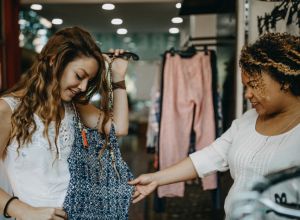
Thrift shopping is a very cool endeavor that not only allows you to find one-of-a-kind pieces, but is eco-friendly as you recycle clothing items; but taking the time to search for items that you like, in your size, that are still of good quality can be quite a daunting task. There are often racks and racks of merchandise to be sifted through for that one great find. Yet, taking just a few key preparatory actions can make your shopping simpler, helping you to navigate in a way that scores you the best stuff.
Do your research – Check in with stylish friends, read blogs, do Google searches, read reviews at the Better Business Bureau website, post questions on social media. Whatever your preferred method, find out where the reputable thrift stores are in your area—ones that have been in business for a while, and are known for quality merchandise with fair prices. If you want to dig a little deeper, you may even be able to find the ones that suit your style specifically—whether you are looking for high-end items, items of a certain style or even from a specific decade.
Get friendly with the owner/staff – Thrift shop owners and staff are your absolute best resource at finding the items you want. They take in the merchandise from donations, they are savvy about the history of the pieces they sell and they often know when or from whom pieces are coming. Half of the battle in shopping at thrift stores is getting to the merchandise before someone else can pick it up. Give yourself a leg up by being friendly so that you know when items are arriving—bonus if they offer to put items you would love aside for you to preview first. You’ll probably even learn a thing or two in the process about the designers you love, specific periods or collections, authenticating items, etc. depending on the store.
Look for unconventional ways to wear conventional items – Can that dress you spied also double as a top? Would that pair of men’s jeans have the perfect amount of ‘boyfriend’ style slouch? Can you rock that fedora with a feminine menswear inspired business look? Would that bulky sweater be great if it were belted? Keep your eyes open for opportunities to layer or transform items that make them look totally unique when you put your personal spin on them.
Tags:
budget shopping, clothing, deals, personal style, saving, shopping, style, thrift shopping, thriftingThe Price is Right: How To Bargain For A Better Price And Never Pay Retail
Love those shoes but don’t want to pay $120? Making a deal for new office equipment and want a discount? Whatever you are buying, you can bargain for a better price, according to an article in MSN.com.
“Here in the United States, haggling over a purchase is often confined to yard sales and flea markets. But there’s no reason you can’t apply your haggling skills to any potential purchase. Not only will you find that you get greater value for your dollar, but you might also decide that shopping is more fun with a little friendly negotiation,” writes MSN.
Before you ask for a deal, do some window shopping for the same item in other stores. Then figure out your target price, making an offer that is not ridiculously low. And check for damage on the item you intend to purchase. “Whether it’s clothing or a refrigerator, even minor damage should mean a lower price,” advises MSN.
Be prepared to walk away from the negotiations if you are not getting the price you want. Walking away may also make the salesperson waver because she doesn’t want to lose a sale.
Let the salesperson know you have cash in hand. “Using cash to pay for your purchase adds about one percent to the seller’s profit margin,” states MSN.
There are also certain times to get good results in bargaining. “Most sellers are more willing to deal when an item is going out of season, out of style or out of model year. If you can help the seller reduce unwanted inventory, you can increase the value of any offer you make,” says the article. “Sometimes salespeople or stores have monthly sales quotas. And there may be additional financial advantages for them to complete a sale, so deals may be a little easier to snag near a deadline.”
Be friendly and polite with the salesperson. The more the salesperson likes you, the more willing the will be to cut you a deal. But if the salesperson unwilling to bargain, ask for the store manager.
Still, if you can’t get the price of the item lowered, MSN suggests asking for a free accessory or free delivery.
Don’t be a hardcore haggler. Play the deal making light, easy and pressure free. If you stress out the salesperson they’ll be less willing to make a deal with you.
Have you ever successfully gotten a deal by negotiating with a salesperson? Let us know about it.
Shop Like A Jean-ius With These Quick Denim Tips
When it comes to jean shopping, we all strive for a fit that will not only have us looking great, but also make our rear-views look stellar—bootylicious if you will. But when you’re unaware of your body type and disregard what works for you, a preventable denim disaster could be lurking right in the fitting room. Who wants to walk around with unwarranted muffin tops, super short legs, and a pancake-like tush? So too keep you from having the denim blues, here are a few easy and quick tips (by body type) for you to keep in mind and take along with you when your shopping for this fall season’s hottest denim trends.
Be Strategic When Using Credit Cards, Or Don’t Use Them At All
A British journalist, Oliver Burkeman, conducted a little experiment: He left his credit cards at home for a few weeks in favor of going all-cash (or all-Pound, as it were). The idea is that people who use plastic spend more money than those who use hard currency.
According to Fox News, there is research to back up this belief. However, proving the “cause and effect” — using credit cards causes a consumer to spend more money — hasn’t been proven. “People who use plastic are often more affluent than average, while people who pay in cash sometimes do so because they have no choice. Perhaps they can’t get approved for a card because their finances are in a mess, and consequently they endure serious liquidity constraints,” the article says.
Moreover, there’s the suggestion that people who use credit cards think differently about their purchases, taking features and benefits into greater account. Those using cash, the research asserts, think foremost about price. Perhaps. But surely, anyone spending money on an item would be willing to spend a little more, if possible, to ensure that what they’re buying won’t fall apart right away.
We would recommend that you try and use cash as much as possible, especially if you are living on a tight budget (saving for a big purchase, trying to pay down debt). It’s really mental. When you think about your lush, green dollars slipping from your hand and into that cash register, you can’t help but to ponder a little more closely whether the purchase really needs to be made. And, once the purchases are made and your wallet is empty, it’s much easier to see where your money went. How many times have you looked at your bank statement and had your memory refreshed — Oh yeah. I spent $50 on drinks with friends on Thursday. And $75 on that dress on Saturday. And $50 on that fancy body lotion I treated myself to in celebration of surviving a rainy Monday. You’ll wish you’d just gone right down the block and gotten some Nivea.
The story points out some clear benefits to using plastic. If you run into a problem with a purchase, you have a record of it. A lost card can be replaced whereas money is gone forever. And the rewards can add up to a nice little something.
But with all of these perks, what’s really important is strategy. For instance, you have a card that offers points, which can be redeemed toward an airline ticket. Perhaps you decide that all of your clothing, restaurant and salon purchases for the next six months will go on the card. There’s no need for an extra pair of boots, an additional night out on the town, or an extra deep conditioner. The point is to get something extra. If you spend the cost of the airline ticket on all these extraneous items, what have you gained? If you find that you’re not earning enough points, maybe start putting your groceries or gas purchases on the card; things that you would normally buy anyway. The point is to make the money you spend every day go a little farther. But keep in mind: credit cards charge interest. If you can, pay off the bill in full every month. Then, you’re really taking advantage of that bonus.
Credit and debit cards definitely have their advantages, so we wouldn’t say you should swear them off entirely. But if you have spending issues, you have to take that into account when you’re budgeting your credit card expenditures. If you go swipe happy, you’ll eventually get very, very sad.
Subpar Service and Defective Products Got You Angry? How to Complain And Get What You Want
Have you ever gotten bad service at a restaurant? Didn’t get what you expected when you bought a product? You could complain, but you need to know how to complain correctly in order to get what you want.
According to U.S. News & World Report (via MSN), there are four steps to take:
1. Write it down: Have a written record of what happened. This, notes U.S. News, “allows you to organize your thoughts into a powerful argument. It also allows you to put both the damage and your requested solution into proper perspective.” You will also have all the details on hand when you need them.
2. Stick with the facts: Don’t exaggerate. “If you have the facts on your side, your case is much stronger,” states the article. “You’ll begin by stating what happened: what was promised to you and who made the promise; what was delivered and how it differed from the promise. Be clear on how the promise differed from the results.” Make sure all the details are precise.
3. Know who can resolve your complaint: Complaining to the wrong person will get you nowhere. Always ask for a supervisor or manager—someone who can make decisions. Sometimes it isn´t easy, however, to get to the right person. “That might take some detective work, such as a phone call to the store to find out the manager’s name or an Internet search to identify the CEO. But be realistic when you choose your problem solver,” reports U.S. News. “A $10 problem should be resolved by the store manager, not a corporate officer.”
4. Know what you want: Don’t just complain for complaining’s sake. Complain to get what you want. “Unless your goal is just to be heard, know exactly what you want to resolve the matter. Are you looking for a replacement product? A refund? An apology from the company?” according to U.S. News. And be prepared to negotiate. You may simply ask and receive, but you may have to settle for less. “Know in advance what the minimum is that would make you happy,” the article advises.
Listen Up Marketers: New Report Shows the Importance of Black Media to Black Consumers
The National Newspaper Publishers Association (aka Black Press of America) and Nielsen have released a new report, “African-American Consumers: Still Vital, Still Growing 2012 Report,” finding that black consumers turn to black media outlets to find items of relevance to them. This may seem like a no-brainer, but the report also found that advertising in black media only represents a small portion of the amount spent on advertising as a whole. So there are great opportunities for companies to reach out to this market in places that they’re turning to for information.
“Marketers underestimate the opportunities missed by overlooking Black consumers’ frustration of not having products that meet their needs in their neighborhoods,” NNPA chairman Cloves Campbell says in this story on Politic365. “And companies that don’t advertise using Black media risk having African-Americans perceive them as being dismissive of issues that matter to Black consumers.”
The report found that an overwhelming majority, 91 percent, of blacks think black media is relevant to them. Another big majority, 81 percent, think products advertised in black media are relevant to them. And brand name items represent 82 percent of the purchased in black homes.
However, 2011 advertising in black media outlets was $2.1 billion. In the same year, $120 billion was spent on general mass media advertising. The report predicts that black buying power will total $1.1 trillion in 2015.
The study also highlights the importance of social media and online engagement to the black community. And notes that black consumers, especially older ones, tend to make more shopping trips, spending less than the broader population during each trip.
“As is true among non-Black households, the younger generation of Black households offset fewer overall shopping trips with higher per-trip spending than their older counterparts. But, in all instances, Black households spend less per trip than non-Black households,” the Nielsen blog writes. The black population is 14 percent younger than the broader population with a media age of 32 years old.
This report was timed to release during the Congressional Black Caucus Foundation’s annual conference. We also wrote about the roundtable discussing the link between small business ownership and the wealth gap, which took place during this conference.
More on Madame Noire Business!
- From Detroit to Austria: Baroness Monica von Neumann Puts a Regal Spin on the Candle Business
- No to OWS: Jay Says He Never Supported Occupy Wall Street Movement
- The Wealth Gap and Entrepreneurship: Helping Black Businesses Helps Everyone
- Put Your Pride Aside: Why You Should Take The Job You Need Until You Can Get The One You Want
- Unemployed and Undereducated: Study Finds Black Youth Are Disconnected
- Vogue’s First Fashion Week In Africa Highlights Renewed Interest in the Continent
Celebrities, Freebies and (Maybe) Some Shopping: A Look at Fashion’s Night Out

Debra Messing, Michael Kors and Kate Upton were just some of the celebs making the rounds during FNO. This was taken at his East Side store. Image: Aaron Showalter, New York Daily News
Last night, the world celebrated shopping. It was Fashion’s Night Out, the evening that fashionistas of all levels can head out into the streets of cities around the globe and expect to see celebrities, get free booze, stand in line for stuff and maybe even buy a thing or two.
FNO (as all the cool kids call it) started in 2009, after the economic collapse led to a drop in sales for clothing and accessories. At that time, Vogue editor Anna Wintour wanted to spur spending. Now, it serves more as an exercise in audience participation for the much more exclusive Mercedes-Benz Fashion Week. And thousands of people surely did come out, clogging the streets and packing the stores.
Along 34th Street in Manhattan, signs invited people in to shops to celebrate. But it was when you got to Herald Square that the party really started. We walked past a stage with loud music (but minimal dancing) on the way into Macy’s, which had events on seemingly every floor.
At 7:30, fashion designer and Project Runway judge Michael Kors was meant to make an appearance, but at that time, the MC was still announcing names for people that, as best we can tell, had won some sort of raffle. Note: The photo above was taken at Kors’ East Side shop, not at Macy’s. We never actually got to see him, though we did take a look at his line of shoes. We asked a woman standing in line whether she was waiting to meet the designer.
“I think so,” she responded. So theoretically, she could’ve just been standing in line for her health. But whatever. Everyone was just happy to be there.
It should also be noted that people, some in large groups, were strutting about the second floor dressed like they were heading to the club to pop bottles in the VIP section. Or wait behind the velvet rope in the hopes of getting to the VIP section. One or the other.
High off of the many squirts of perfume that were fired my way as I left Macy’s, I thought it would be a good idea to head over to a Target pop-up store in the Meatpacking District, which featured the five special collections available this fall. After zipping through the line to get in (Hugo Boss, Diane von Furstenberg and other high-end shops in the neighborhood had lines that were at a standstill), I waited in line to get into the Kirna Zabete shop to look at the women’s fashions, which were very nice, though I couldn’t find my size. All around were people grabbing free bottles of soda, moving to the music (FNO is a big night for DJs, who were spinning everywhere) and chattering blissfully. Over at Odin, the men’s shop, things were much more calm.
“It was packed before,” a salesman told me. “That’s because men know how to shop. They get in and get out.”
Interestingly, the one place where there wasn’t a line was at the cash registers (see right), where we only saw a couple of people actually making a purchase. I was told on the way in that there was a limit of five items per customer, but it looks like there was a lot more cola consumption than actual purchasing.
Also interesting, at least to me, I did manage to get a couple of things from H&M, which offered 30 percent off of the item of your choice, special for FNO. There has always been the question of whether FNO is more for window shopping, freebies and celeb spotting than actual sales, but, according to reporting by Reuters, the organizers of the event declare it a repeated success.
“Data from NYC & Company found that two thirds of stores who participated in 2011 and responded to their survey said store traffic increased as a result of the night,” the article says.
“What happens is there’s a big bump in the stores the following week or 10 days after that. People go and they see … and then they go back to the stores and buy what they want the next day,” the story quotes George Fertitta, head of NYC & Company, the New York’s marketing and tourism group.
Click here for more celebrity images from the New York Daily News. And visit our friends at Styleblazer for additional coverage of Fashion’s Night Out.
Not Done With Your Back-To-School Shopping? You’re Not the Only One
The New York Times has a new trend alert: Parents and kids (teens in particular) are waiting until school is actually in session before doing a big chunk of their back-to-school shopping.
As television viewers and newspaper subscribers, we’ve been seeing ads and circulars crowing about the back-to-school season since July. But this shopping season may be shifting to a later date on the calendar. Teens want to see what the latest styles are before committing. And parents are waiting for better deals. Add later school start dates and the forces of nature — a warm summer means people aren’t really thinking about down vests and other winter gear — and you have a lot of retailers who are scrambling to scrounge up sales where they were once forthcoming.
The economy is very likely playing a big role in this, as it is in everything else. The article makes the point that shoppers are trying to assess what they really need before they start shopping. Moreover, if shoppers know they can wait a little longer and get a discount, they’re going to wait.
But the nature of back-to-school shopping could be changing also. Research from American Express shows that the number of Americans that will include electronic devices in the back-to-school shopping mix is up nine percent. The NYT article makes reference to the slowing of school supply sales; old-school items like notebooks and pens. The research says that 86 percent plan on spending more on clothing and accessories, but it doesn’t say when they plan on doing that shopping. Or where. CBS News reports that more people are doing their back-to-school shopping online.
The Rundown: Census Suggests Ending Use of the Term ‘Negro’; No Need to Be Invited to Pinterest
-So maybe the economy is doing as poorly as we thought? It’s an emotional roller coaster! Now The Washington Post is saying there are indications that things are moving in a lasting, positive direction. New homes are being built and sold at a higher clip. Those jobs numbers improved with yesterday’s Labor Department numbers showing 361,000 fewer people filing for unemployment insurance. And U.S. exports were up. Experts question whether this will make a difference in the Presidential election.
-We talked about some of the trends in retail in this story yesterday. Today we have a story from The New York Times outlining the ways in which personalized shopping is heading to the supermarket as well. Grocers, using data collected on loyalty cards and apps, are reaching out to customers in a variety of ways with personalized coupons and offers.
-The Census Bureau has proposed an end of the use of the term Negro, leaving black and African American. The suggestion is one of a few that the Bureau has made following research it conducted during the 2010 census in which some questions, when worded differently, got better response rates. The other suggestions include a separate category for “Hispanic” and different ways of identifying Arab-Americans. Hispanics are concerned that changes will short-change the count. But other groups, including the National Urban League, are in support of the rewording.
-Couldn’t get an invite to join Pinterest? Now you don’t need one. And here’s our story with a few pointers for using Pinterest to grow your business and your personal brand.
-And in the final Olympics update of this year’s Games, Usain Bolt won gold in the 200-meter race, becoming the first to ever defend both the 100-meter and 200-meter titles in back-to-back Games. For many, the win earns him the title of “best sprinter in history.” He’s also competing in the 4X100 relay competition. Separately, Bolt took issues with comments US Olympian Carl Lewis has made, suggesting that Jamaica’s drug testing program needs to be strengthened.
Ashton Eaton became “the best athlete in the world” with his gold-medal win in the decathalon. Another American Trey Hardee took silver, the first time the U.S. took the top two spots since 1956.
And the U.S. women’s soccer team took gold for the third straight time, beating Japan. The game was a rematch of the 2011 World Cup in which Japan was the victor.


