
All Articles Tagged "prevention"
Where Do We Draw the Line Between Government and Parents in the War on Teen Pregnancy?
Access to condoms, STD testing, and family planning information and treatment without having to go through parental channels has been great for young girls in many ways. Some teens can’t talk to their parents about certain things and others don’t truly have a parental figure in their lives to seek guidance from so it’s been very beneficial to have services available in schools or through other social organizations that can fill the void when needed.
But there comes a point when boundaries are pushed too much and parents are kept too far out of the loop, and that line has been crossed in the UK. A government program there allows teenage girls to receive birth control implants at school without their parents’ knowledge and consent, and some parents are outraged—as they should be.
More than just the blatant disregard for parental rights, parents are also concerned about their daughters’ health. Implanon, the 3-inch long plastic matchstick that’s surgically installed beneath the surface of the skin under the arm, is effective for up to three years, and according to one mother, the device was placed in her daughter without any consultation with her family doctor, she simply filled out a short medical history.
Parents say they’ve had to search their daughters underarms to determine whether they’ve been implanted and that their right to protect their children has been taken away, while other opposers like the Family Education Trust believe this method will cause teens to be even more sexually reckless. The latter concern is similar to those who believe teaching anything other than abstinence will cause teens to be promiscuous which is naive, but the parents have legitimate concerns.
At the age of 13, the age which the schools will implant these girls, teenagers are not in a position to make a long-term decision about their health, not just sexually, but overall. Hormones in birth control can have long-term effects and it’s important that girls know just what their signing up for when they receive these implants. It shouldn’t be the case that teenage girls only seek resources when they are in trouble–such as abortions or emergency contraceptives, but I don’t think parents should be kept out of the discussion when it comes to an eighth grade girl who is considering becoming sexually active. It’s also not clear whether any type of education accompanies these procedures and that’s just as important as the implant itself because birth control does not prevent STDs.
The attitude from the school system, and even a number of commenters on an article Jezebel wrote on the subject seems to be prevent teen pregnancy by whatever means necessary. The government reports that teen pregnancy has in fact been reduced since the program has been introduced, but there may be other consequences to giving a 13-year-old too much freedom over her sexual life at that age. Ultimately it’s a parent’s job to protect and guide their child in all areas at that age and a school system shouldn’t take that away.
What do you think about this program’s policy of implanting birth control in teens without parental consent? Should the US adopt a similar program since it’s effective?
Brande Victorian is a blogger and culture writer in New York City. Follower her on Twitter at @be_vic.
More on Madame Noire!
- 8 Big Mistakes Baby Mothers Often Make
- Brow Beating: People Whose Eyebrows Inspire Our Tweezing
- Boy, Bye!: 6 Stupid Reasons to Turn a Man Down
- 7 Things That Should Never Happen In The Bedroom
- Scent From the Heart: 10 Fragrances Perfect for Valentine’s Day
- Are You A Coward When It Comes To Breaking Up?
- Hair Q&A: Front Edges and Dry Scalp
- So, What Do Their Moms Look Like
Tags:
birth control, consent, government program, Implanon, implant, parents, prevention, teen pregnancy, teens, UKIt’s Time to Eliminate the Stigma of Suicide
I’ve always been sensitive to news of someone’s death, whether I knew them personally or just happened to come across their story in the news. This is particularly true when it comes to suicide. Immediately I think of what it must have taken to get the person to the point of not just having suicidal thoughts but to actually pull the trigger, or take the pills, or make the cut.
But while I sit in sympathy and ponder the sadness they must have been feeling and the emotions those closest to them must be experiencing, I’ve realized there are others who have drastically different reactions to news of suicides. While I ponder explanations like depression and isolation, they think selfishness and cowardice.
It’s interesting since news of Don Cornelius’s apparent suicide yesterday, those words haven’t been brought up. Perhaps Don’s positive influence is so great that it overshadows his controversial passing or perhaps suspicions of dementia or Alzheimer’s give him a pass from simply being a weak person who couldn’t handle the cards he was dealt, because that’s often the attitude that is projected when someone takes his own life. It always baffles me that if even in death you can’t understand someone’s suffering, how are you surprised that those same people didn’t seek help when they were living?
As far as we’ve gotten away from Catholic teachings that someone who commits suicide is automatically damned to hell, it’s clear that isn’t what makes suicide such a taboo in society, so what is? This issue is far from being one that’s solely black but it bears a deeper look in a community that is typically resistant to accept or discuss mental health. If we can’t accept or understand someone’s choice to take their own life then how can we be accepting or understanding of the circumstances that lead them to that decision while they’re still living? People tend to question why a person didn’t just “say something” but I tend to believe the person has been saying something all along—either vocally or indirectly through their moods or behaviors—and those signs were either ignored, unrecognized, or brushed off, as was the case with Ashley Duncan. That’s not something we can afford to do any longer.
Black women are more likely to attempt suicide but black males are much more likely to complete it. According to the Centers for Disease Control and Prevention, suicide is the third leading cause of death among African American males between the ages 15 and 24, and in 2007, of the 1,958 African Americans who committed suicide, 1,606 or 82 percent were males, according to the American Association of Suicidology.
I understand family and friends who are left behind feel as though a person’s choice to commit suicide was selfish but it’s also selfish to only think about the pain they’re feeling in that moment and not the pain that must have driven their loved one to take that step. It’s also unfair to assume what another person should be capable of handling. What one person may think they can take, another simply may not, and no one can say who’s right or wrong. I think it’s safe to say the perceptions of anyone dealing with thoughts of suicide may not be fully in line with reality as outsiders see it. While people may be around and willing to help, those battling depression tend to not see things that way or to feel as though they are a burden and may in fact be doing their loved ones a favor by taking their own lives. Our perceptions create our realities and once someone is gone there’s no way of knowing what they were truly thinking at the time.
Rather than attempting to admonish any guilt that may be felt by disregarding a suicide victim’s circumstances, it would be far more beneficial to think about what can be done to prevent more deaths in the future. Responsibility for a victim’s death cannot be placed on the shoulders of everyone around them but we should be accountable for the attitudes we have toward depression and other mental health issues so that we can eliminate those stigmas and not worry about people taking that next fatal step in the future.
What are your thoughts on suicide? Do you tend to see it as a selfish or cowardly choice? Do you think the black community is more likely to view suicide as taboo?
Brande Victorian is a blogger and culture writer in New York City. Follower her on Twitter at @be_vic.
More on Madame Noire!
- What’s With Some Black Women’s Fascination With Marilyn Monroe?
- The Dark Side of Being Jealous in Love
- Ask A Very Smart Brotha Live: A*sholes & Disappearing Acts
- Undercover Brothers: Not-So-Famous Brothers of Famous Celebs
- What The Heck Happened To You: What Lost Celebs Look Like Nowadays
- Hair Q&A: Good Weave Hair and Flat Iron Recommendations
- 7 Things That Could Change The Way He Feels About You
- Say Cheese! Unfortunate Yet Unforgettable Celebrity Mug Shots
Tags:
african americans, black men, black women, coward, depression, mental health, prevention, selfish, stigma, suicide, teensTeen’s Death Inspires Keke Palmer to Tweet Suicide Prevention Message
On Monday, 17-year-old Ashley Duncan tweeted, “I finally got a gun” along with a picture of a revolver. Later that day, she walked to the banks of Brays Bayou in Houston and killed herself.
Referring to comments on Duncan’s Tumblr page indicating she may have taken the drug ecstasy, Keke wrote that people don’t realize that ecstasy causes depression. She also discussed her own issues with low self-esteem:
“I think I’m BEAUTIFUL! I didn’t start feeling that way completely until I liked the person on the INSIDE, and that’s real.”
“Please people speak up if you’re struggling with anything!!”
“Emotions only last for but a few seconds. We humans are the ones that dwell on it. Just remember, there will be a better day.”
“I’ve been through things in my life like all teenagers! I’ve felt silenced but I said ‘HEY!! I’m hurt, I’m angry!’ even [if] no one listens!”
“You are put on this earth to learn and to make a change in your life or someone else’s life, whatever! Just know YOU HAVE A REASON!”
As the Huffington Post points out, Ashley Duncan’s death is the second teen suicide in the area in just a few months. In November, high-school student Ashley Billasano sent out 144 tweets of despair about molestation, forced prostitution, and cutting herself before taking her own life.
Suicide prevention advocate Bill Berger says the Internet has made it easier for teens to speak out about how they feel, but it makes an intervention that much harder.
“In the olden days, you had to talk face to face. Now we have this wall of protection called the Internet and I think it’s easier for people to release their feelings.”
Hopefully meeting teens where they’re most comfortable, like Keke Palmer attempted, will make a difference.
Brande Victorian is a blogger and culture writer in New York City. Follower her on Twitter at @be_vic.
More on Madame Noire!
- What’s With Some Black Women’s Fascination With Marilyn Monroe?
- The Dark Side of Being Jealous in Love
- Ask A Very Smart Brotha Live: A*sholes & Disappearing Acts
- Undercover Brothers: Not-So-Famous Brothers of Famous Celebs
- What The Heck Happened To You: What Lost Celebs Look Like Nowadays
- Hair Q&A: Good Weave Hair and Flat Iron Recommendations
- 7 Things That Could Change The Way He Feels About You
- Say Cheese! Unfortunate Yet Unforgettable Celebrity Mug Shots
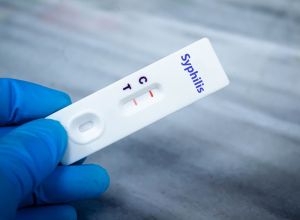
LA Church Encourages Black Women to Test for STDs
How would you feel if you woke up on a Sunday morning and got dressed in your Sunday’s best to head down to hear the good word preached, and mid-sermon your pastor urged you to get tested for HIV? Would your face go o_0 or would you shout “amen!”? Well, that’s exactly what’s going on at some churches in LA. Apparently there is a group of preachers and first ladies of the church urging their women congregants to get tested.
Given recent reports from the CDC, black men and women need all the help we can get when it comes to the war on STDs. Black women are 19 times more likely than their white counterparts to contract an STD. Black men are nine times more likely than white men to contract an STD. So I’m all for telling people of color to be responsible and get tested.
Now the church being the messenger makes it a little tricky and may even offend some, but it doesn’t offend me. I’m a member of a very progressive, protest church so I’m very familiar with the house of God being involved in the dealings of the community. And with STDs ravaging the lives of so many young people, I’m thankful that churches are stepping into the 21st century and finally discussing the reality that not everyone is “saving it” for marriage. People need to be responsible. Far too long has the church world kept sex and disease hidden in the taboo closet. Let’s address what’s going on in our communities.
Oh yeah, STDs are not solely a black issue; I would hope that white churches are empowering their members with this knowledge and encouragement of prevention just as well.
My only reservation with this anti-STD crusade is that, from what I have read, I haven’t seen a call to encourage men to get tested. Yes, women have a higher risk of contracting STDs but let’s be clear about who they are contracting STDs from–men. Churches traditionally have tons of women members yet a patriarchal mindset runs rampant throughout and women are reduced to second-class citizen status. If the plan is to tackle the STD epidemic in the black community, the church needs to hold men accountable in the same way it holds women accountable. If not, then all you have is women finding out that they have an STD while men continue their promiscuous lives infecting other unsuspecting women. That’s irresponsible. Of course, I hope that is not the case here but I can only go on the information I’ve been given.
Overall, I think it’s a great idea. Knowledge is power and encouraging members to be more concerned about their health and personal well-being is something that gets a praise dance in my book.
What do you think about the church stepping into such personal matter? Do you agree or are they crossing the line?
Email nativenotes at nativenotes@gmail.com or follow him on Facebook/Twitter/Tumblr and check out some his writings over at Notes of This Native Son
Musiq Soulchild Tackles Breast Cancer Awareness in New Video For “Yes”
The Philadelphia-born and bred singer’s newest video “Yes” helps raise awareness about breast cancer, but is also a touching love story. Musiq stands by a girlfriend during the roughest parts of her breast cancer treatment, from the actual surgery to the hair cutting and recovery process. In Musiq-like fashion, he makes it clear that as their relationship goes on, he won’t leave her side or love her less. AWWWWWW! At the end of the video, he finally marries the young woman, and does so in front of a room of actual breast-cancer survivors. Deep, right? Musiq, who is a new ambassador the for Susan G. Komen for the Cure Circle of Promise had this to say about the video’s message:
“Early detection is the key to winning the fight against breast cancer,” said Musiq. “Too often, black women are diagnosed in stage three and four when breast cancer is most difficult to treat. Some women are afraid to seek treatment for fear of losing their breasts or their hair. One’s physical appearance is much less important than the will to live. It’s time to remove the stigmas that are attached to this disease.”
You can check out the video below, and to get further information on how you can help and understanding breast cancer, check out Circleofpromise.org.
The Race Gap in H.I.V. Infections

HIV infection rates have stabilized in much of the United States due in large part to increased education in schools.
But despite this good news, rates for the infection are rising quickly in young, black gay men.
One New York Times writer says a large reason for this is that many young, gay men growing up in smaller cities may feel they need to hide their sexuality and engage in “riskier sex”. These same young men may not have health insurance and might not have had a doctor reiterate the importance of getting tested.
Keith Boykin, author of “Beyond the Down Low: Sex, Lies and Denial in Black America” says people need to realize socioeconomic conditions play a role in the disparity of HIV infections.
How are poor teens, growing up without access to resources and or health care supposed to fight the disease with no weapons?
What role do you think race and socioeconomic status play in HIV infections?
Get Meds, Get 90 Percent Less Chance of Infection
Two new studies confirmed everything being said for years about the spread of HIV.


