

All Articles Tagged "Dandruff"
MN, M.D.: I’ve Heard You Can Get Fungal Infections Of The Scalp, What Is That?

Source: Shutterstock
Q: Is excessive dandruff related to eczema and what can I do to remedy the problem?
Dandruff and eczema are part of a group of skin conditions called dermatitis. What dermatitis means is that you have inflammation occurring in certain parts of the skin. This inflammation can contribute to you feeling sensations (eg, itching) or make the skin look different (eg, redness or dry flakes of skin).
Dandruff (also known as seborrheic dermatitis) causes the skin to get red and scaly often in areas where there is too much oil such as the scalp, face, and chest. Itchiness is also part of the package and can be very frustrating. For those who have been diagnosed with dandruff, there are several treatments out there. I’m sure many of you have seen the medicated shampoos in the stores that help in getting rid of dandruff. These daily shampoos usually keep the dandruff from getting worse and can be used as a first option. Tea tree oil has also been used as a “natural” remedy for dandruff. Your doctor can prescribe stronger medicated shampoos and creams to also help in stopping the inflammation.
Q: I’ve heard that you can have fungal infections of the scalp, is that true? How do I protect against that?
Yes, you can have a fungal infection of the scalp. It is actually called tinea capitis and it almost always happens more in kids than in adults. It is very similar to the ringworm infection that you may have heard of. When the fungus invades your scalp, it causes balding of an area of skin (aka patch). This patch can look red and/or scaly. There may be a single patch or multiple patches on the scalp. Tinea capitis is often obtained through someone who has it and who you frequently are in contact with (eg, family). However, it is not restricted to just humans. Dogs and cats can also get the fungal infection and transfer them to you. So, it is not unusual to see all family members be treated once someone is found to have the infection. It is also not unusual for pets to get treated as well. Treatment usually involves antifungal pills that your doctor can prescribe to you. As far as how can you protect against it, that is very hard to do because not everyone knows when they become infected. I would say that protection should involve avoiding sharing items such as combs, hats, and brushes with anyone who may be infected.
Dr. Mercy Edionwe is a physician specializing in internal medicine. She earned her medical degree at the University of Texas Medical Branch, and afterwards, completed an internal medicine residency at the University of Arizona in Tucson, AZ. During her free time, she loves to write and educate the public on medical issues. She currently resides in Texas. You can follow her on Twitter at @fuchsiamd.
Disclaimer: The information contained here are intended solely for the general information of the reader. It is not to be used for treatment purposes, but rather for discussion between you and your physician. Please consult your physician for further information in regards to your own general care. Knowledge is power! Be informed.
Itchy Scalp? Natural Remedies To Alleviate The Irritation

thinkstockphotos.com
Of the many problems that plague women and hair care, a HUGE concern is how to alleviate or get rid of itchy scalp. Sometimes scalp irritations are minor annoyances due to product build-up or changes in the weather. While no one is excited to see loose flakes of dandruff dotting their clothing, most times this will clear up with a specially formulated shampoo for dandruff. But in other cases, itchy scalp goes from a mild inconvenience to a full-blown, scalp-on-fire, can’t-keep-your-hands-out-of your-head type disaster of epic proportions. Anyone who has experienced these symptoms knows the pain of scratching or even massaging your scalp to the point that your whole head begins to feel inflamed and tender to the touch. Chronic bouts of itchiness will leave you wondering which came first – are you frantically digging your nails in your scalp as a result of the inflammation, or is the inflammation a result of all the scratching? It is a chicken-or-the-egg conundrum of the worst kind, and at the end of the day, who really cares which came first? All we want is relief.
Luckily, there are a few natural remedies you can try to see if you can finally win the war against the “itchies and the scratchies.”
Apple Cider Vinegar
A staple in the world of hair care, when diluted with water apple cider vinegar is used for its clarifying properties as well as its ability to help reduce hair porosity as a rinse due to its low pH balance. It also has anti-bacterial qualities that make it particularly helpful in treating an itchy scalp that is caused by bacteria build-up, and against any fungal condition (yeast on the scalp). Yeast don’t like an acidic environment so swabbing the scalp with an ACV solution can be helpful. Just be careful to make sure that you dilute it enough to a level where it is comfortable enough to put on your scalp, or else it will sting like crazy, especially if you have any abraded skin. The raw, unfiltered organic ACV is the best kind.
Aloe Vera
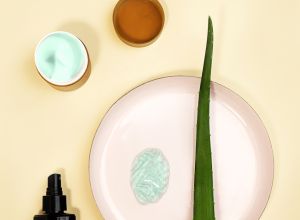
In case you decide to try the ACV, consider having some aloe vera gel on hand to soothe any stinging sensations that you may get. Aloe Vera can be used straight from the plant, or the organic gel can be bought commercially. Naturally emollient and calming, it is a great balm for the scalp that will also soften the hair and feed your roots.
Tea Tree Oil
Melaleuca Alternifolia, or simply “Tea Tree Oil” is ubiquitous in shampoos and conditioners for this very condition in large part due to its highly antiseptic qualities. It’s a triple threat to scalp irritations because of its anti-fungal, anti-viral and anti-bacterial properties. Again, Tea Tree Oil should not be used full strength and is best when used with a carrier oil. Which brings us to the next tried and true product…
Coconut Oil
Ever seen a moldy coconut? That’s because the capyrilic acid in coconuts inhibit the growth of fungus. Incidentally, caprylic acid is also an active ingredient in a lot of vitamin supplements for women who are trying to suppress an overgrowth of candida (yeast) throughout the body. As always, look for the unfiltered, unrefined, organic extra-virgin coconut oil, cold-pressed if possible. It’s especially effective when infused with a few drops of tea tree oil.
Stay Away From This
If you co-wash instead of using an actual shampoo, this might be a good time to take a break and use a product that won’t just leave more build-up on your already beleaguered scalp. Do try to avoid shampoos with harsh detergents that will strip your scalp (and hair) of its natural oils, further adding to that dreaded tight and dry feeling. If your shampoo has sodium lauryl sulfate or sodium laureth sulfate as an ingredient, it probably won’t be doing you any favors. Look for shampoos without sulfates and parabens and with nourishing oils that will soothe your skin.
Word to the Wise
One final word of caution: itchy scalp can be caused for a variety of reasons that are not always easy to self-diagnose. If you are experiencing symptoms that don’t seem to be responding to any treatments, or have broken skin or open sores on the scalp, please see your dermatologist or a licensed trichologist for an accurate diagnosis of your condition. In some cases, professional care may be required, for a complete analysis and evaluation of your diet, as well as any medications
More on Madame Noire!
- Single Black Male: The 5 Steps to Approaching A Woman
- Where Are They Now? 11 Singers and Rappers Who Didn’t Blow Up Like We Thought They Would…
- Signs He Will NEVER Be Into You
- OO-OOP! Did You Know These Celeb Women Are Deltas?
- You Don’t Have To Be Wonder Woman: The Importance of Vulnerability In Relationships
- Bison Brothers: 10 Notable Men Who Attended Howard University
- Love On Your Terms: Are Your Expectations Too High?
Build-Up Ain’t Cute: 5 Things You Should Know About Dandruff
Taking care of your hair goes beyond just treating your hair follicles. There are a million and one sayings to reiterate the importance of building a good foundation and for your hair that foundation would be your scalp. Dry scalp and product build-up can be treacherous to your scalp and the health of your hair. Here’s a few quick tips on taking care of your scalp.
Real dandruff is fungal build-up.
First, a dry flaky scalp is not always dandruff. Dandruff is actually a common scalp disorder that is caused by excessive build up of dead skin cells and accompanied with an itchy scalp. According to WebMD, some believe that the fungus, malassezia is the cause of the fungus. Malassezia exists on all humans, however some immune systems overreact to the fungus, therefore causing dandruff. True dandruff can be treated with specialized shampoos.
Cleanse regularly.
The big myth is that as women of color, it’s okay for us to wash our hair infrequently, like once or twice a month. A clean scalp promotes hair growth. If you are focusing on growing your hair, it is helpful to wash or co-wash frequently. At the minimum, you should aim to wash your hair once a week. Use sulfate-free shampoos, regardless of your hair texture or process. You can find a bevy of sulfate-free shampoos at any major retailers, like Wal-Mart and Target, as most brands are branching out and producing this type of cleanser.
Condition Lightly
Co-washing is a great for highly texturized hair types. However you don’t want to over-condition your hair, which can result in product build-up and leave you with oily flakes in on your scalp. When you do condition, THOROUGHLY rinse out your hair. If a product’s instructions say to “rinse out” after a certain time period, then rinse it out. Don’t leave a product in your hair that is meant to be rinsed out in 30 minutes in your hour for over an hour. You will be left with a flaky residue that you might not notice immediately.
Product Junkie Anonymous
Don’t be that person that gunks every product under the sun into their hair. Just as conditioner will lead to product build-up, any product that you put on your hair can cause a residue that leads to white flakes as well. Always apply product in small amounts and add more as needed. Especially when using gels! You want to decrease the potential for flakes, but use as little as possible to get the desired affects. Start with a dime size of the product and work up from there.
Doctor Knows Best
If you have noticed an excessive amount of white flakes or possible dandruff build-up that you just can’t get rid of, visit your dermatologist to find out if the real root of your problem isn’t a medical condition. Psoriasis and Seborrheic Dermatitis are both skin diseases that include dandruff as a symptom. Per the National Library of Medicince, “most people with psoriasis have thick, red skin with flaky, silver-white patches.” Seborrheic Dermatitis features yellow/white flakes on the scalp. Definitely check with your doctor who can help with more severe cases of dandruff.
Jouelzy offers tutorials on all aspects of Black hair care via her YouTube channel. You can also find her daily hair tips and inspirations on Facebook.
6 Essential Oils You Should Consider Using To Promote Healthy Hair
If you’re on your healthy hair journey, essential oils are oils you may want to consider adding to your regimen. Unlike carrier oils (castor, jojoba, grape seed, etc), essential oils are extremely concentrated and have to be diluted before you use them. Another distinct characteristic is their strong scent.
Diluting and Using Essential Oils
1. Pick a carrier oil
2. Have an applicator bottle handy for measurements
3. For every fl oz (fluid ounce) of carrier oil, add 12 drops of essential oil (this is known as 2 percent dilution)
Using a carrier oil is the most effective way to dilute your essential oil because it will “carry” the essential oil to your hair/skin and allow it to be absorbed better. However, it is not out of the norm for people to use the 2 percent dilution method in their shampoos and conditioners (being able to rinse it out helps when the scent is overwhelming).
Here are some essential oils you may want to try and their benefits to you…
Dandruff: Why You Have it and What You Can Do to Control It
Simply put, dandruff occurs when your scalp generates new skin cells at a faster than normal rate. Skin is always shedding and renewing, but folks with dandruff experience this process at a more accelerated rate due to external or internal (health related) factors. It’s a very common dermatological issue, and fortunately there are many OTC (over-the-counter) products that will keep it under control. You may even find that a simple change in your hair care routine is all you need. However, If you have tried everything and still experience flakes, the best option is to consult with your dermatologist.
A variety of factors could be triggering your dandruff including:
1. Seasonal Changes: some individuals experience dandruff especially during colder temperatures that lead to dry scalp. It’s also common for individuals to experience oily scalps in warmer and more humid temperatures, which also triggers dandruff.
2. Infrequent Washes: I don’t get dandruff unless I wait longer than a week to wash my hair. It could just be that you need to wash your hair more often. Be sure to focus more on your scalp while you’re washing (an applicator bottle makes this easier).
3. Products: You could be having an allergic reaction to a product. Or you’re greasing your scalp with products that contain mineral oil and petrolatum. These products will only coat your scalp and keep moisture out. Additionally, your shampoo may be too harsh on your scalp causing increased dryness.


