
All Articles Tagged "hip hop beef"
Is “Beef” Good For Business?
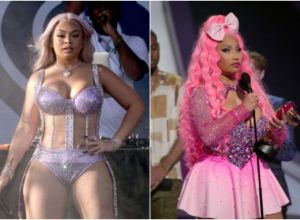
While the rest of us were battling crowds for last minute holiday gifts, some of our favorite rappers were gift-wrapping subliminal shots at their rivals. Common released a track titled “Sweet” that takes aim at rappers who sing. Days later, Nicki Minaj debuted the buzz track “Stupid Hoe” targeting unnamed promiscuous women with sub-standard intelligence.
The two fiery tracks barely made a ripple in pop culture. Common’s attacks were largely written off as the cries of a broken-heart, given gossip of singer/rapper Drake getting cozy with his ex-fling, Serena Williams. People have surmised that Nicki is beating a dead horse to death, namely Lil’ Kim’s career.
The lackluster response reflects the overall decline of beef – or rivalries – in hip-hop. The genre has played host to legendary battles. But in recent years, rappers have largely stayed to themselves. There has been a diss record here, a subliminal shot there, but nothing that has come close to the battles of yore. Since the tragic conclusion of the East Coat-West Coast feud of the 1990s, you could even say it has been discouraged. However, beef is a hip-hop tradition for a reason. Healthy competition allows rappers to generate buzz while demonstrating their lyrical prowess. As 50 Cent proves, it can even launch a career. When done correctly, beef can be good for business, any business.
Brands were beefing long before hip-hop got into the game. Competition can serve to improve a product, as is the case with the Ferrari vs. Lamborghini rivalry. Ferrucchio Lamborghini was a successful tractor engineer who enjoyed cruising in Ferraris, but felt the cars had design issues that his tractor expertise could remedy. Lamborghini once claimed that Ferrari (the man) told him he would never be able to handle a Ferrari (the car) properly. That was before Lamborghini produced cars that many consider comparable, if not better than Ferrari’s, initiating an over 50-year rivalry.
Tags:
apple, beef, business, coke, Common, competition, drake, ferrari, hip hop, hip hop beef, hip-hop business, Lamborghini, Lil Kim, microsoft, nicki minaj, pepsi, rivalryThe Lucrative Side of Hip-Hop Beef: 10 Rap Feuds That Fueled Sales
In the Biggie Smalls song, “What’s Beef,” the legend answers his question by rapping, “Beef is when I see you/Guaranteed to be an ICU.” Of course meaning members of warring rap factions will attempt to send each other to the Intensive Care Unit of a hospital should they cross paths. But why would grown men (and a few women), many of whom are millionaires with a lot to lose, seek to publicly threaten each other with death? They didn’t get to the top of the hip-hop game by making silly moves. No — these days beef is more than a string of verbal threats. It is the premiere marketing tool for rap stars’ albums. It’s free, viral, engages the public emotionally, and turns the creation and promotion of any LP into a drama better than any soap opera. Here are the top ten hip-hop beefs in the history of rap — and how the artists involved managed to turn rage into cash.
Lil’ Wayne vs. Jay-Z
In August of this year, Lil’ Wayne’s camp leaked a track off of his post-prison album “The Carter IV” that dissed Jay-Z. Why? According to rap gossip impresario Miss Info, this beef actually began in 2009 when Wayne’s mentor Birdman stated that Lil’ Wayne is more talented than Jay and has more money. In January of this year, Jay-Z leaked a track in response off of “Watch the Throne” putting Lil’ Wayne in his place with the lyrics: “Really, you got baby money. Keep it real with n-ggas, N-ggas ain’t got my lady money.” This of course spun into a cycle of beef by all parties involved, leading up to the official releases of both of the superstars’ albums this summer. The beef between Jigga and Weezy drove organic consumer interest in their projects helping “Watch the Throne” amass 613,000 sales by late August. Funny thing is, “The Carter IV” moved 964,000 units within days of its August 29 release. Looks like starting beef with Jay really paid off — for Birdman’s protégé.
Winner in this beef: Lil’ Wayne. Numbers don’t lie. He might have less cash than Jay-Z, but Wayne is slaughtering him in the departments of record sales and fan loyalty.
50 Cent Rejects Young Buck’s Debt Repayment Plan, Might Counter-Sue
After filing for bankruptcy in 2010, former G-Unit member Young Buck has been working with creditors to structure a plan to pay off his debts. According to The Wall Street Journal, the former 50 Cent protégé is moving toward a five-year payment schedule, which suggests that Buck has filed for Chapter 13 bankruptcy. When an individual files for Chapter 13 bankruptcy, they are allowed to keep all of their assets and receive court protection from further harassment from creditors. Creditors sign on for this delayed repayment of monies because this agreement is more profitable than prolonged fighting in court. But the debtor has to be confident that there will be enough funds earned in the future to make repayment possible.
50 Cent apparently does not have faith that Young Buck can or will repay his debts, so has rejected Buck’s July 11 petition — in some pretty damning language. The Wall Street Journal reports:
50 says he wants to know just how Young Buck—who titled his debut solo studio album “Straight Outta Cashville”—is going to successfully manage his business affairs so that he can raise the revenue needed to pay off his creditors over the next five years, as his plan proposes.
At a recent questioning over Young Buck’s financial affairs, 50 Cent’s lawyers said the rapper “had trouble identifying where he had been on tour, who had booked his travel, how he had even gotten from one place to another.” This troubles creditors like 50 Cent, his lawyers wrote in court papers, because it raises the concern “as to whether any creditor can truly rely upon these claims and projections by the debtor.”
Another concern is the fate of a contract with 50 Cent and his G-Unit record label, which signed Young Buck in 2004 and under which the latter is still obligated to record.
The continuing contention over this contract includes Buck vacillating between wanting to break it, then more recently stating he wants to continue it under different terms. In response, 50 Cent said through his lawyers: “If the debtor defaults under the recording agreement… G-Unit would maintain a claim for damages flowing to it as a result of the debtor’s failure to perform under the recording agreement in an amount believed to be not less than $10,000,000.”
Ouch.
It is unfortunate that artists in the music industry often go into debt to their labels. Yet, Young Buck is in a situation of his own creation, and at the complete mercy of 50 Cent. 50 owns him as a recording artist and has a much more powerful legal team behind him. Buck might think he has options — such as rejecting his contract, or paying his debts when it’s convenient — but he does not. And in this particular instance, 50 is not the one for fair discussions.
The Cost/Benefit of Hip-Hop Beef and Battles
by Alexander Cain
Beef is part of hip-hop. Whether it’s the lyrical battles between rap superstars or the more theatrical arguments done through the airwaves, rappers are always trying to top one another. While each dispute between artists can start from different reasons, the impact of beef can be seen almost immediately. The enhanced publicity and buzz among fans are some of the positive outcomes for artists who engage in starting disputes. There can also be negative consequences for artists who unsuccessfully handle beef and lose their reputation very quickly. Each situation presents different outcomes for artists, but creating beef still offers the right opportunities for artists trying to make a name for themselves.
Rappers can create beef in an effort to establish themselves. The best example of a hip-hop artist using beef to propel himself is 50 Cent, who reached the peaks of his popularity during his rift with then-popular rapper Ja Rule. By attacking one of rap’s most popular rappers, 50 Cent soon gained notoriety for his gangster mentality and battle lyrics.
His album Get Rich or Die Trying achieved multi-platinum status. 50 Cent continued to use this formula of creating beef to create buzz and album sales with top artists such as Kanye West when they both released albums on the same day. While 50 Cent wasn’t able to attain the same record numbers as he did with previous albums, by creating a dispute with Kanye he was able to remain the topic of conversation and still remain relevant in the rap game.
Beef between artists can also have a negative effect, especially within rap groups. As recently seen in the BET awards, the Diplomats, a very popular rap group throughout the early 2000s, were seen reuniting for the first time in nearly four years. Due to ‘creative differences’, prominent members Cam’ron and Juelz Santana refused to work together, disrupting the Diplomats rise to prominence.
While Jim Jones and Juelz Santana were able to experience relative success in their solo careers, they still weren’t able to reach the popularity achieved by the Diplomats. When the collective announced their reunion in June 2010 and later performed at the BET awards, it was clear that their fans had moved on and the buzz that the group once commanded had faded away.
Social media has also made disagreements between rappers and those affiliated with the hip-hop community easier than ever to garner the attention of fans. Twitter stands as the main source of beef today, with artists often expressing themselves not through their lyrics but through their daily tweets to fans. Soulja Boy is the pioneer of Twitter beefs with his first argument against rap godfather Ice-T. He continues to get buzz with his recent Twitter rants against celebrity groupie Kat Stacks. Soulja Boy’s tweets became one of the top trends with Twitter and remained the topic of conversation without producing a new track. The use of Twitter provides artists with a convenient way of expressing their opinions about fellow rappers to millions of fans and can even have a greater impact than lyrical battles.
While beef remains an integral part of the hip-hop culture, the battlegrounds are different: more artists are straying away from using verses to display their superiority, but rather are using social media outlets such as Twitter to announce their dominance to the world. Gone are the days of great lyrical battles such as Jay-Z and Nas, but are replaced with Twitter arguments of Soulja Boy and Ice-T or Omarion and Raz-B from B2K. Beef in the hip-hop community can be best described as a two-edged sword, providing success for many artists looking to gain a name for themselves (a la 50 Cent) or ruining the progress for those involved (like the Diplomats).


