



All Articles Tagged "healthy foods"
14 Foods To Make You Happy, Energized And Alert

shutterstock
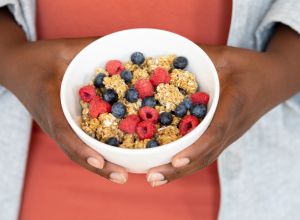
While the act of eating always makes you happy, the aftermath can have the opposite effects. We’re talking bloating, lethargy, and even feelings of depression (and guilt, depending on what you’re snacking on!) But these foods are guaranteed to make you feel sharper, brighter, energized and positive. So if you want to emotionally eat, be sure you’re eating the right emotions!
Your Guide To Slimming Carbohydrates — Trust Us, They’re Not All Bad

Shutterstock
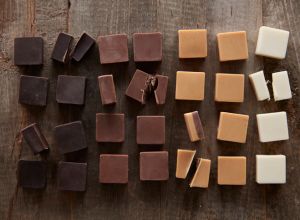
You probably tried cutting out carbs completely, and while you maybe dropped weight fast, you also likely felt so lethargic you couldn’t stick to your exercise routine! And you were probably a smidge moody too. So you want to incorporate the no-no category of food back into your diet, in a healthy way now? Here are 14 surprisingly slimming carbohydrates that should be a regular part of your diet.
14 “Kid Foods” You Should Be Eating

Shutterstock
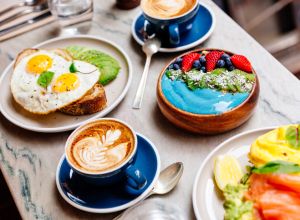
Have you ever peeked over at your kid’s menu, or the children’s section of the buffet and felt a little ashamed when you realized you wanted that food instead? Well if you can put that shame aside (and if the server will let you) you might actually benefit from ordering off the 12 and under menu.
14 Weird (But Super Healthy) Foods You Should Be Eating

Shutterstock
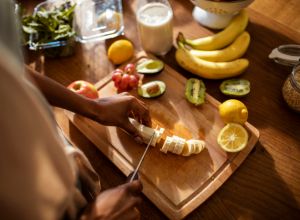
You learned to make the transition from chicken fingers and grilled cheeses to asparagus and steamed fish as you became a health and weight-conscious adult. Now we’re going to push you a bit further on your fit and fabulous journey. The foods listed here may sound — and look — sort of odd, but we have faith that you can learn to love these even stranger, but super healthy foods if for no other reason that they will do your body real good!
Yum! Healthy Snacks That Will Nourish Your Hair
Health is one of the major parts of our lives we seek to improve each day. As cliché as it may sound, we are what we eat. Many times it takes a simple fine-tuning in our daily eating habits to make all the difference in our outward appearances. In the case of hair, you may have tried a million and one products that didn’t live up to your expectations. When all fails, start from the inside—have you evaluated your diet lately?
Here are some healthy snacks that are loaded with nutrients to benefit your hair. Don’t worry they won’t require any culinary skills!
Not So Healthy, But Certainly Pricey
By Charlotte Young
You thought you were being health-conscious when you bought that granola bar and drank that soy milk, didn’t you? Turns out, you may have been wrong. In a perfect example of how you can’t trust marketing claims that this product is good for you or that product has less fat, Forbes examines some of the top healthy alternatives we think we’re making every day.
Soy milk may brag that it’s the healthy alternative to regular fat-free and reduced fat milk, but its hiding some scary details. According to New York dietitian Robin Barrie Kaiden, “half the time it’s flavored and it has added sugar.” Soy milk is also genetically modified and no one yet knows what damage that may cause later in life. So for about $90 more a year, soy milk buyers are getting a product with higher calories and with more risk factors.
Another outrageously priced product is organic peanut butter. No matter how you spread it, peanut butter is still peanut butter and it’s high in fat. It’s best to stick with the cheaper version or if you’d like to be healthier, experiment with fat-free cream cheese. You might find that a cream cheese and jelly sandwich taste just as good.
Perhaps the highest price product on the list is skin cream. People believe that all the fancy ingredients on the bottle equal a well formulated product worth the $400-$1000 price tag. Dermatologist and cosmetic surgeon Tony Nakhla tells Forbes that “there is no ingredient so amazing that’s worth spending hundreds on a skin cream.” He reveals that often times a good product can be found right at your local drug store. A good product should range from $30-50. Try to look for a plant-based brand or one with retinol. It may be a good idea before embarking on a product search to start with a licensed dermatologist who will be able to guide you in the right direction for skin care.
The list wouldn’t be complete with the last two items: bottled water and diet soda. Americans have become obsessed with the convenience of what they believe is purified water in a bottle making it a $4 billion a year industry. But medical experts are growing increasingly concerned about the risks of bottled water, researching whether or not the plastic container holding the bottle is leaking toxins into it when the bottle is left in the heat. They recommend that if you’re still not convinced to go with tap water, try using a basic faucet filter instead. The change could save you an estimated $150 a year.
As for diet soda, turns out that neither diet soda nor regular soda is good for you. Diet sodas have been linked to increased waist sizes. It’s best just to take this craving out of your life. While it may be hard at first, the additional $300 a year it’ll save you is a good incentive.
Tags:
cost, diet, expensive, habits, health, healthy alternatives, healthy foods, healthy living, products, risk, soy milkLawmakers Debate: Healthy Eating or Healthy Budgets?
By Charlotte Young
When it comes to the future of America’s youth, healthy eating doesn’t seem to be a top priority for House Republicans. Unfortunately, it’s also not a top priority for schools.
As the Obama administration attempts to promote healthier school lunches, Republicans are claiming that this move is too costly and some schools, especially in poorer districts, are inclined to agree.
The new school guidelines cut sodium in subsidized meals for low-income children, require more servings of dark green vegetables and limit starchy vegetables to one cup a week so that schools can’t serve fries every day.
Associated Press reports an overall spending bill approved by the House Appropriations Committee on Tuesday, estimating that the new school lunch will cost 14 cents extra a meal, and an additional $7 billion over five years. The bill implores the USDA to rewrite the rules issued in January by the Agriculture Department. It also seeks to cut the Food and Drug Administration’s rules that requires restaurants to post calorie information on menus.
While critics of healthy school lunches see the immediate cost saving benefits, proponents say the additional spending now will cut down on obesity and health related costs later.
The new overall spending bill is a major block to First lady Michelle Obama’s “Let’s Move” campaign to reduce childhood obesity. The billions of dollars it would cut from the USDA and FDA budgets will also curb the efforts of the domestic feeding program and international food aid.
Soda Ban Seeks To Revoke Choice, Disrespects Low Income People
Various media outlets are reporting that Mayor Michael Bloomberg and NY Governor David Patterson are actively seeking permission from the U.S. Department of Agriculture to add sugary sodas to the list of products not allowed for purchase through the federal food stamp program.
According to Mayor Bloomberg, the idea behind the sugary soda food stamp ban is to address obesity in the city. The proposal could potentially ban any drinks with 10 or more calories per 8 ounces. Juices, diet sodas and milk-based products with no added sugar would not be included in this ban.
In an opinion-piece in the New York Times, city and state commissioners argue that tens of millions of federal dollars are spent on sweetened beverages in New York City through the food stamp program, which they claims acts as a enormous federal subsidy for the sugar beverage industry.
How they are able to track the amount spent on sweetened drinks alone is beyond me however, how is that any different that what we already spend on subsidizing crap food?
Some are applauding Bloomberg and Patterson for taking an active stance in the war on obesity while some activists are opposed to the restriction and are questioning whether or not this is just a way to further perpetuate the myth that only poor people on public assistance make poor shopping decisions.
For the record I’m not one of those persons, who gets all bent out of shape every time I see another person whip out an access card to pay for their cart full of soda, potato chips and other junk food. As a former child on food stamps (back in the day when stamps were actually books of funny printed money), I remember very vividly what it was like not having all of the “fun” foods in which my other classmates’ parents could afford. And how much of a treat it was when my mother bent the budget a little to get us youngins’ something a little extra.
And this is not to say that the eating habits of folks aren’t atrocious but we all, regardless of income level, could use a little more fruit and vegetables in our diets. Yet things like soda, and its consumers, are always the target of these anti-obesity initiatives while those similar sugar laden yet expensive drinks such as Venti-sized Starbucks Carmel Chocolate Frappuccino, never raise an eyebrow with any of these “concerned” legislators and politicians.
What is apparent is that the conditions of homelessness and poverty in America are being further criminalized, stigmatized and marginalized to the point that our political leaders spend more time obsessing on the poor and their habits and behaviors instead of the underlying reasons behind why there is so much poverty.
Despite the many years of research, our politicians have yet to figure out why obesity and socioeconomic class are often interconnected. If Bloomberg, Patterson and the rest of the get-healthy hacks in our government were really concerned about the “shape” of its lower income citizens, then time should be spent on actually regulating the junk, which passes as food in his state as well as across the country.
Not everyone has a Whole Foods in their neighborhood. Moreover, not everyone in the vicinity of a Whole Foods can afford to spend his or her “whole paychecks” on “organic” and “healthy.” Can someone explain to me why a 1,000 calories bag of potato chips is cheaper than a 44-calorie apple? Oh yeah, that right: because our government subsidizes many of the food items found within that bag of potato chips as oppose to fresh fruits and veggies, which we are suppose to eat.
I probably wouldn’t be so outraged at this ban if it also came with a plan – and funding – to address the issue of food insecurity in many of these lower income communities, many of which are more likely to have several fast food restaurants and no adequate supermarket. Giving grocery stores tax incentives for doing business in low-income neighborhoods is just as effective as food bans at giving these lower income families access to healthier options.
Thanks in part to the recession; which by many indications suggest that the effects will be with us for a very long time, the face of poverty in America is rapidly changing. As more and more people find themselves out of work, knocked out of unemployment benefits and yes, at the welfare office, we should be cognizant that it is never okay to deny people, who may have less than us financially with the dignity and self-respect as the rest of us are lucky enough to afford – for now at least.


